

Keep Birds Coming To Your Yard In Winter With A Simple Addition To Your Bird Feeder
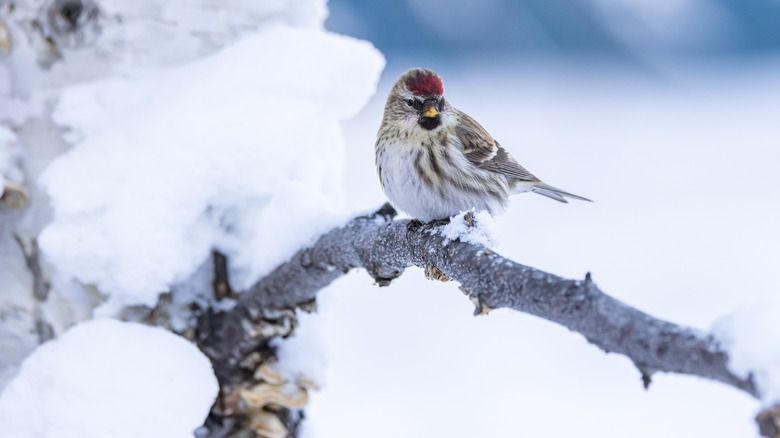
When cold weather comes, it's a lot harder for birds to find food they can count on. This is why they often turn to backyard feeders to get through the winter season. Many of the common birdseed mixes have a lot of filler seed, like red milo and cracked corn. These don't offer much benefit once the temperatures drop and natural food sources become scarce. In winter, birds need food that gives them quick energy, not just bulk to fill the feeder. A lot of this filler seed ends up being picked through and left untouched. Seeds with higher fat content give birds extra energy that helps them get through cold days and nights. One simple way to help winter birds is by adding nyjer seed, also called thistle, to your bird feeders. Nyjer seed is a high-oil seed that is a favorite of many finch species and other small winter birds.
Nyjer seed is very valuable for winter birds because it is high in oil and fat. In addition to fat, nyjer seed provides protein, another important nutrient for winter birds. These valuable nutrients provide birds with the calories and energy they need to maintain their body heat during cold weather. When natural food sources are limited, access to nutrient-rich seeds becomes even more important for the well-being of the birds. Without access to those valuable food sources, like nyjer seed, birds may struggle during extended periods of snow, rain, and harsh winter temperatures.
Why nyjer seed keeps birds coming back all winter

Winter feeding can bring its own challenges compared to feeding birds during the warmer months. Cold temperatures, wind, and snow limit how long birds can safely remain at feeders, which makes easy access to food very important. In these cold conditions, birds benefit from food that doesn't require a lot of effort to eat or remove from the feeders. Because nyjer seed is so small, birds are often able to eat faster, allowing them to get the energy they need without lingering at the feeder. Moisture can also be an issue during winter feeding. Winter rain and snow can cause nyjer seeds to clump together if they aren't protected, making them harder for the birds to eat. If the seeds are too difficult to eat, this can discourage birds from returning to the feeder.
Using feeders designed for nyjer seed that offer some protection from rain and snow can help maintain the quality of your bird seed. Some specialized tube feeders designed for nyjer seed have attached trays that catch dropped seed, allowing birds to eat it from the tray instead if they prefer. Nyjer mesh sock feeders are another simple way to offer these seeds to your winter birds, but they don't offer as much protection from the elements. These feeder styles help prevent nyjer seed from just spilling onto the ground and being wasted. It's also helpful to position feeders under some natural cover to reduce how much winter moisture they're exposed to. Keeping nyjer seed dry makes it easier for birds to rely on your feeders during cold, wet weather. Together, nyjer seed and the right feeder setup can make it much easier to provide what the birds need in winter.