

Tell-Tale Signs That Your Spider Plant Isn't Getting Enough Water
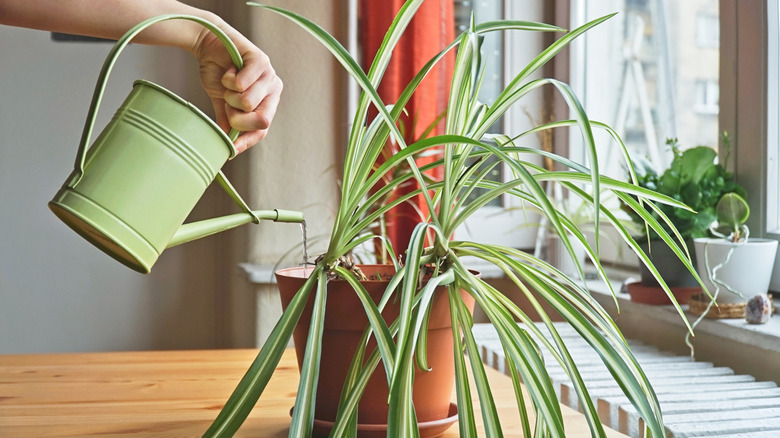
If ever your spider plant isn't getting enough to drink, it will let you know — or, rather, the condition of its leaves will. Spider plants are supposed to have firm, slightly arching leaves that are cream and bright green in hue. They fall outwards and downwards from the plant's center like the legs of a spider, hence this species' common name. However, if a spider plant is underwatered, the leaves fade in color and start to curl or wilt. In severe cases of dehydration, the foliage will collapse inwards. Browning on the tips can also be a sign of too little water, especially if brown tips are an ongoing issue. (Though, confusingly, this can also mean they're being overwatered.)
The signs aren't always so dramatic. Sometimes, the plant just slowly fades. This can be a frustrating realization for houseplant owners because there isn't a single, obvious indicator — or an obvious cause. Generally speaking, spider plants (Chlorophytum comosum) are considered a low-maintenance houseplant. There are many spider plant varieties to choose between, but they all have similar care requirements. And indeed, while spider plants are somewhat forgiving, you can't let watering slide long-term. Consistently dry soil leads to slow leaf growth, which is another sign to watch out for. If you have noticed your spider plant isn't getting any larger or has stopped producing new leaves or babies, a lack of water could be the culprit.
What to do when you see signs of underwatering in a spider plant
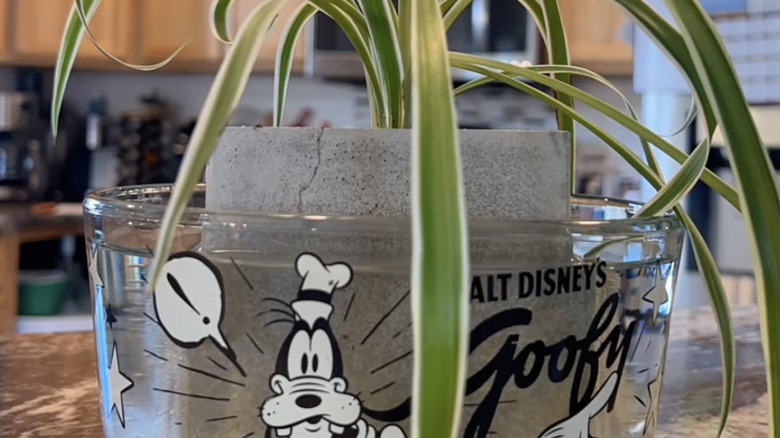
You've stuck to a spider plant watering routine for ages and it's always worked perfectly. Now, suddenly, your methods are having an unwanted effect on your plant. The signs — browning tips, fading or wilting leaves, and a lack of new foliage — are telling you that you need a new approach. The first step in making sure your spider plant stays healthy is checking the soil regularly before watering. If it's dry to the touch, you need to water. Spider plants actually like their soil to dry out between waterings. Once it's dry, however, you need to act fast. Your plant needs a good drink right away, ideally with distilled rather than tap water, or you'll see signs of underwatering. Allow the water to drain through the soil, then pour away any excess collected in the saucer.
Seasonal changes can make things tricky, too. For example, watering your houseplants the right way in winter is challenging for many indoor gardeners. To keep spider plants happy all winter long, they need less water than they do while actively growing (in spring and summer). To make sure you don't err too far on the side of underwatering during changes in season, apply the above advice on testing the soil for dryness. Other reasons for changes in watering needs include too much or too little light or airflow and a recent repotting with changes in potting soil. If your spider plant is looking particularly lackluster, don't assume it's done for. You can try submerging the entire pot in a tub of water and leaving it to soak for up to 20 minutes. After that, you can slowly change its environmental and growing conditions to test where and how it thrives best.