

The Slow-Growing Houseplant With Dark Foliage And Stunning Heart-Shaped Leaves
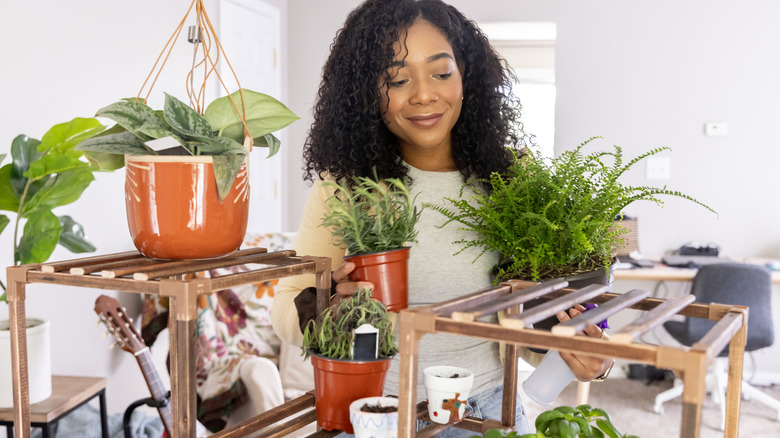
There are many benefits to honing your green thumb indoors, especially given that there are houseplants that can improve your health. However, when all is said and done, it can also just be nice to enjoy houseplants for their aesthetic. As a result, if you're looking for a new houseplant that screams visual appeal, look no further than this dramatic plant with its striking foliage.
The crystal anthurium (Anthurium crystallinum) is a show-stopper, pairing dark heart-shaped leaves with a sharp contrast of pale veining. While these tropical plants can flower, their unique appearance keeps them eye-catching, even outside the blooming season. While many of the most alluring houseplants come with a laundry list of maintenance needed to keep them happy, crystal anthuriums are relatively low-maintenance and easy to care for. Much of this can be attributed to their slow growth rate, which keeps pruning and trimming needs to a minimum.
Before adding this stunning houseplant to your indoor garden, there is one important detail to keep in mind. Although easy to care for, crystal anthurium is toxic to both humans and animals. As a result, you'll want to keep any furry friends or small children in mind before cultivating this plant. Wearing protective gloves when handling the plant is also recommended, as the sap can cause skin irritation.
How to grow crystal anthurium indoors
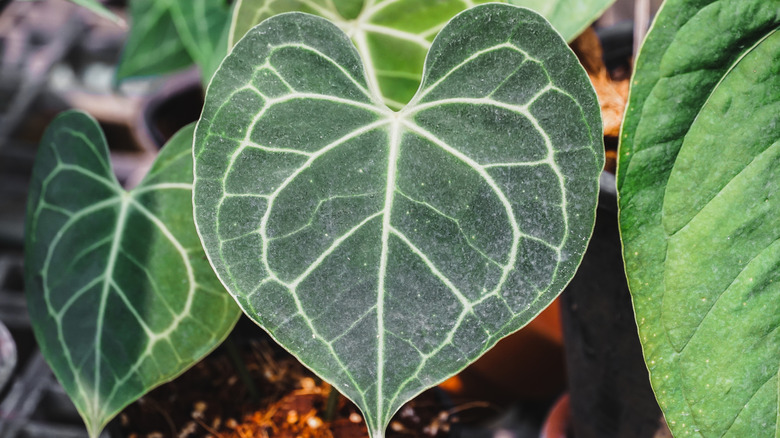
When working with a tropical plant like crystal anthurium, establishing the right growing conditions is important. Crystal anthuriums thrive in bright, indirect light. Think about the area these plants grow naturally: they're often dotting the floor of forests and jungles, with just dappled sunlight to get them through. Because of this, placing this houseplant in a room with an east-facing window will often provide the most appropriate lighting. However, other rooms can also work, as long as the plant is protected from direct sunlight and still receives enough light to avoid wilting or yellowing.
As a tropical plant, temperature and moisture are two other essential factors to consider. Fortunately, crystal anthurium can grow in temperatures as low as 60 degrees Fahrenheit, although up to 80 degrees is preferred. As far as moisture goes, both humidity and hydration are key components, especially when thinking about their native habitats. Humidity around 50 percent will keep the plant healthy, though higher levels can encourage stronger growth. Achieving this indoors can be difficult, so you may want to try ways to increase humidity for your plants, such as misting or using a humidifier. With such specific humidity requirements, this can be a top choice for houseplants to grow in the bathroom. They do require regular watering, but take care not to allow the soil to become waterlogged or too heavily saturated, which could lead to root damage.