

Tips To Stay Safe When Removing Snow From Any Tree In Your Yard
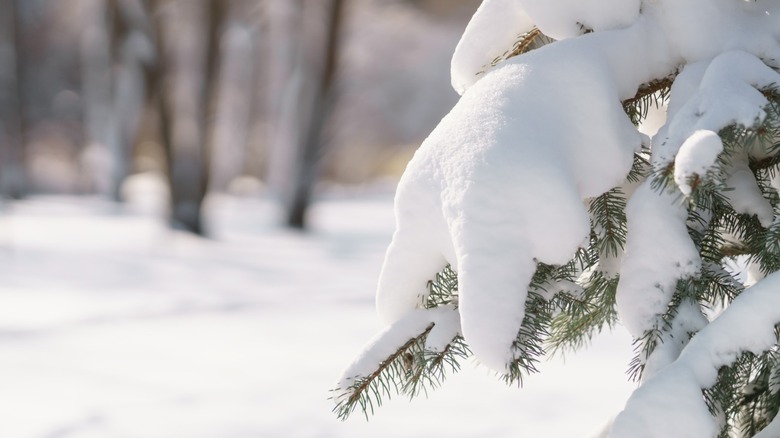
After a heavy snowstorm, clearing accumulation from your trees is just as important as shoveling the driveway. Built-up snow puts extra weight on your trees that can damage or even break the branches, especially if the trees are young or weak. Following a few tips to stay safe when removing snow from trees in your yard will prevent harm to them and you. With the right timing and techniques, you'll ensure that your trees remain whole come springtime.
Because their branches, roots, and trunks could be damaged by the frigid weather, it is important to protect trees from snow and ice damage during the winter months. Fortunately, you don't need expensive tools or extensive arboreal knowledge to get the job done. When removing snow from your trees, it is important to use extreme care to avoid accidentally causing damage. You will need a soft broom to remove the snow from the branches of your trees so you can keep your feet safely on the ground at all times. Make sure to dress for the weather with grippy boots and winter work gloves. If you are clearing branches from above your head, you may want to wear protection, such as a warm hat (and possibly a helmet) and goggles.
Safely removing snow from tree branches
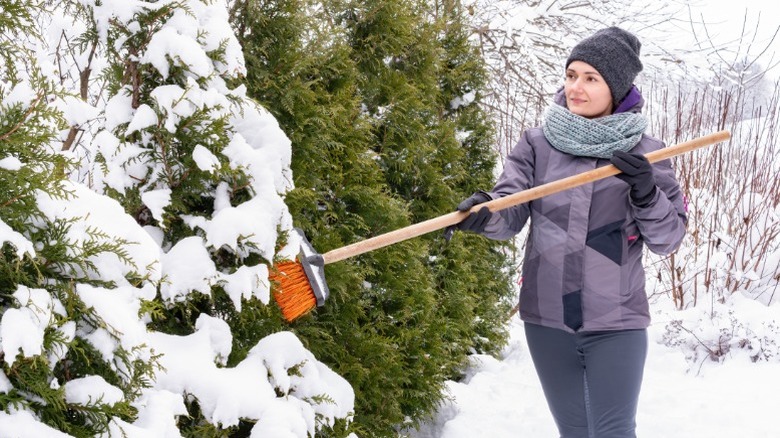
Some snow is light and fluffy and will be easy to remove, while dense, wet snow is more challenging to clear off and can cause more damage to your tree branches. Standing off to the side of the drop zone, knock off the snow with a broom by moving the branches with upward sweeping motions. Start from the lower branches, and work your way up. Gently brush the snow off the tree branches as you move up the tree. If the snow doesn't come off easily, it could be frozen. Don't push harder to force the frozen snow off, or it may cause damage.
Remove the snow as soon as you can, especially if you notice the branches are bending from the weight of the snow. Even if the branches are not bending yet, it is important to remove the snow to prevent it from freezing over. When the snow sits on the branches and refreezes, the branches are more prone to breaking. It is better for the health of your trees to remove snow as it accumulates to avoid the heavy weight of many inches of wet snow and ice weighing on the branches.
Avoid causing damage to trees and shrubs

You may be tempted to just shake the snow off your trees and shrubs. While this may work on young trees or those with very little snow, branches are more brittle in the winter. Shaking them could cause additional damage. Unless it is a light coating of fluffy snow, you should never try to remove snow by shaking your tree branches.
While removing heavy snow is important, think twice before removing ice from the plants in your garden this winter. If there is ice on the branches, leave it there and let it melt on its own. Trying to remove ice will result in broken branches and damage to your tree. Never use a de-icing product on your trees, as the chemicals are harmful to plants. As you work, pay attention to any safety issues that will require the help of an expert and check for signs that you might need to remove a tree. Damaged and leaning trees or branches hanging over structures or power lines can be hazardous, so you may want to call an arborist to help with pruning or removal to ensure you, your home, and your trees stay safe.