

Cleaning Your Wood-Burning Fireplace: Here's How Often (And The Best Methods)
We may receive a commission on purchases made from links.
There's nothing quite as relaxing and cozy as cuddling up by a crackling fire on a chilly evening. The comforting glow of a wood-burning fireplace feels like a warm hug, turning your home into a winter chalet or rustic farmhouse. But the next morning, you might start to notice the ash, soot, and overall dust that's building up. Yes, you need to clean your wood-burning fireplace.
As a rule of thumb, it's best to clean your wood-burning fireplace once every 50 burns. And even if you're not a heavy fireplace user, you should still clean it at least once a year. Of course, we're talking about deep cleaning here, not regular maintenance. Tasks like sweeping debris and ash left over after a fire should be done after each use, so don't wait. Then, after 50 burns, you should do a deeper clean involving scrubbing soot and cleaning the glass door, if there is one. This is also a good time to check your chimney and make sure all is in order.
This isn't just about dust and residue; it's about safety too. Maintaining your fireplace in tip-top shape will make it more efficient at heating your house, and it can help avoid chimney fires. Over time, keeping a fireplace clean is one of the best ways to make it last longer. While you're doing it, make sure to wear a respirator mask and protect floors and furniture nearby using tarps and towels.
When should you deep clean your fireplace?
While it's best practice to clean your fireplace every 50 burns, there are some times that are best suited for this. A main cleaning can be done in the warmer months of spring and summer, when the regular wood-burning season ends. This is a great time to clean out all of the ash residue that has accumulated, even with basic daily maintenance. This is also when you can scrub off soot and buildup, which will make the fireplace more aesthetically pleasing to look at during the off-season.
In general, fall is the best time of year for a fireplace inspection and another good point to consider a deep clean. As temperatures start to drop, make sure your chimney isn't a fire hazard in winter. Before your first fire of the season, check the fireplace and chimney for debris, animal nests, or buildup you might have missed during your last cleaning. Even if you cleaned the fireplace in the spring, this is a good time for a quick sweep to remove dust, pet hair, and other things that got lodged in there during the warmer months.
And of course, depending on how often you use your fireplace, you might reach the 50-burn mark before spring and need to do a deep cleaning mid-season. If that's the case, make sure to give the fireplace a full 24 to 48 hours to cool off completely after a fire. This might sound like overkill, but don't overlook it. Coals can stay hot for a long time; even if it looks cool, any embers in the ash could still easily start a fire.
What's the best way to clean a wood-burning fireplace?
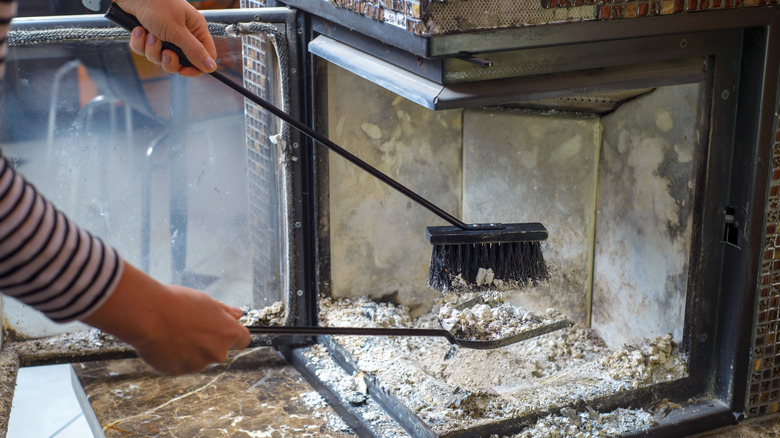
When you're ready to properly clean your fireplace, start by clearing it of any ash, wood, and coals leftover from your last fire using a hand brush, a hand shovel, and a metal bin to collect the mess. You can later repurpose your fireplace ash around the home and garden, like giving plants a boost and protecting them from pests. While you might be tempted to use your vacuum cleaner to go faster, don't! The small ash particles could break a household cleaner by blocking filters and motors. You may, however, use a special ash vacuum made of heat-resistant materials.
Once that's done, tackle the soot and ash buildup from the back, sides, and hearth of the fireplace. To do this, you'll need something to cut through the grime. One option is to use a commercially available soot remover, like Quick'n Brite Fireplace Cleaner, that is especially well-suited for brick and stone fireplaces. If the soot buildup is relatively minor, though, try to clean it first with a simple solution of dish soap, white vinegar, and water. This method works well with a hard-bristle brush and possibly some salt to help really loosen the blackened buildup.
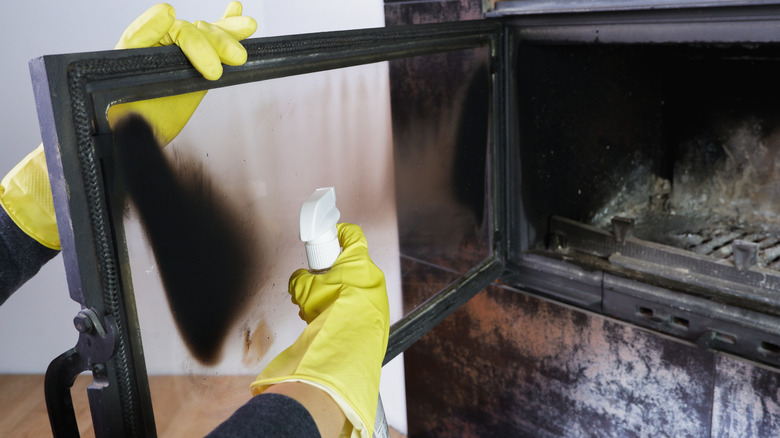
If you have an open wood-burning fireplace, this should be enough. But if your fireplace is glass-fronted, you'll also need to clean that. For this, you can use another commercially available solution, like Meeco's Red Devil Woodstove Glass Cleaner, or try a vinegar and water mix. The key difference between cleaning the glass and the inside of the fireplace is that, of course, glass is easier to damage and scratch. Therefore, steer clear of hard-bristle brushes, and use a microfiber cloth instead.