

How To Buff Countertop Scratches Based On Each Material
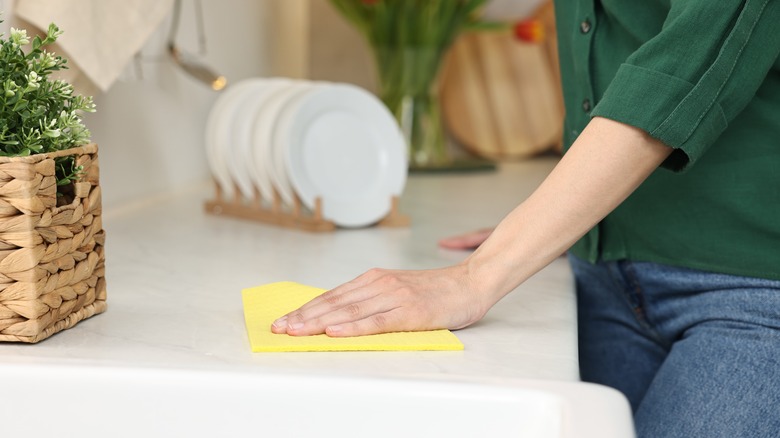
Finding the perfect countertop and keeping it in tip-top shape through the years is a work of art. Whether you have budget-friendly countertops or luxurious, high-end materials, your kitchen countertop will experience the highs and lows of daily life. If you drop a sharp knife onto it or slide pans across it, even the hardest, most durable countertops will start to show scratches. But don't worry — you can often buff scratches at home with some DIY methods. Each countertop material requires a unique approach. Ones made of softer stone, like soapstone, scratch more easily but can be fixed at home without any specific tools. Some harder materials, like quartz, require using a grinder and special buffing pads to remove scratches.
Either way, there is usually a solution as long as the scratches are light and shallow. If, however, these at-home buffing techniques don't work, you might be dealing with deep and more stubborn scratches. In that case, you'll probably need to call a professional countertop expert to come and fix it, which will cost a few hundred dollars.
And scratches on a kitchen countertop are more than just an aesthetic issue — they're an issue of cleanliness. Over time, debris and bacteria get lodged in the scratches, which is far from ideal. Having a scratched kitchen countertop is less hygienic and can make keeping the kitchen clean and safe more difficult — all the more reason to try and buff these scratches at home if you can.
Granite
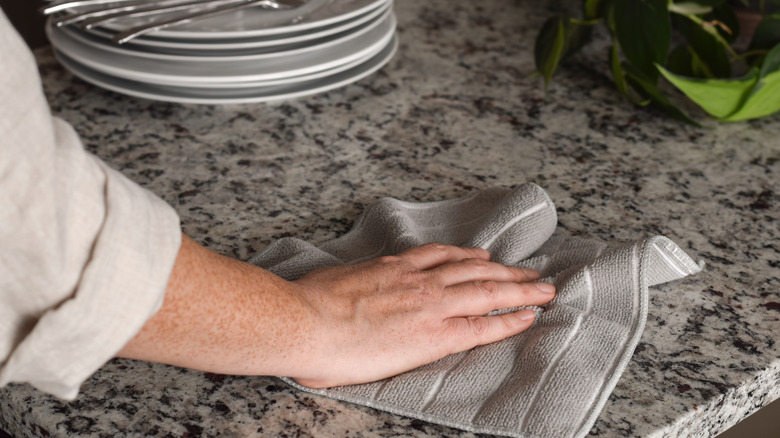
Granite is a great material for kitchen countertops because of its incredible durability. Even when exposed to heat, it doesn't blister, melt, or stain. It's more resistant to scratches than some other materials because of its hardness. However, accidents happen, and it might scratch and chip once in a while, especially if you drop heavy, sharp tools on it. To remove scratches from granite countertops, you just need some granite polish. Apply the polish paste to the scratches with a soft cloth, and buff in circles. After a few passes, the scratches will disappear.
Marble
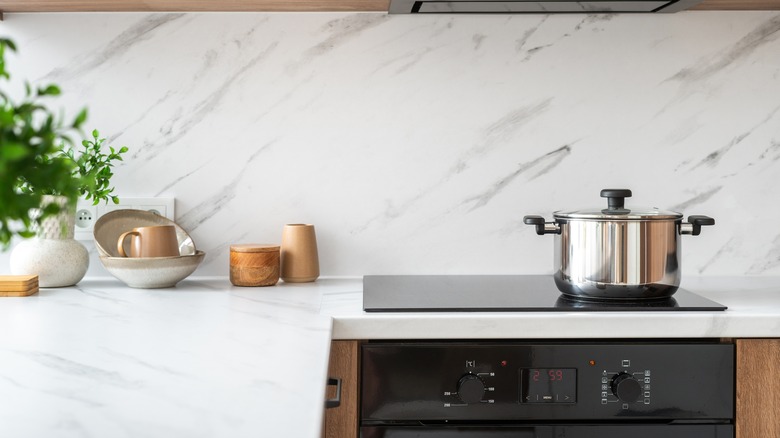
Marble is more high-end and rare than granite, which also means that it's more expensive and high-maintenance. While being long-lasting, it's also a softer stone that can be easily scratched. The good news is that you can buff scratches on your own, as long as they're not too deep. To do this, use dish soap and water to clean the scratch. Then, go in small circles over the scratch with some fine-grit sandpaper and water. Rinse the area, and grab a dry cloth to buff it before using some marble polish to make the countertop shine.
Quartz
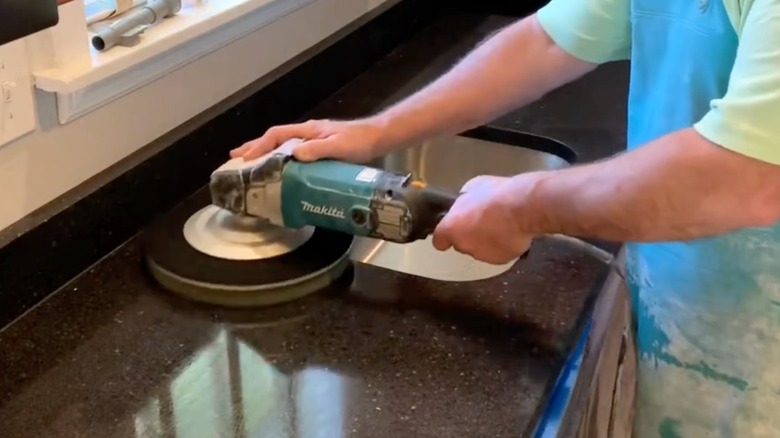
A more accessible and affordable option that's still high-end and luxurious is quartz. It's durable, but like any material, it's not immune to small scratches. However, removing them isn't the easiest process. To do it, you'll need a set of pads, like these Polishsurf diamond polishing pads. These attach to a grinder and gently buff out an area of your countertop, making scratches disappear. Buff the area with a polish to bring back the surface's shine so it matches the rest of the countertop.
Soapstone
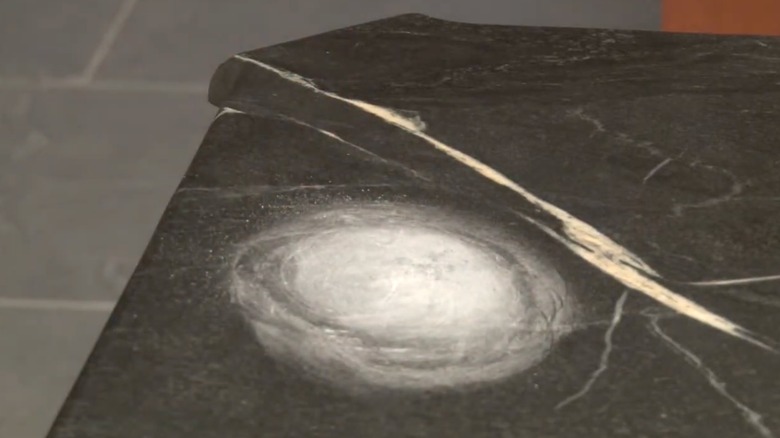
Soapstone is a much softer material than stones like granite and marble, which makes it more susceptible to scratches. However, its softness also makes it easier to fix. All you need for this is a bit of mineral oil and some 300-grit sandpaper — no special tools required. Sometimes, the oil on its own will be enough to make the scratch disappear. If not, rub the area with sandpaper, remove the dust with a sponge or rag, and once the surface has dried, apply mineral oil. Your countertop will look brand new.
Laminate
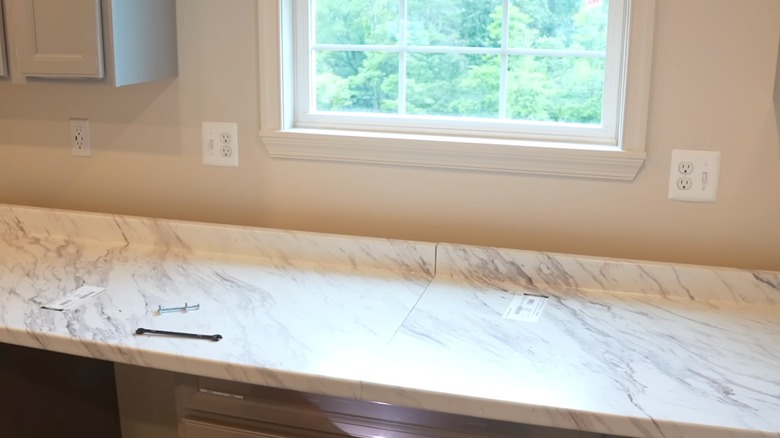
Laminate countertops are a great choice for budget-conscious families. These are much cheaper than other countertops; they can be made to look like other materials and installed without professional help. Over time, scratches may appear on the laminate — but they can be hidden. Simply clean the surface with dish soap and water, and then apply some furniture wax over the scratch. Once the wax has dried, use another clean cloth to buff it, which will make the countertop look uniform and scratch-free.
Wood
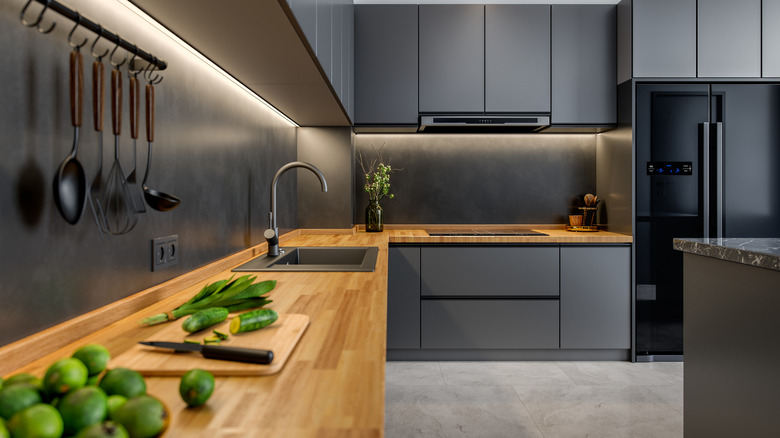
If you have a more rustic, farmhouse-style kitchen countertop, it might be made of wood. While charming, warm, and inviting, wood tends to be more easily damaged than stone because of its softness. To remove scratches on wooden countertops, the best technique is to use 240-grit sandpaper and fully remove the scratch. Then, a simple layer of oil should help restore the area's shine and make the countertop look uniform.
Stainless steel
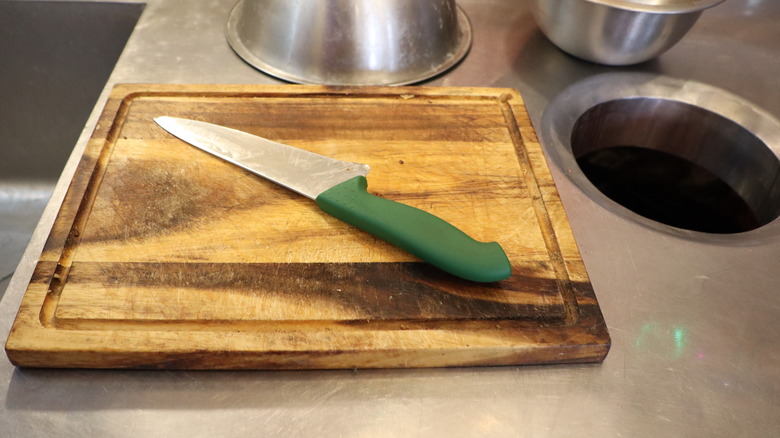
Stainless steel countertops are an absolute joy for any serious at-home chef. They're hygienic, heat-resistant, and a breeze to clean after a cooking session. However, they do scratch easily. To remove scratches from stainless steel countertops, your best bet is to use a paste of baking soda and water. With your hand, work the paste into the scratch, then wipe it clean with a cloth. Some people also use toothpaste for this, or store-bought commercial stainless steel cleaning products. Over time, the accumulation of scratches will become more visible, so it's best to avoid things like steel wool.
Tile
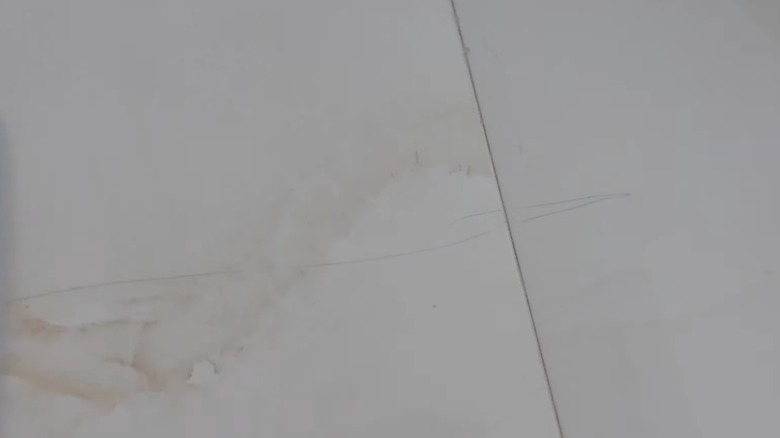
Tiled countertops are less common, but they have a unique charm. Both timeless and modern, tiled countertops allow you to bring color and patterns into your house. To remove minor scratches from tile, try making a baking soda-and-water paste. After rubbing the paste into it, you should see the scratch fading away. If the scratches are too deep for baking soda, you can try using car wax or brass polish, but make sure to clean the area well afterwards (these aren't food safe).
Concrete
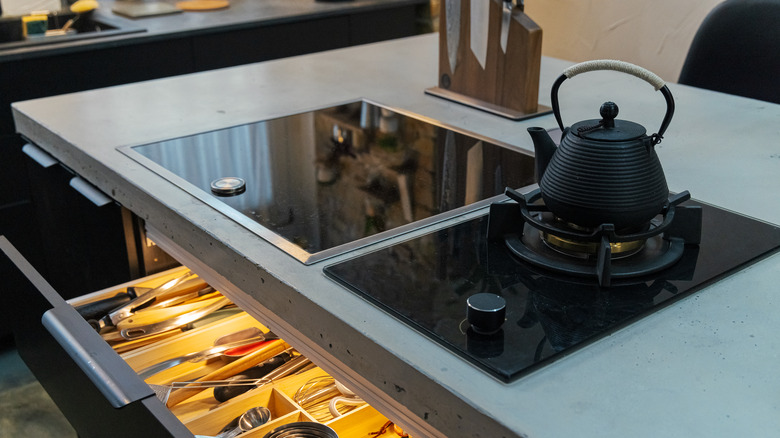
Concrete countertops are especially common in modern homes because of how customizable they are and thanks to their unique industrial look. This material is rather hard, which means it won't scratch easily. Oftentimes, what looks like a scratch is actually damage to the layer of sealer that's on the concrete. To buff these off, apply another layer of sealer to the scratch or to the entire countertop. In any case, this is an essential step in concrete countertop maintenance because sealing prevents water and food from penetrating the material.
Glass
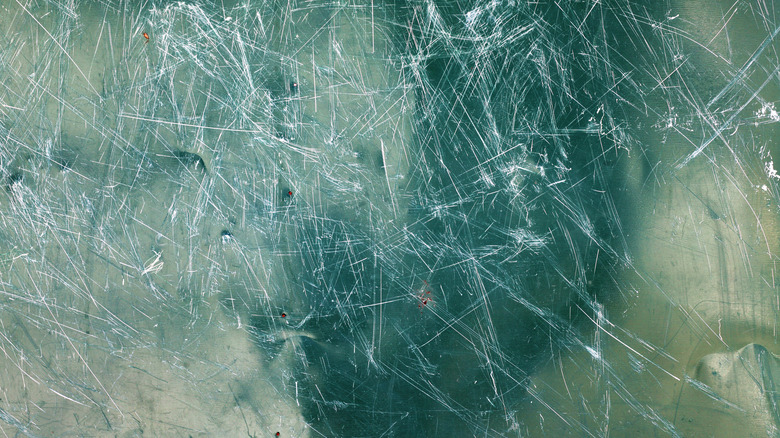
Glass countertops are fairly rare, simply because they're not really convenient or practical. Part of the reason is that glass is incredibly easy to scratch and damage, which makes it a significantly less attractive choice for a high-traffic area full of sharp objects, like a kitchen. To remove a scratch from glass countertops, buff a paste of baking soda and water into it. With a soft cloth, remove the paste residue and repeat as needed. There are also some commercial glass scratch-removing solutions that you can buy if natural solutions don't work.