

Heated Driveways: What To Know Before Buying & Installing

Another snowstorm, another trek into the frigid outdoors bundled up like a little kid headed to their first snowball fight. Unearthing the snow shovel or trying to remember how to use a snow blower on the driveway likely aren't high on your list of favorite things to do before you can even start the car. A heated driveway seems like the solution you didn't know that you were looking for, but it could be a costly luxury if it only snows once or twice a year where you live. Costs can vary from place to place depending on the cost of energy in your region, contractor expenses, the size of the driveway, and how much snow you get each winter. Other considerations include which type of system you choose and whether or not you'll be building a new driveway or remodeling an existing one. Generally, the cost to build a heated driveway ranges from $12 to $28 per square foot, but the cost for a two-car driveway can reach as high as $16,000.
There are many obvious benefits to having a heated driveway. No more shoveling or paying someone else to keep your driveway free of snow, no more worrying about a loved one or a delivery driver slipping on ice. Since you won't need them, your yard won't be exposed to the chemicals in deicers. Heated driveways are low-maintenance can last over 20 years before they have to be repaired or replaced, but they do present a few hurdles. In addition to higher electric bills, if part of the system breaks, you'll most likely have to tear up the part of the driveway that contains it.
Multiple factors can affect the cost of a heated driveway
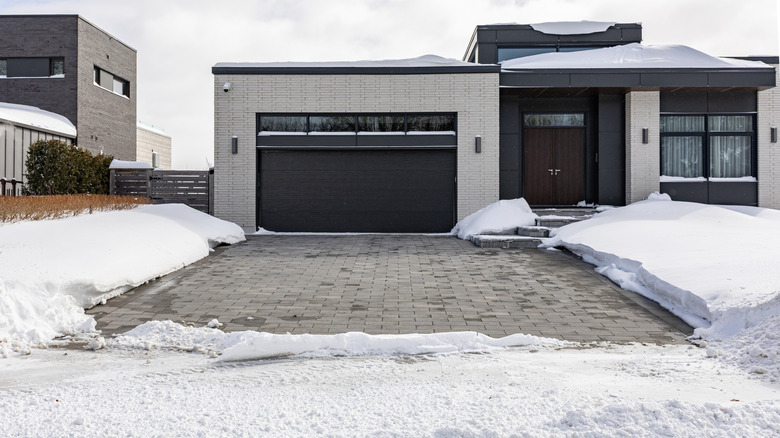
Consider the type of system you'll need when you're thinking of buying a heated driveway. For an electric system, installation runs from $3,200 to $5,800. Hydronic systems can cost more to install, around $4,000 to $8,700. No matter which system you choose when you replace your physical labor, keep in mind that you'll be adding to your energy bill, unless you choose to install efficient solar panels in winter. When they're operating, electric driveway systems use between 35 and 50 watts per hour to heat the driveway. While they cost more to install, hydronic systems typically cost less to operate.
Electric systems use mats, coils, or wires that are heated by electricity while hydronic systems use heated liquid, and both run under the surface of the driveway. They can cover the entire driveway or just the tire tracks, and a sensor tells the system when to automatically turn on and off, either by detecting snowfall or a low temperature. Usually the controller for the system is installed in the garage, but hydronic systems will also need a boiler to heat the liquid. Hydronic systems work better in areas with very cold temperatures and heavy snow, but they're more likely to need maintenance.
Heated driveways don't have to be installed at the same time you build the driveway; they can be installed on top of an existing driveway and covered with small pavers, which may be better for easy repairs. When installing a heated driveway, it's worth assessing other high-traffic areas too. These systems can also be used to keep walkways, patios, and steps clear of snow and ice.