

15 Holly Plant Varieties That Add Year-Round Interest To Any Garden
We may receive a commission on purchases made from links.
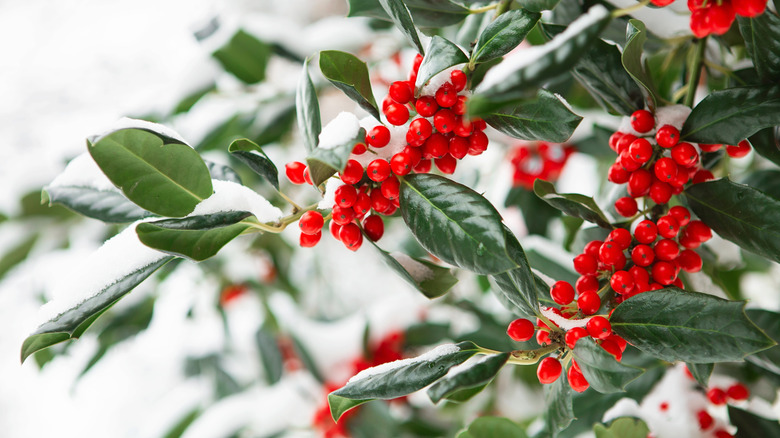
It's hard to resist the allure of flowers for making our yards gorgeous during summer — but focusing solely on blooms can make our outdoor spaces feel a bit sad during the rest of the year. That's why many gardeners choose to grow holly bushes to add year-round interest. Whether you're looking for evergreen foliage or bright red berries that will make your yard look festive during winter, don't overlook gorgeous species like American holly (Ilex opaca), winterberry (Ilex verticillata), and their varieties when planning your landscaping. In addition to members of the Ilex genus, some other species are commonly called hollies, such as Oregon grape holly (Berberis aquifolium), which may be ideal for gardeners in locations where Ilex species don't naturally grow.
Evergreen hollies provide lush shades of green year-round, which is especially welcome in winter, when deciduous trees cut stark, grayish-brown figures in our yards. In spring and summer, the flowers of holly plants tend to be inconspicuous, but they can attract eye-catching butterflies, bees, and other pollinators to our yards. When autumn comes around, these trees and shrubs produce colorful berries that are held on their branches throughout the cold months, providing a welcome source of cold-weather color. Whether your interest is in winter berries, evergreen foliage or the ways to use these varieties in the garden, you'll learn what to expect from the following selections so that you can easily pick the best options for your yard.
American holly
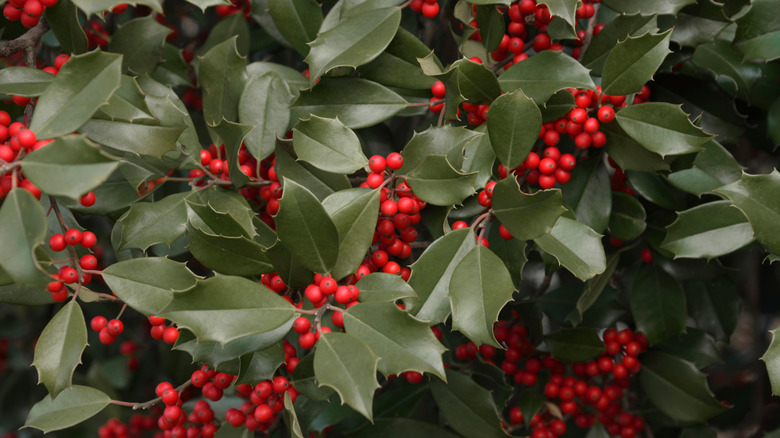
American holly (Ilex opaca) offers year-round, spiny, green foliage, and bright red berries in winter. Instead of English holly – which is one of the invasive shrubs you should never plant in your yard – grow this plant native to the eastern and central U.S. Best suited for large spaces, the tree can reach up to 60 feet tall and 20 feet wide. Gardeners in USDA Hardiness Zones 5 to 9 can add this festive tree for years of evergreen beauty – but be sure to grow a male specimen to help females fruit.
Dahoon
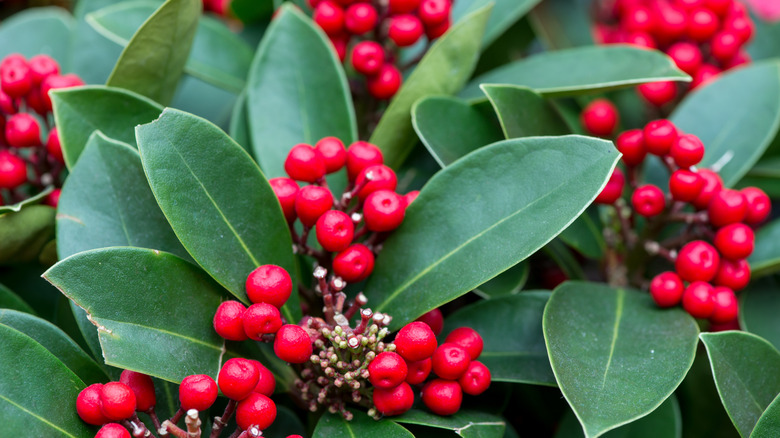
Dahoon (Ilex cassine) is an evergreen tree or shrub with leaves that lack the characteristic spines of some other hollies. This southern U.S. native is a good alternative to privet, one of the fast-growing evergreens you'll want to avoid. Dahoon produces red or golden berries that are displayed from fall through winter, and can reach up to 30 feet tall and 15 feet wide. Gardeners in zones 7 to 11 might want to use Ilex cassine for pollinator gardens, privacy screens, or salty areas. Add a male shrub along with females for berries — or content yourself with yearlong foliage.
Inkberry
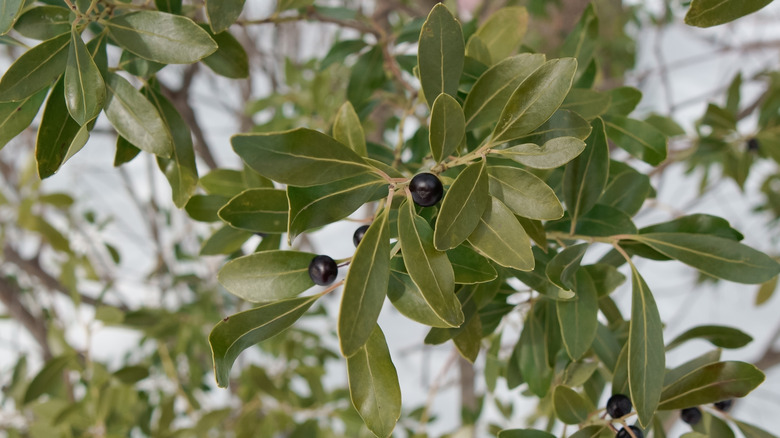
Inkberry (Ilex glabra) is a type of evergreen holly that bears black berries and spineless leaves, and reaches approximately 10 feet tall and 8 feet wide. This Ilex species has a wide native range along the eastern and southern U.S., making it accessible to gardeners in zones 4 to 11 for foundation plantings and hedges. Inkberry is also an easy-to-grow shrub that creates year-round privacy and feeds pollinators. You'll also need to add a male in order for the female shrubs to produce berries.
Winterberry
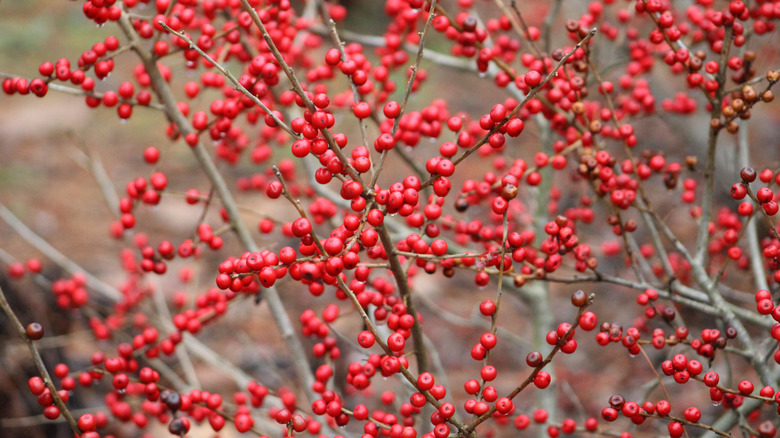
If you need year-round interest in zones 3 to 9, consider winterberry holly (Ilex verticillata). When the autumnal yellow, spineless leaves of this deciduous shrub or tree fall, the branches are covered with showy red berries, making it absolutely stunning in winter. You'll need a male winterberry as well as females for those red fruits. The size of these plants varies, ranging from 3 feet tall and wide to 15 feet tall and 12 feet wide. Ilex verticillata is a deer- and salt-resistant plant, native to the eastern U.S., that can be added to pollinator gardens.
Oregon grape
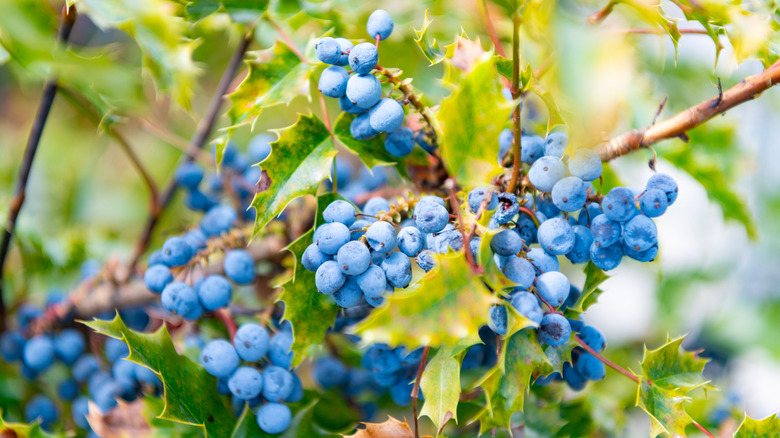
Oregon grape holly (Berberis aquifolium), also known as holly-leaved barberry, is native to the Pacific Northwest. This shrub reaches up to 6 feet tall and 5 feet wide, with spiny, evergreen leaves and edible, blue berries that ripen in fall and attract birds. Preceding those delectable fruits are showy clusters of yellow flowers that are born in spring. Grow Oregon grape in zones 5 to 9, where you might consider it as a foundation planting for year-round color, or for a border or shade garden.
Possumhaw
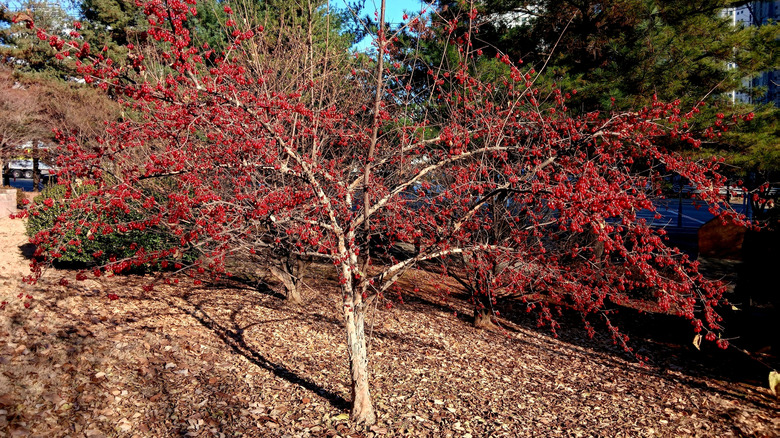
Possumhaw holly (Ilex decidua) is an adaptable shrub or small tree that puts on a magnificent winter show of branches covered with orange to red berries that last through winter — or until birds devour them. This native to the southeast U.S. has spineless, deciduous leaves, can be added to yards and gardens in zones 5 to 9, and is particularly fabulous when grown in mass plantings. Possumhaw holly reaches up to 15 feet tall and 12 feet wide at maturity. Make sure to include a male specimen alongside females for a more abundant display of berries.
Toyon
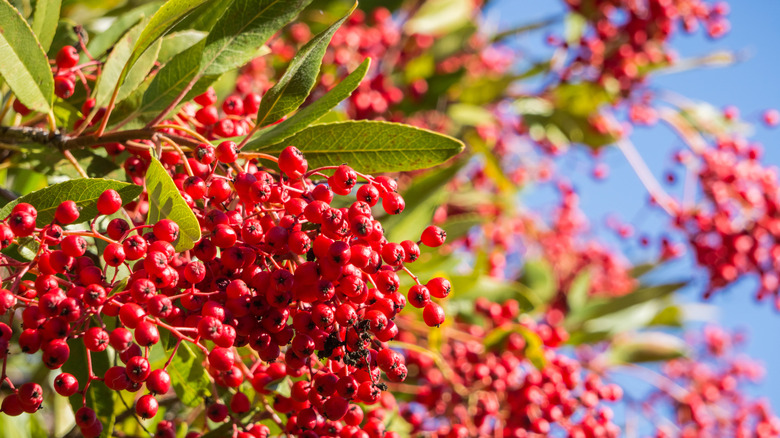
Toyon (Photinia arbutifolia) grows natively in California, and is loved for its spineless, evergreen foliage and red, winter berries. Also known as Christmasberry or California holly, this 6- to 30-foot-tall shrub bears fragrant, pollinator-friendly flowers during summer, grows quickly, and requires little maintenance. Add toyon to gardens in zones 7 to 9 for a drought-tolerant plant that is stunning all year long and benefits birds, bats, and butterflies. Toyon is a fire-resistant species that can be installed on slopes to help prevent erosion.
Yaupon holly
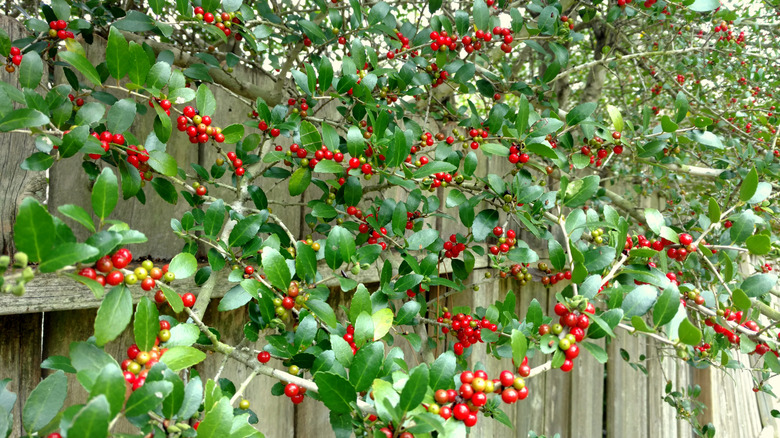
Yaupon holly (Ilex vomitoria) is a shrub or small tree that livens up yards with spineless evergreen foliage throughout the year, and clusters of red berries in winter. Yaupon reaches up to 20 feet tall and 12 feet wide, and can be grown in zones 7 to 9. This native to the eastern U.S. provides cold-weather food for wild birds, is important for butterflies and bees, and its caffeine-containing leaves and twigs can be used to make tea. Be sure to add both male and female plants to your garden if you want the ornamental winter berries.
'Merry Christmas'
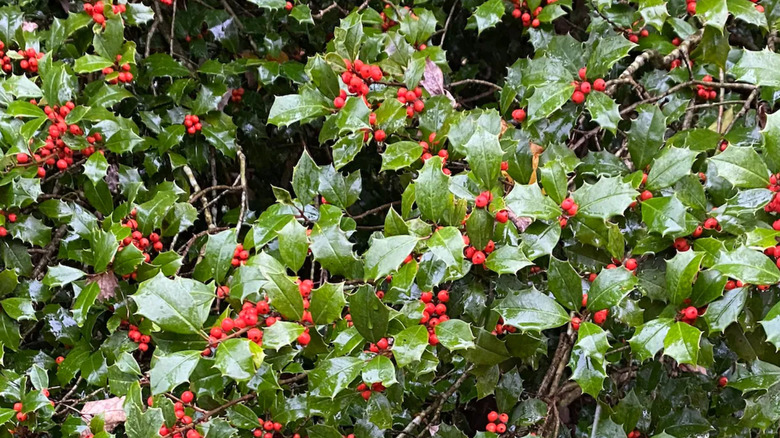
When you add 'Merry Christmas' holly (Ilex opaca) to your yard, you'll have an abundant supply of evergreen foliage and berries to decorate with for the holidays each winter. This female American holly cultivar has glossy, dark-green, spiny leaves and a naturally conical shape. This variety grows to be 40 feet tall and 15 feet wide at maturity, and can be included in landscapes for year-round greenery in zones 5 to 9. Be sure to plant a male American holly nearby so the females will produce their cold-weather berries.
'Condeaux'
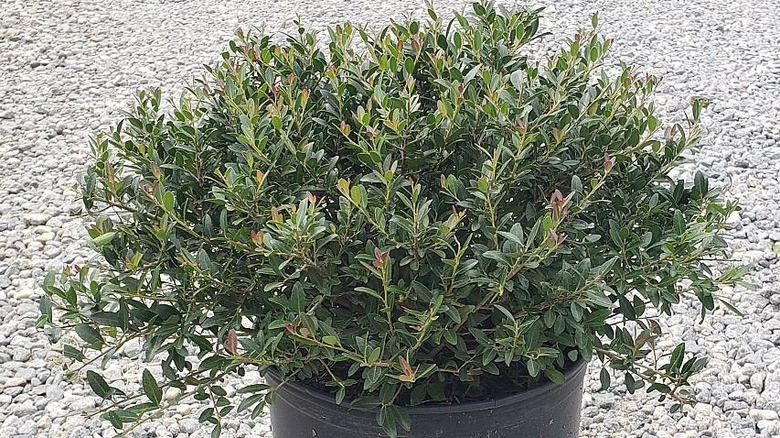
'Condeaux' is a cultivar of yaupon holly (Ilex vomitoria) known for its red, winter berries and fine, spineless, evergreen foliage that is tinted burgundy when new leaves are produced, or cold weather sets in. This bush — also known under the trade name 'Bordeaux' – reaches just 3 feet tall and can spread to 5 feet wide. Thanks to this variety's compact growth habit and dense foliage, 'Condeaux' is a low-maintenance shrub that gives your yard a polished look year-round. Add 'Condeaux' to gardens in zones 7 to 9, and choose both male and female plants for fruit.
'Little Goblin Red'
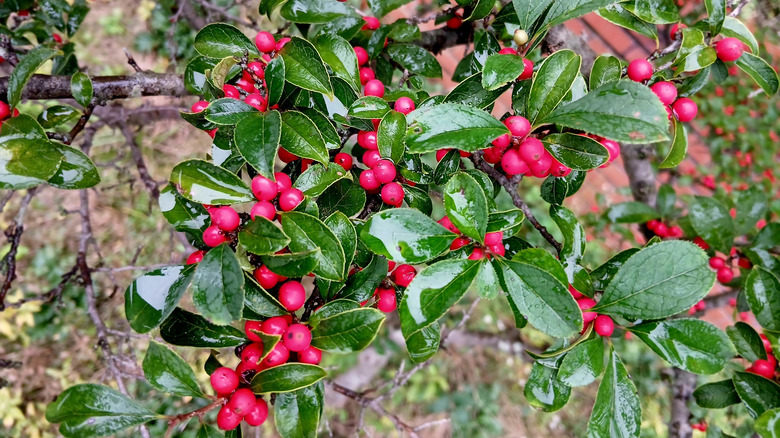
Hollies are such useful landscaping plants that you may want to seek out some of the smaller options for year-round interest, such as 'Little Goblin Red,' a cultivar of winterberry (Ilex verticillata) that has spineless, deciduous leaves. Like the straight species, 'Little Goblin Red' is a bush whose branches are loaded with red berries in winter. This variety differentiates itself as a compact shrub that reaches up to 4 feet tall and wide. Gardeners in zones 3 to 9 can grow 'Little Goblin Red,' but to ensure fruiting, add a 'Little Goblin Guy' alongside these bushes.
'Jersey Knight'
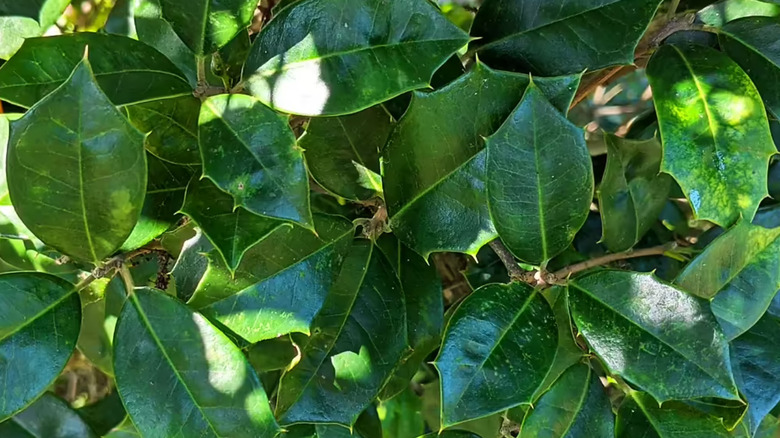
Are your American hollies not producing berries? You may not have planted a male along with your female. 'Jersey Knight' is a cultivar of Ilex opaca that aims to solve this problem by providing the small male flowers required for pollination, along with green foliage year-round. Like its female counterparts of the same species, this male variety has spiny evergreen leaves and can grow in zones 5 to 9. However, unlike the straight species, 'Jersey Knight' doesn't bear fruit and remains a manageable size for the garden as it only reaches 8 feet tall and 4 feet wide.
'Maryland Spreader'
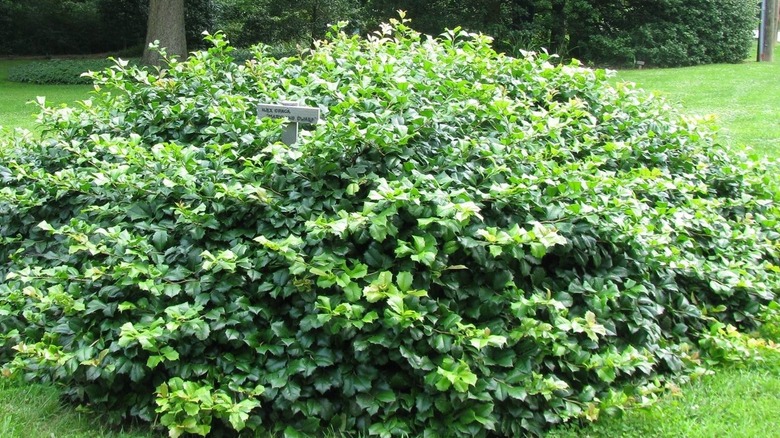
For a squat, mounding holly bush that will bring year-round interest, turn to 'Maryland Spreader.' This attractive cultivar of Ilex opaca reaches just 3 feet tall, but can spread to 10 feet wide. Gardeners in zones 5 to 9 will want to grow this spiny-leaved Ilex — also known as 'Maryland Dwarf' — for hedges, to attract birds, or as a cutting shrub for Christmas greenery. 'Maryland Spreader' is a female variety, so add a male American holly nearby to ensure beautiful red berries for the winter.
'Red Sprite'
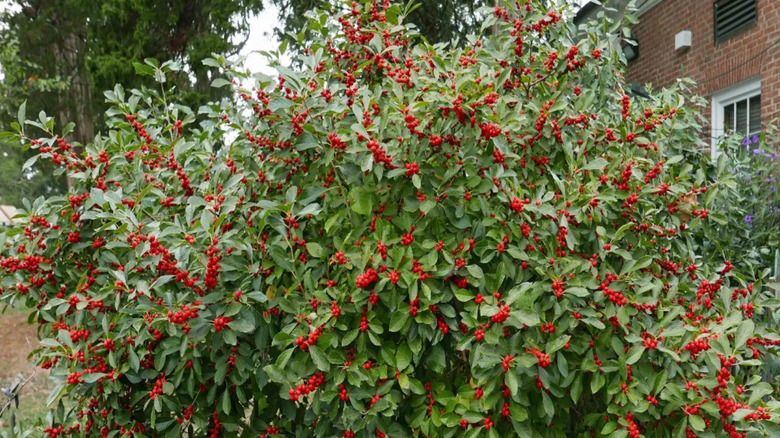
Looking for eye-catching winter color for zones 3 to 9? Consider 'Red Sprite,' a cultivar of Ilex verticillata that looks gorgeous in every season. Also known as 'Nana,' this small bush with spineless, deciduous leaves is a favorite of birds, thanks to its abundant, large, red berries that last all winter. This very compact variety reaches just 3 feet tall and wide, making it extremely versatile – you can use it in a rain garden or on a slope to prevent erosion. 'Red Sprite' is a female plant, so be sure to grow a male winterberry alongside it.
'Miss Helen'
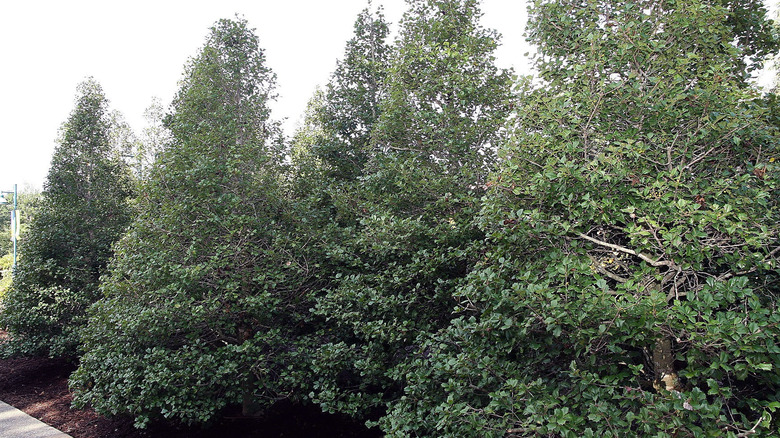
If 'Merry Christmas' is too tall for your yard or garden, 'Miss Helen' will make an excellent alternative, reaching 25 feet tall and 18 feet wide after many years of growth. This female variety of Ilex opaca has a naturally conical shape, dense foliage, spiny evergreen leaves, and a load of large, red berries, making it a beautiful plant in every season. Add 'Miss Helen' in zones 5 to 9, where it will offer a welcome source of food for birds during the cold months – as long as you plant a male American holly nearby.