

8 Types Of Stains On Your Leather Furniture & The Best Way To Clean Them

We may receive a commission on purchases made from links.
Leather is a lovely material for living room furniture. It adds visual warmth and an air of sophistication to any home. What's more, if you sit on a leather couch on a hot day, it will transfer the room's ambient temperature to your skin (unless it's positioned in direct sun). That's why leather often feels cool to the touch. Leather is also more durable than fabric if you care for it correctly, and, generally speaking, a leather couch is easy to clean — unless, of course, you spill a few specific things on it. Pet urine, red wine, pen ink, candle wax, makeup, and even plain old water can stain leather. Cleaning them requires some ordinary and some unexpected products and tools: Castile soap, rubbing alcohol, cornmeal, warm water, a hairdryer, and a damp rag, among others.
You probably find yourself cleaning stains off your furniture all the time, especially if you have kids or pets. This might even dissuade you from purchasing leather furniture. It's often expensive, after all. If you ditch fabric couches and chairs for leather, however, you will spend less time cleaning. Unlike fabric, leather does not absorb allergy-triggering dirt and dander. It's also easier to remove pet hair from leather. Perhaps the biggest benefit of leather is that it does not absorb stains as easily as fabric. If it does get stained, you're cleaning a smooth (albeit microscopically porous) surface instead of fibers. You just have to know how to clean leather properly, so you don't cause further damage. Best of all, most of the ingredients you should be using to clean your leather sofa are natural.
Remove ink stains with rubbing alcohol
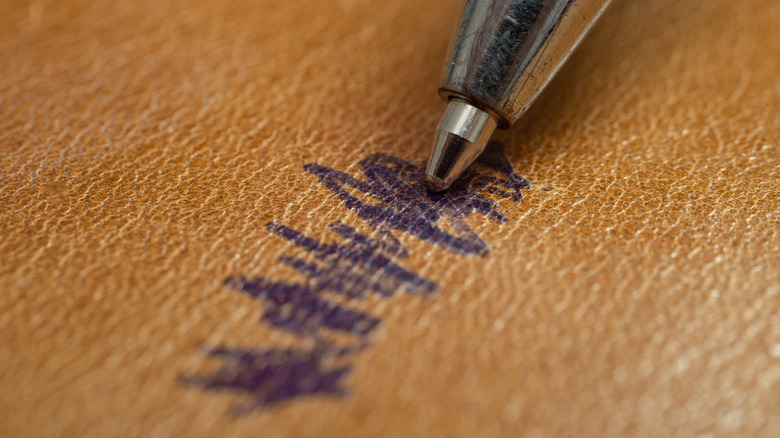
Act fast while the ink is fresh. Dab (don't rub) the stain with a dry microfiber cloth or paper towel. Rubbing will force the ink into the material. If any ink is left or it's dry, wet a cotton ball with isopropyl or rubbing alcohol and, once again, dab at the stain. The alcohol should lift any remaining ink from the leather. You might have to repeat this method. If you do, turn the ball or swab, so you're dabbing with a fresh side. Otherwise, the leather may reabsorb the ink you've already removed.
Clean wine stains with Castile soap

Red wine stains are hard to remove from leather. Grapes contain tannin and natural dyes. Once again, you need to act quickly. Start by blotting the wine with a rag or, preferably, a white microfiber cloth. The latter is more absorbent. Then mix some Castile soap into lukewarm water until the solution becomes sudsy. Blot the stain with a sponge soaked in the soapy water, rinse it with a wet cloth, and allow it to air dry. Still see the stain the next day? Clean the couch again with saddle soap or leather cleaner.
Urine stains benefit from an application of enzyme cleaner
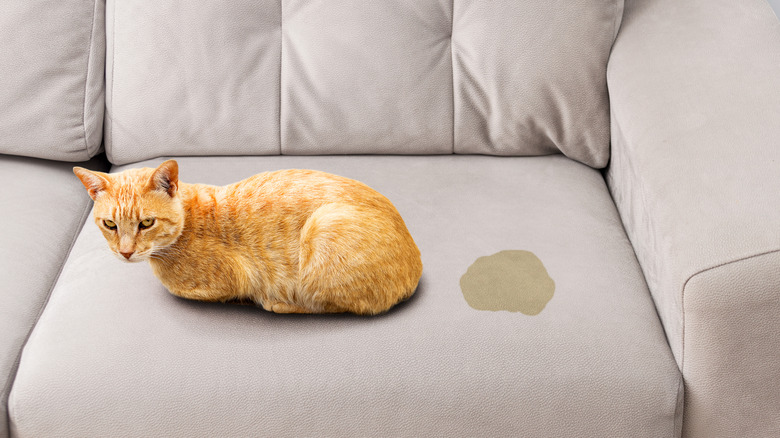
Sometimes your pets go to the bathroom on your furniture. For leather, one of the most common cleaning mistakes you can make with urine stains, like all stains, is not cleaning it up as soon as you can. If you don't notice right away, the urine can dry and leave moisture rings on your upholstery. Start by sopping up any moisture that's left. Then use a leather-safe enzyme spray, such as Nanoskin Store's enzyme multi-purpose cleaner, to help mask any remaining urine. This cleanup process may not reverse water damage, but it should reduce it.
Butter stains are removed with talcum powder

Do you eat popcorn or sandwiches in the living room in front of the TV? There's a good chance you'll spill melted butter or oily butter-like spread onto your leather couch at some point. Start by scraping off as much of the butter as you can with a spoon. Sprinkle talcum powder onto the remaining stain and leave it for two hours. Remove the powder with a brush or vacuum, and wipe the area with a wet, slightly soapy rag. Still a faint stain? Apply a spritz of Leather Master Leather Care Degreaser.
Treat cosmetic stains with soap, water, and cornmeal
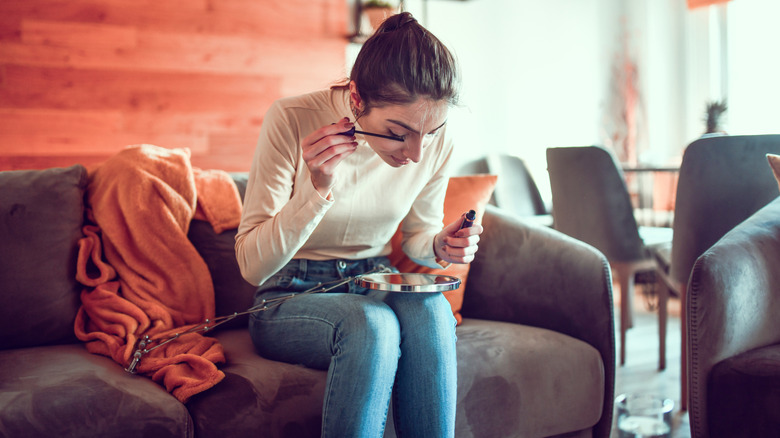
Typically, makeup doesn't leave bad stains on leather. Tan or russet-colored leathers are more likely to absorb stains than darker hues. If you get makeup on your leather upholstery, you should wipe it off with a dry rag. Then, mix a little soap into water, dip a rag into the solution, and dab the stain. Still see grease or oil after cleaning the suds away? Sprinkle cornmeal on the stain and leave it overnight to absorb the grease. Repeat as needed. Apply leather conditioner to your couch once the stain is gone.
Candle wax removal requires a hair dryer
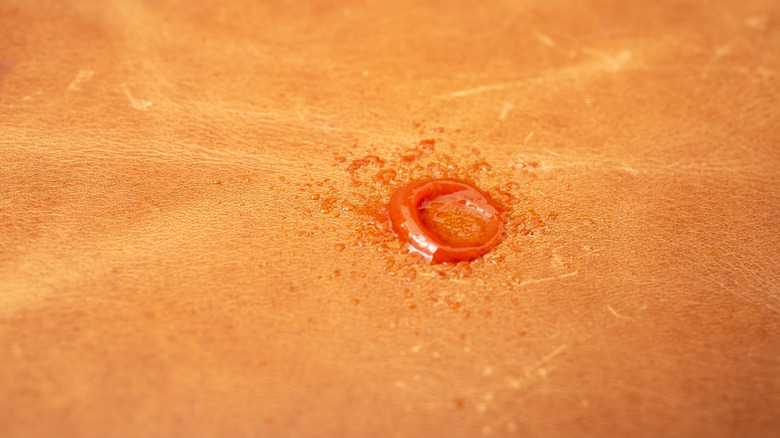
There's no better way to create an atmosphere than with scented candles. Candles, wine, and a leather couch are a fine pairing, but like wine, candle wax can stain leather. The easiest way to remove spilled candle wax is to reheat it, turning it liquid once again. Hold a hair dryer over the wax spot and blot it up with a dry paper towel. If you have a suede or aniline couch, the material can absorb the wax, so only heat it until it's mushy. Scraping the wax will scratch the leather.
Clean fabric dye stains with isopropyl alcohol

Dyed fabrics can stain leather — and especially suede — couches. The dye from blue jeans, transferred to the couch via friction and moisture, is the worst. Once the pores in the leather fill with dye, it can be challenging to remove. A bottle of isopropyl or rubbing alcohol is your best friend. Alcohol, like any solvent, will dissolve the stain and help to extract it from the leather. Pour a little alcohol on a white rag. Rub the stain to remove it, replacing the rags as they change color to avoid spreading the stain.
Get rid of water stains with Castile soap
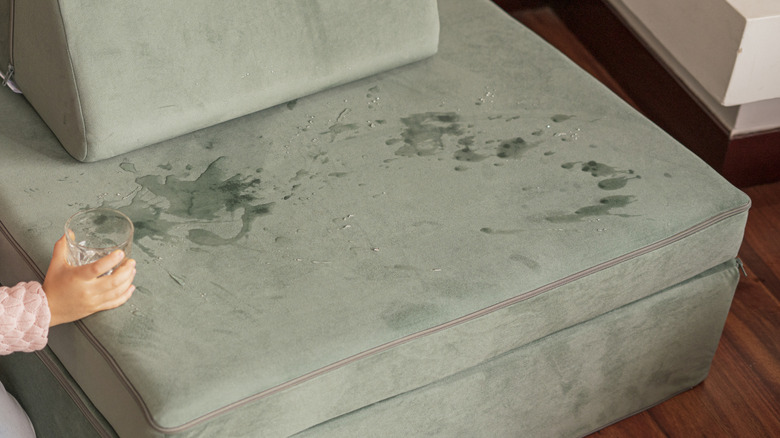
Water can leave discolored rings on a leather couch that you likely can't remove completely. However, you can reduce them significantly. First, rub your couch with a damp microfiber cloth — the whole couch, not just the stained areas. Mix one part Castile soap with eight parts lukewarm water in a spray bottle. Spritz the solution onto the couch, then rub it lightly with another cloth in a circular motion. Pat the couch dry and apply a little beeswax, a natural ingredient that creates a protective layer on your leather furniture.