

Say Goodbye To Winter Chills: The Long-Burning Firewood That Keeps Your Home Extra Warm
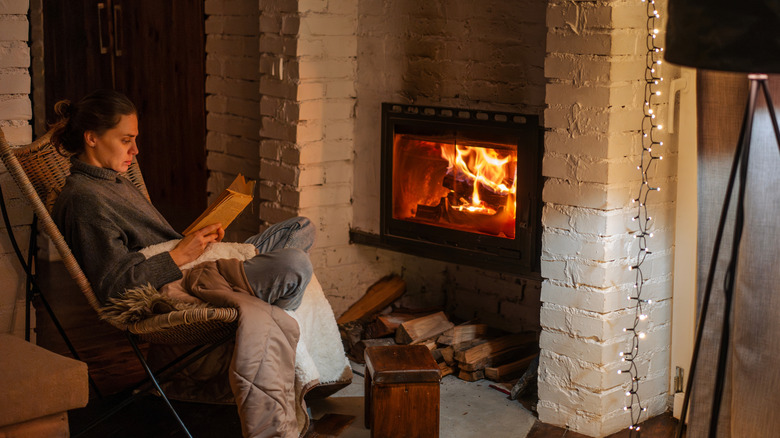
A merrily burning wood fireplace is the quintessential element in a Hallmark Christmas movie. Now, you may want to recreate this to turn your home into a winter wonderland or bask in the glow and warmth of the ignited logs. Either way, your grand plans will turn into a smoky and creosote-filled affair if you stick with the worst types of wood for your fireplace in the winter – that is, green wood, rotten wood, or treated wood. Softwoods like pine can be burned in your wood-burning stove, but carry downsides.
Instead, go with hardwoods. And your hardwood of choice should be oak if you really want to beat the chilly weather and keep your home warm. Although more expensive than its counterparts, it burns longer and gives off high heat. What more could you want?
That being said, not just any oak will do. You need good quality logs that have been seasoned — that is, left to dry, a process that can sometimes take up to 24 months. Ideally, you shouldn't burn oak with a moisture content higher than 15 to 20%. Following this simple strategy will ensure your fires burn cleaner, and also won't promote mold growth. With that said, don't just trust any vendor who claims their wood is seasoned, because burning unseasoned green wood is a key mistake when it comes to fire safety. Always inspect any wood you receive: It should feel lighter, dryer, and you can test it with a moisture meter to be absolutely sure. If this all seems like too much work, look for a vendor that retails kiln-dried logs for a hassle-free experience.
Benefits of choosing oak firewood to keep your home warm
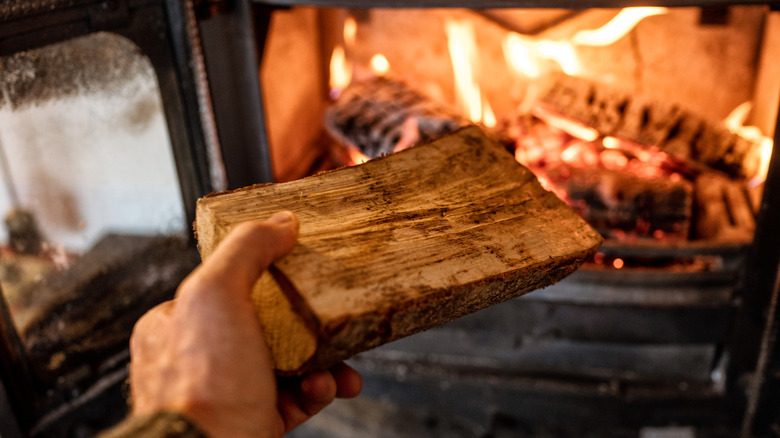
As mentioned above, oak is a top firewood choice because it's denser than other kinds. This forces it to blaze slowly, which, in turn, extends its burning time. In short, you get more out of each log. But its winning quality is the amount of heat it gives off. You can expect each cord (128 cubic feet of firewood) to release anywhere between 26.2 and 29 million BTUs (British Thermal Units) of heat. The exact amount will depend on the type of oak you pick. For example, white varieties emanate about 27.5 BTUs, whereas pin emits 25.9 BTUs, and red as well as bur emit about 24 BTUs. Whichever variety you go with, your living room will feel all toasty during the cold and dreary winter months.
As long as any wood is seasoned (and not rotted or pressure-treated) it will burn clean, so you can rest assured that seasoned oak won't cause the sort of excess of creosote that would lead to home fire when you least expect it. That said, regular chimney cleanings are still necessary, no matter what you burn. And while oak comes with a lot of pros, the one big con is that the same things that make it burn long and hot also mean it doesn't catch fire as easily as a softwood like pine, so have some kindling or fire-lighters handy when you burn them in your fireplace.
The best part, though? This type of wood is readily available, so you won't have to search high and low to get your hands on a cord.
Tips to help you make the most of your oak firewood
Even though oak is a premium choice for wood-burning fireplaces, it can be a little taxing on your wallet. To illustrate, a cord of this hardwood can cost anywhere between $250 and $500. This might not be an issue if you don't need to burn wood for a majority of the winter months. However, this can be problematic if the weather is too cold and you need to use the fireplace every day, even if it's just for a couple of hours. Given the high cost, ascertain the measurement's correct to get what you pay for. Also, always get a cord only; don't fall for non-standardized measurement units like rack, face cord, truckload, or pile.
If you want to get prepped in advance, you can save a lot of cash by buying fresh-cut green oak logs for a discount, and seasoning them at home. Unfortunately, you can't use them the very season you buy them. Remember: this firewood requires at least six months to dry out, and some might even take up to two years, especially if they're harvested in the spring and summer months.
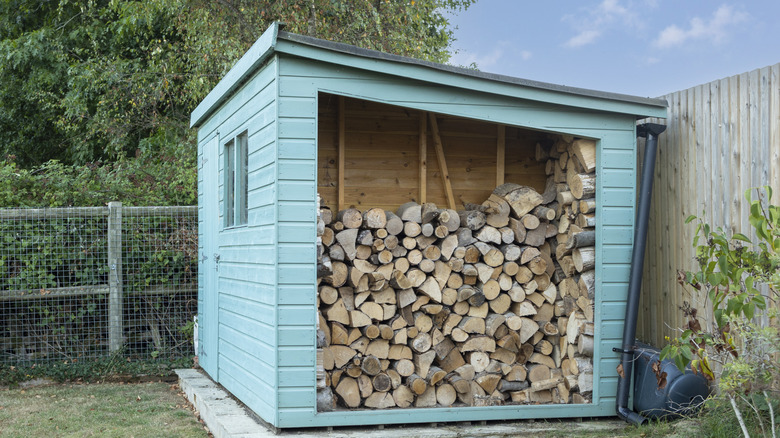
With that said, only go this route if you're willing to store the logs carefully. They shouldn't come into contact with water and mustn't be heaped against the walls of your property (otherwise, insects will hunker down in their depths). Dedicated firewood storage racks are a big help if you want to get the logs off the ground, but also make sure to cover them properly.