

13 Yearly Home Maintenance Tasks You've Probably Been Skipping

You probably already have your weekly cleaning routine figured out, but what about your annual one? Annual home maintenance tasks are all too easy to forget about, since they're not something you encounter often. Keeping track of all the yearly tasks you might need to get done around the home is the best way to stay on top of your maintenance checklist without accidentally pushing a project to the side for too long.
If you've been skipping any of these yearly maintenance must-dos, it's time to get started on them right away. While some annual projects are more about the cleanliness and upkeep of your home, others are necessary to prevent serious health and safety hazards. If you haven't been on top of your annual HVAC inspection or chimney cleaning, for example, your home could pose a safety risk.
Keep your appliances running longer, your home feeling cleaner, and your household safer with this yearly maintenance checklist. Don't worry; you won't have to do all of these tasks at once; some are best completed in the fall, while others you can save until spring. Here are some of the most important tasks that you need to be completing every single year.
Have your HVAC inspected every year
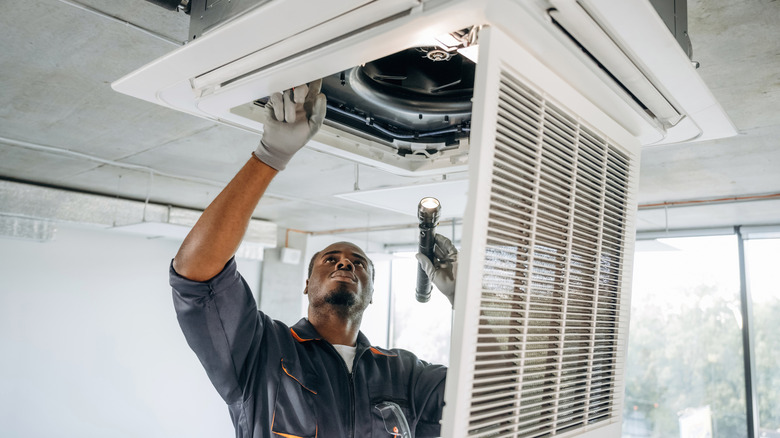
A professional HVAC inspection is a must for any homeowner, and it should happen at least once a year. Having your HVAC inspected allows a professional to identify future issues before they actually occur, saving you money on repairs. This can also help you spot any issues with your heating or cooling well before they happen, so that you don't have to worry about losing heat or AC during the season you need it most.
Besides failing to cool and heat your home properly, a faulty HVAC system can have other problems that are much harder to detect but pose a greater risk to your household. For example, a broken HVAC could be releasing pollutants or carbon monoxide into your home, the latter of which is a life-threatening concern. Additionally, a malfunctioning HVAC system is also a fire hazard; a crucial part of your yearly inspection involves a professional assessing your HVAC for potential fire risks.
An HVAC inspection ensures that you can breathe freely — literally — all year-round. Your air quality will improve, and the life of your HVAC will be extended, saving you money in the long run. Experts recommend having your system inspected more than once a year if it's old; otherwise, an annual inspection should suffice.
Examine your home's exterior for siding issues
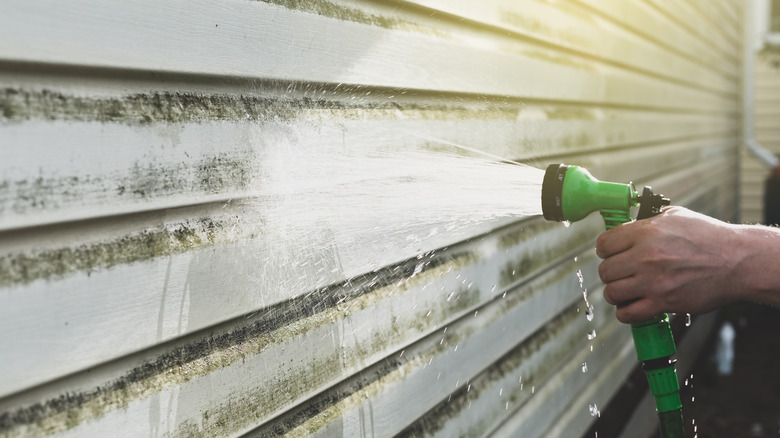
When was the last time you did a walk-around of the outside of your house? This isn't usually something that you need to call in a professional for, which makes it a simple home task that you should do annually, often in spring. You'll be checking for problems with the outside of your home's siding, which include gaps, cracks, exterior damage, and signs of mold or mildew.
To check for mold, look for discolored siding. Black, gray, white, or even green spots on your siding may indicate a mold issue. If you press a spot on your siding and it feels soft, that's also a sign that you have underlying damage. Catching a mildew problem early on prevents it from spreading to the rest of your siding (or even your home's insulation), so you don't have to shell out for significant repairs.
Inspect your home high and low to be sure that you're not missing any spots. Some types of damage will be easier to spot than others; a small hole, chip, or peeling piece of siding isn't as easy to see as entire parts of your siding that are buckling. If you spot any minor scratches, you can paint over them while you work. This is also a great time to clean your siding, helping prevent dirt and mildew from building up over time.
Clean your refrigerator coils

Cleaning the condenser coils in your refrigerator will actually help it stay cool more efficiently. Your fridge's coils work hard to transfer the heat that builds up inside your refrigerator, keeping your food cold. But as layers of dust and grime build up on your coils over time, they're prevented from releasing as much heat as they should.
You can clean your coils yourself at home, and it's generally easy to do. Always start by unplugging the refrigerator. Then, you'll need to find where your fridge coils are located — if it's your first time cleaning the coils, you can always check your manual to see where they are. Typically, they'll be covered by a grill somewhere in the back or underside of your fridge.
Once you've located the coils, it's time to actually clean them off. Most hardware stores will carry a specific coil cleaning brush that you can use to effectively remove buildup. A coil brush is recommended because it ensures that you've completely removed dirt, dust, and grease from your coils, while your average wipe-down is likely to leave buildup behind. Some experts also recommend using a vacuum with a brush attachment.
Check the batteries on your house alarms
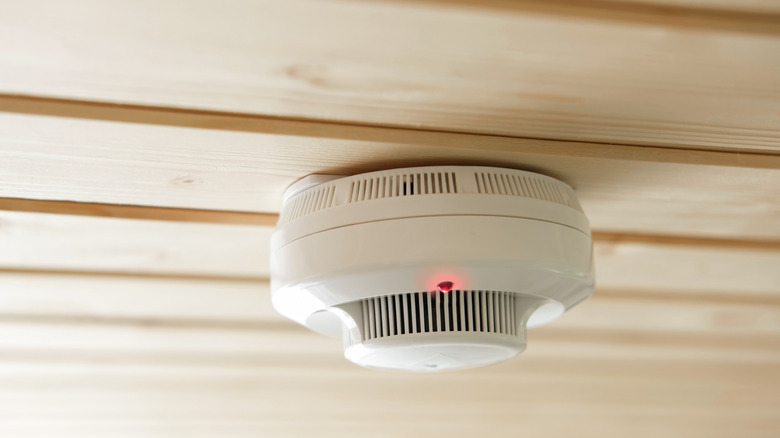
Changing the batteries in home safety devices such as smoke alarms, carbon monoxide detectors, and security alarms is a must-do annual task. Each of these devices will typically need a new battery every year; setting a date to complete this task all at once means it gets done before your devices start chirping a low-battery warning. You should be testing your home alarms once a month, according to the National Fire Protection Association, so be sure to do so after you've installed new batteries.
While you're busy checking in on your home alarms, it's also time to thoroughly examine your fire extinguisher. Many fire extinguishers won't need any kind of replacement for anywhere from five to 15 years on average (depending on the type), but that doesn't mean you shouldn't be inspecting yours annually. When you check yours, make sure it's accessible, undamaged, and that the pin is still secure. You should also check the pressure gauge; if it's too low, the extinguisher needs servicing. If it has expired, be sure to dispose of your fire extinguisher properly.
Have your insulation inspected

An annual insulation inspection is a must for many homeowners. If you live in a climate that frequently experiences severe weather events — including storms, floods, or tornadoes — then you'll certainly want to inspect your insulation annually. The same goes if you have a basement or attic, live in an older home, or are noticing drafts.
During your inspection, a professional will be checking for any damage to your existing insulation, as well as looking for areas where more insulation is needed. Insulation can fall victim to mold or water damage over time, so calling in the pros early can help prevent these issues from spreading. Over time, your insulation will likely need replacing or reinforcing.
If you haven't had your insulation inspected in a while, then getting it done may also help you find areas in your home that aren't sufficiently insulated. A professional can help you determine which areas need insulating — when winter rolls around, you'll find that your home is less drafty. Better yet, quality insulation throughout your home can help you keep heat or air conditioning inside, saving you money on energy bills.
Wash your walls

In high-traffic areas, you might wash your walls more than once a year. However, for a whole-house wall washing, an annual cleaning is much more realistic. Washing your walls can be time-consuming (and often doesn't feel as necessary as the rest of your weekly cleaning routine), but this task is worth the effort.
Cleaning your walls removes dust, grease, and dirt. You'll likely notice that the air quality in your home improves after your annual wall washing, since so much dust and allergens are removed by washing your walls. If you use candles, then a good wash will free your walls of soot. Your wall paint will also look brighter and fresher if you give it a yearly scrub.
Another benefit of washing your walls is that it can help stop mold and mildew from growing. Especially in moist environments (like your bathroom), paint has the potential to develop mold over time. Scrubbing down your walls prevents this problem. Give them a quick dust or wipe with a dry cloth, then clean them gently with a wall mop or rag and dish soap. Be sure not to use too much water when washing your walls — you don't want to damage the paint by getting it soaking wet.
Have your chimney cleaned

The oil from burning wood and coal (known as creosote) builds up in your chimney over time. Freeing the inside of your chimney from creosote isn't just about looks; creosote is a major fire hazard when it has the chance to build up. Starting a fire beneath a chimney with creosote buildup may cause it to ignite, which can quickly cause the fire to spread to the rest of your home.
If you use your fireplace at all, you'll need to have your chimney cleaned at least once a year. Calling in a professional is the best way to ensure that no flammable creosote is properly removed. Typically, homeowners will have their chimneys cleaned just before fall arrives; this ensures that the debris is removed before your fireplace's busiest season. (Those who use their fireplaces consistently may want to consider a biannual cleaning.)
Deep clean your carpets
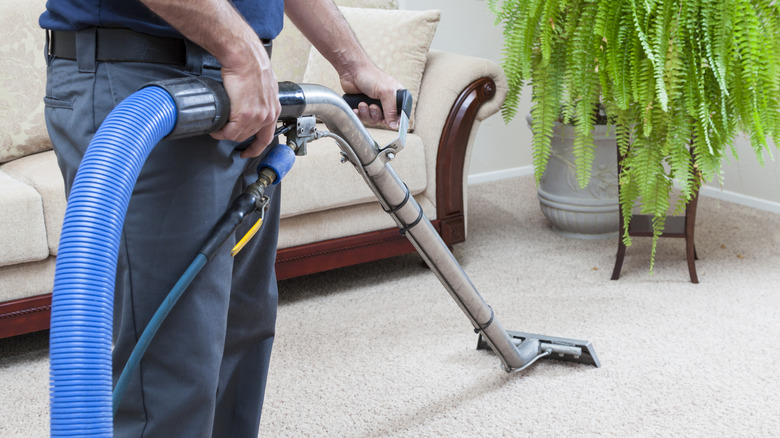
If you want your carpets to look brighter and have them last longer, then a yearly carpet cleaning is what you need. Deep cleaning your carpets is much different from the vacuuming and spot-cleaning you do regularly. A professional cleaner will typically use a spot cleaner to lift stains before steam cleaning the carpet and moving your furniture to access hard-to-reach areas you may not have cleaned in a while. The average carpet cleaning costs less than $200 per room — but prices vary.
Though it's quite a bit of work, you can deep clean your carpets yourself. Your best bet is to rent a carpet steaming machine, so that you have the right tools to properly clean your carpet. Start with a careful vacuum, as you don't want any dirt in the way while you use the steam cleaner. You'll begin steam cleaning with hot water, and then go over your carpet repeatedly with the machine to dry the floor.
Reseal your grout
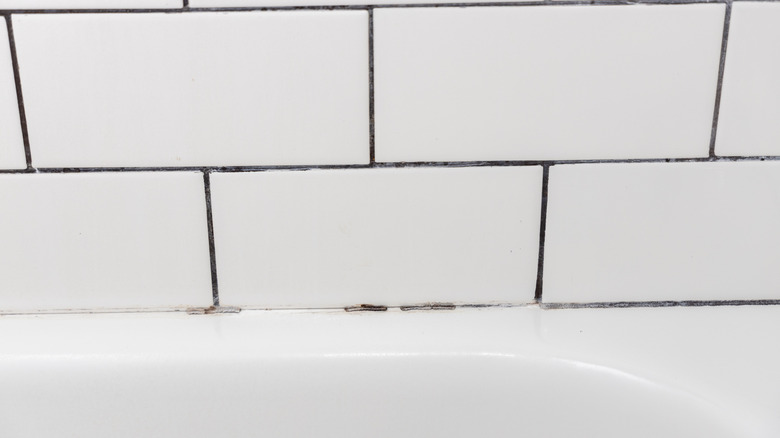
Did you know that you need to be resealing the grout in your bathrooms and kitchen? The resealing schedule you should follow depends on where the grout is located. Your kitchen backsplash, which doesn't see much action, can probably go for longer than a year without being resealed. Areas in your bathroom, on the other hand, including your shower tile, need to be resealed at least once a year.
Properly-sealed grout is what helps prevent mold from growing. When your grout isn't sealed correctly, it's all too easy for moisture and debris to get inside, eventually growing behind your tile and causing damage to your walls. Fortunately, sealing grout on your own is a pretty easy job — you'll just need some grout sealer, of course. Checking off this task every year can save you thousands in the long run, since $1,200 is the upper range of what you can expect to pay should your grout need repairing.
Inspect and clean your fences

If you've got a fence, you'll need to inspect it and give it a deep clean at least once a year. When inspecting your fence, you're looking for signs of external damage, mold or rot, rust, and loose fence posts. All of these are signs that parts of your fence may need to be repaired or replaced. If you happen to spot any signs of pests, then it's time to call in professional help.
If everything looks clear, then it's time to start cleaning. While it's true that you should be giving your fence a light cleaning on the regular, giving your fence a very thorough annual scrub with a fence cleaner will help prevent deeper buildup and mold from penetrating your fence. No matter whether you have a wood, vinyl, or metal fence, you shouldn't skip this maintenance task.
Working with a wooden fence? After it's been cleaned, you'll need to reseal it. This helps combat mold, moss, and wood rot from making short work of your fence posts. You can also repaint your fence at this time.
Have your roof inspected
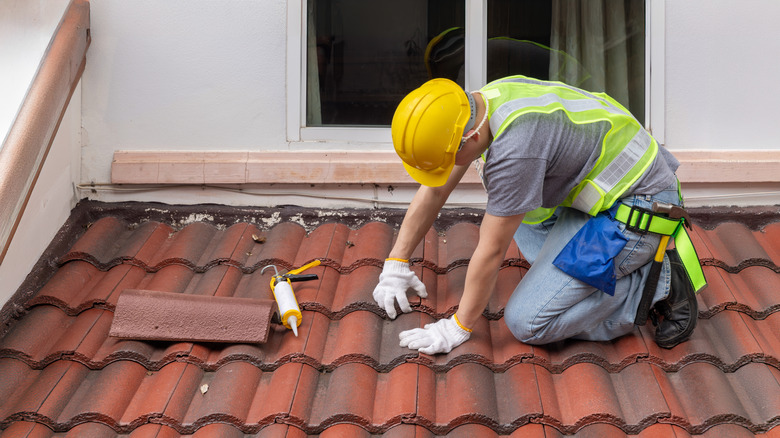
No one wants to learn their roof is damaged by spotting a leak inside the home. An annual roof inspection can prevent any nasty surprises, especially during bad weather. Calling the professionals in for this type of inspection is a good idea; they'll be able to check the external and structural components to spot any areas that are damaged. A professional can also help spot issues with mold early on. Besides your annual inspection, don't forget to have your roof looked at after severe weather. A major cause of roof damage is environmental factors, not just age.
Typically, a roof inspection costs around $250. Your home insurance may require that you receive a roof inspection annually (or on your insurer's terms). In this case, you may be able to receive a free roof inspection on behalf of your insurance company.
Flush your water heater
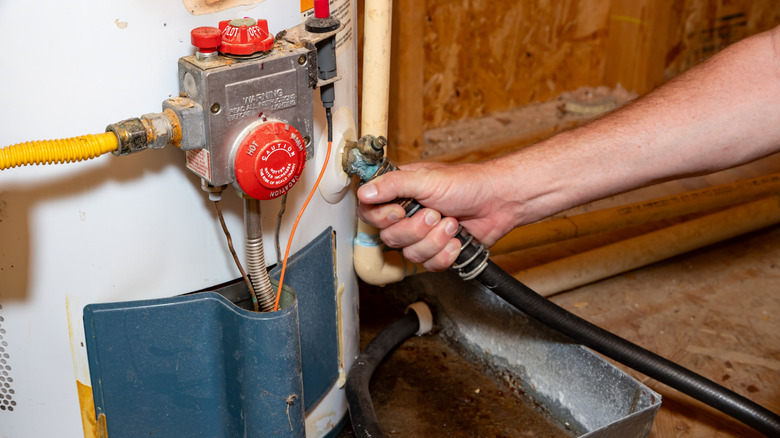
Want a more efficient water heater? All you need to do is flush yours once a year. Over time, your water heater gathers debris inside, which can cause issues for your water heater — besides requiring more energy to heat water properly, it's also much more likely to clog.
Flushing your water heater's tank is a task that you can do yourself. The process involves draining the water currently in your tank (usually done with a hose) and running fresh water into it until all of the debris has cleared out. Then, you can allow your tank to refill itself and enjoy a sparkling clean water heater once more.
It's important to read the manual for your water heater, because you'll need to turn off the gas or electricity that powers it in order to work on it safely. You should also turn off the cold water valve. When you drain the water in your heater, it will be hot; you can leave it to cool off for a while as needed. Too concerned about damaging your heater? You can call a plumber in to flush your water heater without any hassle.
Get a termite inspection
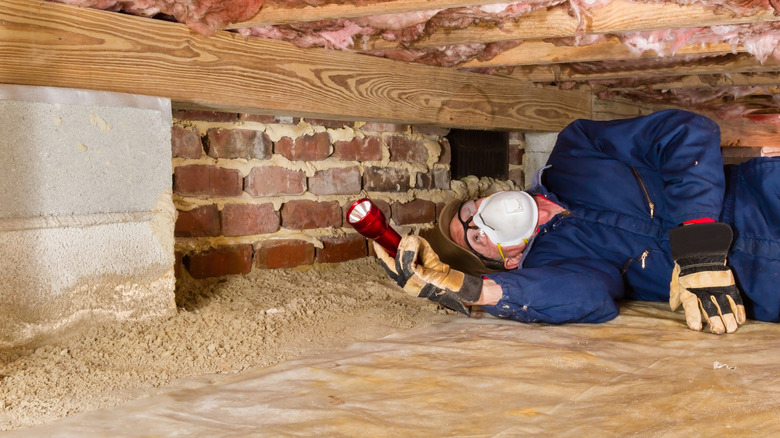
A termite infestation isn't always something you can see yourself — in many cases, you won't notice the damage termites have done until it's too late. Termites can eat away at the foundation of your home, your walls, and burrow through your insulation without you noticing — and on top of the cost of dealing with the infestation, you'll also be looking at significant repairs that can only be done by professionals. Termites aren't swayed by the cleanliness of your house or simple DIY pest control methods; they're most interested in eating wood, which is easy to achieve when they move into your home.
Because termites can cause such extensive damage, many home insurance companies recommend (or even require) a yearly termite inspection. A professional will come to your home and examine it thoroughly for signs of termites. Even if they don't find any, they can still warn you of potential areas in and around your home that pose a risk for termites in the future.
Some pest control programs or companies may offer free initial termite inspections. Otherwise, the average termite inspection costs around $100. Compare that to the cost of repairing major termite damage, which can be tens of thousands of dollars depending on the damage, and an annual inspection is well worth the money.