

Laundry You Should Think Twice Before Air Drying

We may receive a commission on purchases made from links.
To air dry, or not to air dry, that is the question you might find yourself pondering after starting a load of laundry. On the one hand, line drying is better for the environment, will lower your electricity bills, and keeps your precious clothes from shrinking magically. Considering these pros, you might be tempted to ditch your dryer altogether and set up clotheslines or drying racks in your home. But just like there are certain fabric types you should always try to hang dry, others benefit from a spin in the dryer. To illustrate, your heavy bath towels will get stiff if you leave them to air dry and feel scratchy against your wet or damp skin.
Since such towels take up a lot of time to dry organically, their fibers get brittle after a few hours. Worse, they'll require even more time to dry completely if the weather is cloudy. This might encourage the growth of mold and mildew, making them smell musty from the get-go. So, always throw your towels in the dryer as soon as the wash cycle finishes. This will help soften their fibers, cut down on drying time, and discourage mold. Check their care label to find the right heat setting. In case you can't find one, subject them to low or medium heat and stay away from high temperatures. With that established, your bath towels aren't the only laundry item you should think twice before air drying. Your bath mat, denim garments, blankets, thick bedding, coats, knitwear, cushion covers, and polyester-made fabrics belong to the same category. Generally, you should avoid anything that takes over 24 hours to line dry.
Why you shouldn't air dry your denim pieces, thick garments, and polyester fabrics
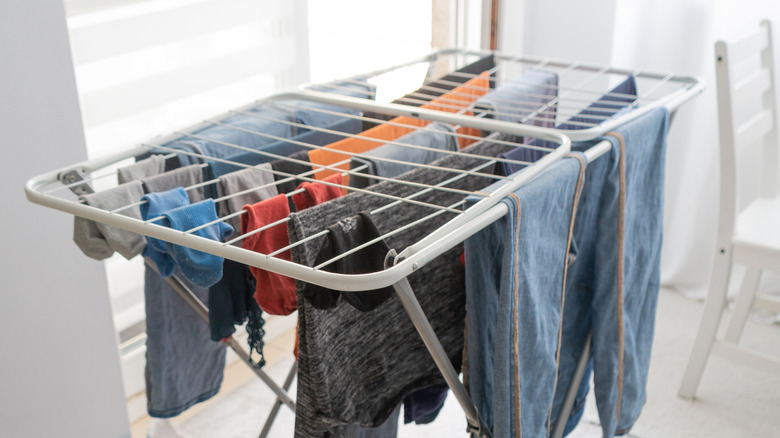
If your washed denim jeans or jacket feels rigid to the touch or smells funny, your drying technique might be to blame. While you should avoid putting them in the dryer to prevent accidental shrinkage, you should opt against air drying when ventilation is poor, or the garment in question is too heavy. This is because it'll retain water under such circumstances and take longer to dry, developing a dank odor. So, put your wet denim pieces in the dryer for 10 minutes and pick the low or no heat setting. Dryer balls will help, too. Then, turn them inside-out and hang them to air-dry in a shady spot. This balancing act will ensure your jeans feel comfortable without getting two sizes too small. It'll also prevent your whites from fading. That being said, don't forget to check the care label since pieces that are made of Lycra or spandex can sustain permanent damage.
Moreover, don't air dry your thick articles, like coats, sweatshirts, sweatpants, sweaters, and chunky t-shirts. The logic is simple: throwing the wet pieces on a clothesline will put unnecessary pressure on them. And, eventually, they'll become stretched and lose their inherent shape, forcing you to replace them more often than you'd like. This is why you should open them up and spread them on a padded drying rack, like Storage Maniac's Sweater Mesh Clothes model. In a similar vein, don't leave your polyester fabrics to line-dry, as they hold onto water and take too long. Instead, select the medium heat cycle to dry them and eliminate wrinkles.
Why you shouldn't air dry your thick bedding, bath mats, and cushion covers
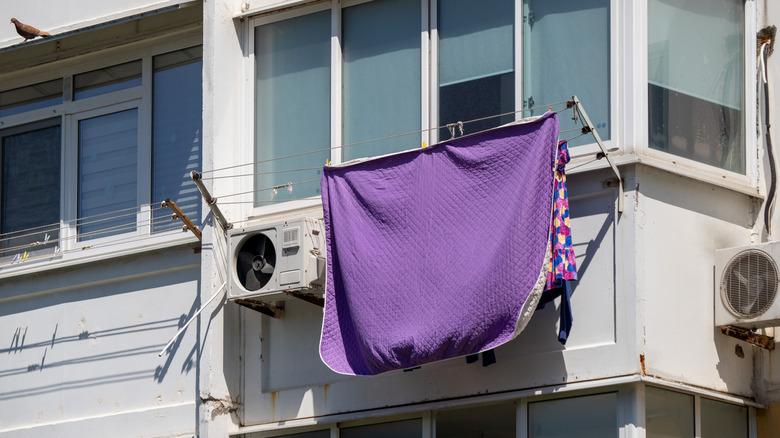
Do you know what the biggest secret is to keeping your bedding fresh and clean? It should be bone dry before you fold it and put it away, or mold and mildew will start growing. But this will take a lot of time if you leave your pillows, duvet, or down comforters to air dry. And there's no guarantee if the inner filling will dry 100%. Down-filled pieces might develop lumps, too. Besides, they retain water and are quite heavy when wet, so you may face issues while spreading them on a clothesline. Given these drawbacks, it's best to put them in your clothes dryer. Check the care label to pick the right heat cycle for your bedding. Remember to add a few dryer balls (clean tennis balls work in a pinch) to minimize clumps and speed up drying.
Extend the same courtesy to your bath mats and place them in the dryer to ensure the fibers don't mat together or flop down unceremoniously. Look at their care label to choose the right temperature, but always pick the lowest setting possible when drying a mat with a silicone layer. This will allow the non-slip backing to perform to its highest standard for a good while. The final item on our list is cushion covers. Don't air-dry them, as the pillow should be inserted while it's damp (or it won't fit right) or slightly wet. After you prop the filler inside, drop your cushion on a flat surface to dry thoroughly. A dehumidifier can come in handy during wet months and humid summers.