

Don't Panic! Here's What You Should Do If A Raccoon Gets Into Your House
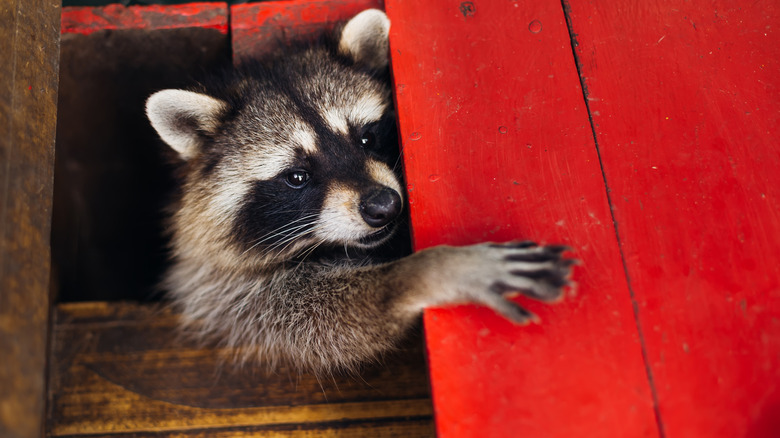
Discovering a raccoon has made its way into your house likely feels chaotic and a bit unsettling. Whether you hear scratches inside your walls, spot footprints with distinctly long claws, or run across one late at night sneaking out of your house, the situation can go south real quick. Raccoons are clever, mischievous, and opportunistic, and once inside, they could cause damage and spread diseases. Sure, raccoons look cute and cuddly, but when they're scared, they often become aggressive. But before you freak out, there are things you can do — calmly and humanely — to encourage them to leave. While there are ways to get raccoons to leave your yard, like finding better places to hang a bird feeder, getting them to vacate your home quietly is a bit trickier.
Raccoons will usually break into houses looking for food, shelter, or both. They'll slip through unlocked pet doors, loose attic vents, uncapped chimneys, or open garage doors that have enough space for them to scoot under. If you find there's a raccoon in your house, the best thing to do is remain calm, keep your distance, and know when to get professional help. Homeowners who panic can make mistakes, such as chasing it to scare it away. That could startle the raccoon and cause it to panic, possibly prompting it to become defensive or run in the opposite direction of the exit. You might also want to think twice before trying popular raccoon control methods like trapping, as this could be tricky and hazardous. Instead, you should try to coax the raccoon away by containing it in the room and opening windows and doors so it can leave. If it's in an attic, make the space uncomfortable with bright lights, loud sounds, and foul odors to deter it.
How to get a raccoon out of your house
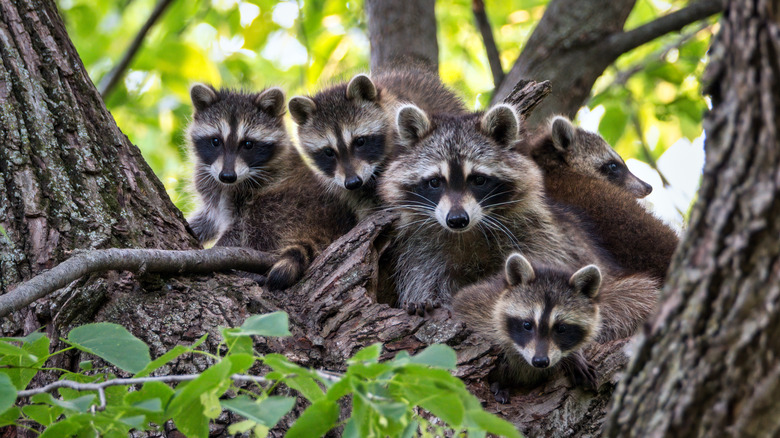
When a raccoon is in your attic, make the space unpleasant by placing ammonia- or vinegar-soaked towels inside containers around your attic. Also, leave the attic lights on and play a loud radio, preferably tuned into a talk radio station rather than a music one. If a raccoon is actually inside your house, close the doors to contain it. Dogs can make the situation more intense by barking or chasing the raccoon, prompting it to go into defense mode, so keep them away. Give the raccoon an escape route by opening a window or door.
For scratching inside your walls or crawl space, raccoon removal gets a little trickier. This could mean cutting into the drywall, which likely requires professionals who know how to safely and humanely handle your raccoon dilemma. Raccoons are nocturnal and prefer dark, quiet spaces, and these steps can encourage these little critters to relocate. Once they have, check for broken vents, exterior cracks, or holes in the roof to find out where they got in, making any necessary repairs to prevent future access. If you're concerned about removing the raccoons on your own, reach out to your local animal control service for help. When you're sure all the animals are gone, take a few extra steps to banish raccoons from your property once and for all.