

The Popular Kitchen Floor Material That Many Homeowners End Up Regretting
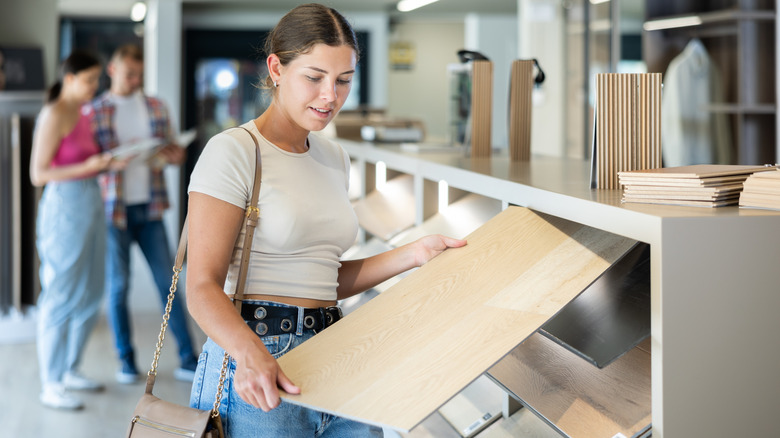
Hardwood floors can make a wonderful addition to any home. They look beautiful, easily blend in with any interior design style, and may even have long-term effects of increasing the value of your home. Hardwood is especially popular in homes where open concept creates a continuation of flooring from one room to another. But it does have its limitations. One of the biggest mistakes homeowners can make when choosing hardwood flooring is installing it in the kitchen. While the living room benefits from the warmth and beauty of wood flooring, the kitchen is a busy, messy place where hardwood isn't a good choice due to the risk of damaging your beautiful and expensive wood flooring.
Wood floors have been in U.S. homes since the original founding of the colonies. They were slowly phased out of the kitchen by the 1950s in favor of water-resistant linoleum or vinyl. And while wood floors add value to a home in many ways, it's better to leave them to the other rooms in the house. There are better options available today that can mimic the look of wood flooring but are also scratch and dent-resistant, waterproof, and extremely budget friendly. There are ceramic tile, waterproof laminate, and luxury vinyl plank (LVP) flooring, just to name a few.
Why wood flooring isn't a good idea for kitchens

The kitchen, besides being the heart of the home, is a place where a lot of spills and messes can happen. Not to mention there is a high risk of an appliance or the faucet leaking or flooding the floor. Wood is porous, and when it is exposed to liquid, it can swell, warp, and shift. If you have pets and kids, you know what kind of chaos can happen. It's much less stressful to have a floor type where you can easily clean up something rather than having to figure out how to prevent messes from damaging your expensive wood floors. It's also such an awful feeling to find water damage from a leak or spill you didn't know happened in the first place. For hardwood, that usually means you'll need to replace boards.
You will also have to worry about dropping your heavy cast iron skillet on hardwood floors since wood dents and scratches easily. Even without impact or water damage, with constant traffic (especially if you have pets or kids), your wood floors will start to look old and worn. You will have to sand and reseal them roughly every 10 to 15 years. This is another common regret of homeowners who've installed wood floors in their kitchens; the level of maintenance is much higher than LVP flooring, ceramic tile, or waterproof laminate. Thankfully, modern advancements have made these wood alternatives durable as well as beautiful.