

The Rule To Follow That Gives You A Stunning Flower Arrangement Every Time

Whether it's simple bouquets for the home or more formal displays for parties, flowers are a popular way to transform your home's interior. Creating a flower arrangement that looks visually pleasing can feel tricky, especially when you're working with different sizes, textures, and colors. Color choices play a big role in how a flower arrangement comes together. Having a simple design guideline to follow can make it easier to create flower arrangements that appear more polished. These guidelines are meant to help the different color shades work together more smoothly within an arrangement. One popular guideline for creating visually appealing flower arrangements is known as the 60-30-10 rule. This rule involves dividing colors so one dominant hue makes up roughly 60% of the arrangement. A secondary color accounts for 30% and an accent color will fill the remaining 10%.
At its core, the 60-30-10 rule is a simple way to think about how colors are distributed so one shade leads, another supports, and a smaller accent adds interest. You can easily use this timeless color rule when decorating your home, but it works just as well in flower arranging. By giving each color a clear job, this rule helps take some of the guesswork out of choosing and combining flowers. The goal isn't to limit creativity; it's meant to provide a solid starting point. This type of structure can be useful in flower arrangements, where several colors are often used together. Having a loose palette framework can help guide decisions without making your flower arrangements feel rigid or boring.
Applying the 60-30-10 rule to flower arrangements
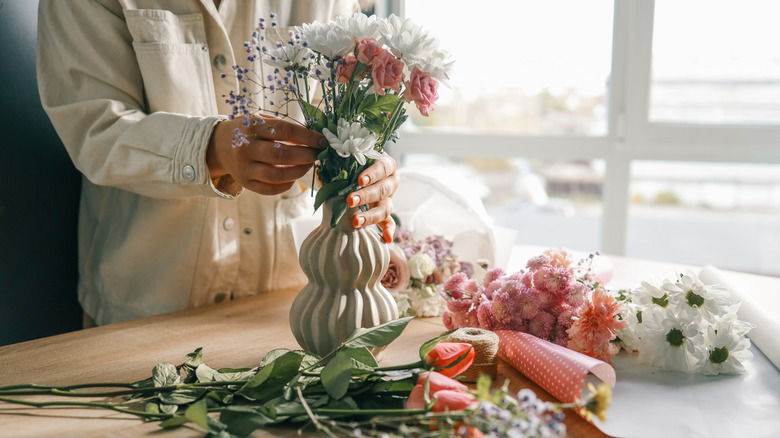
The idea of using the 60-30-10 rule in flower arranging is to help you decide which colors you want to stand out and which should stay more subtle. This means choosing one main color to carry most of the visual weight, with other complementary shades filling in around it. The supporting color gives the arrangement depth and contrast while still letting the main color remain the focus. The accent works best in smaller amounts, bringing more visual interest to the arrangement without taking attention away from the main shades. Using this rule for your bouquets and arrangements can make it easier to plan before you actually place any stems.
The 60-30-10 rule offers a clear structure for color choices and how to arrange them without requiring exact measurements to work well. In practice, this usually means estimating the right amounts of each color by sight rather than trying to measure out exact percentages. The size of the arrangement you are creating and the flowers you're working with can naturally affect how the colors are distributed. This color rule isn't meant to be so rigid that it takes away the enjoyment of being creative with your arrangements. You can still express your personality through greenery and florals throughout your home, but this just makes it easier, and it's especially helpful for those who have never arranged a bouquet before.