

How To Nail The Mixed Material Kitchen Trend Without Making Your Space Feel Cramped
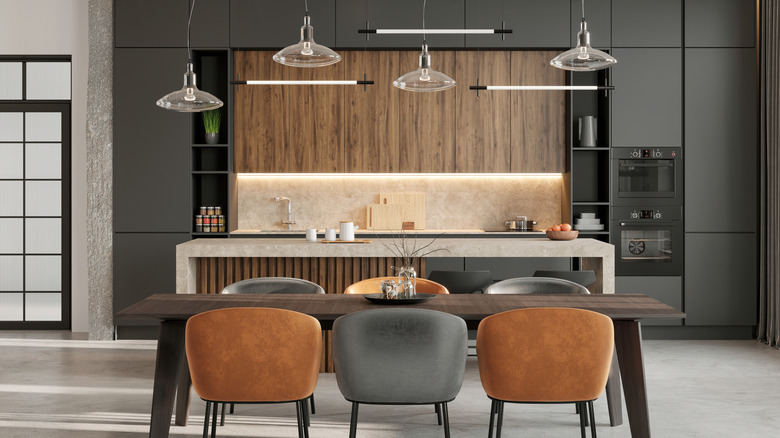
Much like the mixed metals jewelry trend that's been everywhere over the last year, mixed materials are having a major moment in interior design as well — and kitchens are becoming a particularly popular place to embrace the look. From European-inspired tiles and rustic materials like wood and exposed stone to more industrial-leaning finishes such as iron and concrete, there's no shortage of options when it comes to mixing and matching materials. And kitchens are especially well-suited to the trend, as they naturally have a wide variety of surfaces and finishes, including countertops, backsplashes, cabinetry, and hardware — making them the perfect blank canvas for layered design details.
However, while mixing materials can bring added depth and texture to your space — and ultimately give your contemporary kitchen more personality — it has to be done thoughtfully, especially if your kitchen is on the smaller side. Too many materials can quickly make a space feel busy, cramped, and overwhelming if not carried out properly. According to Ayten Nadeau, founder i-TEN DESIGNS, mixing too many materials is "one of the sneakiest ways" to make a kitchen look smaller. "When every zone has its own finish, different uppers, different bases, different island, the eye has no idea where to land — suddenly that kitchen feels like three very mini kitchens fighting for attention," he explained in an interview with Southern Living. Luckily, there are ways to make mixed materials in the kitchen feel cohesive, intentional, and balanced.
Choosing the perfect combination of mixed materials
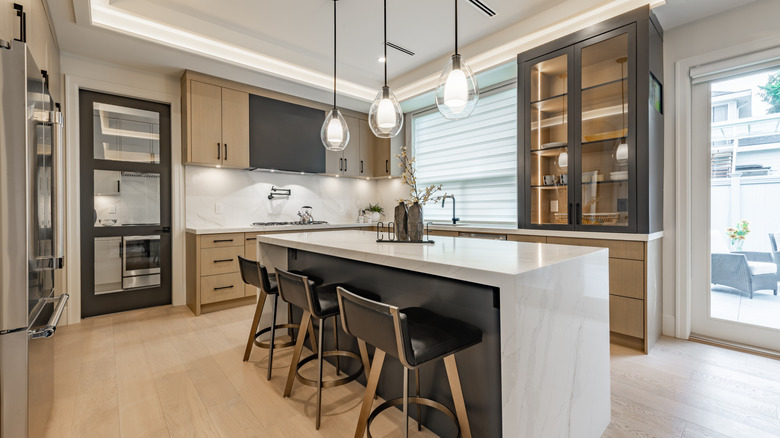
When it comes to mixing materials, it's helpful to understand which materials naturally work well together. Wood and stone, for instance, make a classic pairing, as the warmth of the wood creates a beautiful contrast against the coolness of the stone. A butcher block countertop paired with a stone backsplash is one great option, as is wood cabinetry combined with a natural stone countertop such as marble or an engineered stone like quartzite — the latter of which is a kitchen countertop trend you'll seeing everywhere in 2026. Alternatively, mixing wood with metal materials is an easy way to blend elements of old and new, and works especially well in modern farmhouse kitchens with an industrial upgrade.
One simple way to avoid getting carried away with too many materials is following the 60-30-10 rule. While this guideline is typically used for creating color palettes, it can be applied to materials as well. Start by choosing a dominant base material that will set the overall tone for the space. For example, if you're going for a rustic cottage or farmhouse aesthetic, wood would likely serve as your dominant material. From there, you can choose your secondary material — such as a stone or a ceramic or porcelain tile — to complement it. Finally, to tie it all together, you'll decide on your accent material, which will make up 10% of the overall design. This one could be as simple as linen placemats or blinds, brass or metal hardware, or clear or fluted glass details on cabinetry. Sticking to a simple formula like this will help your mixed material kitchen feel cohesive rather than cramped and cluttered.