

Keeping Birds Safe In Your Garden Starts With This Fertilizer Advice

The typical yard can offer many helpful resources for birds, from food to shelter. But there can also be hidden risks you may not even be aware of. Many gardeners don't realize that routine tasks like fertilizing can affect the birds that visit their yard every day. Birds often look for insects, seeds, and grit on the ground, which puts them in direct contact with fertilizer granules. While fertilizers are helpful for plants, certain formulas pose health risks to birds, which can easily eat them by mistake. Don't worry, this doesn't mean you have to choose between fertilizing your lawn or having birds in your yard. All you have to do is choose products with bird safety in mind and properly apply them.
Fertilizer ingredients play a surprisingly important role in the safety of wild birds. Some conventional lawn fertilizers, like those labeled "weed and feed," contain herbicides or pesticides that can be harmful if birds are exposed to them. For this reason, using organic fertilizers in your garden is recommended to keep your yard bird-friendly. Organic fertilizers are made from animal- or plant-based ingredients and don't rely on synthetic chemicals to provide nutrients. Because of this, they're often the best natural fertilizers for gardens shared with wildlife.
Keep in mind that choosing organic fertilizer doesn't automatically eliminate all risks. Birds can still be exposed to substances that are not safe for them, particularly if the organic fertilizer contains organic pesticides or herbicides. Even without those ingredients, organic fertilizers may carry pathogens like bacteria or viruses, which birds can be exposed to if they eat fertilizer granules or come into contact with fertilizer residue on the ground. That's why it's still important to think about where and how you apply any fertilizer.
A smarter way to fertilize for bird safety
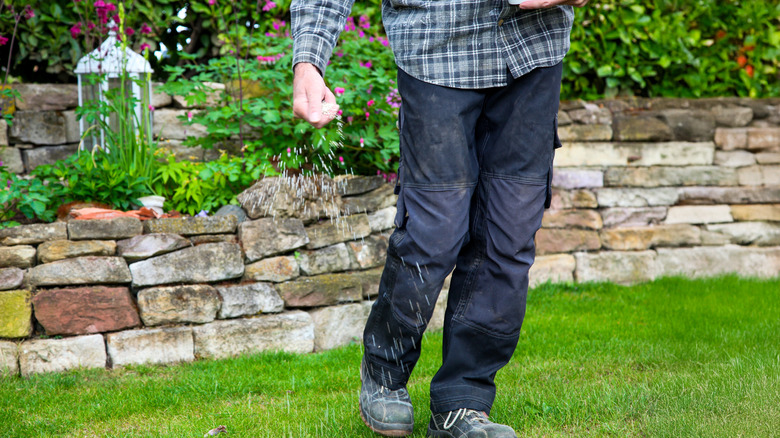
Aside from which fertilizer you choose, the formula and application also play a part in keeping birds safe. Granulated formulas can be a problem, as birds can consume the small granules by accident as they forage for food or grit. This is especially true if there are seeds in the mix as well, because birds can't always differentiate between the two. This is the case regardless of whether you use a conventional or organic fertilizer. To reduce the chances of exposure for your local birds, water immediately after applying granular fertilizer. This important step will help the fertilizer sink into the soil where it belongs instead of remaining on the surface where birds can find it. Alternatively, some gardeners prefer using liquid fertilizer. This can be a helpful option for a bird-friendly yard since it absorbs into the soil more quickly and doesn't leave granules behind.
When and where you apply fertilizer makes a difference when it comes to bird safety, too. In the spring, birds spend more time on the ground foraging as they reproduce, and the bird population increases overall with spring migrations. If you wait to apply your fertilizer until late spring or summer when they are not so active, or apply earlier in the growing season, you can reduce the likelihood of issues. You will also notice that certain areas of your yard naturally attract more birds than others. These popular areas may include natural forms of shelter, spots near bird feeders, prime nesting spots, and bird baths. In these busy areas, lighter applications or skipping the fertilizer altogether can be a smart and safe adjustment. Using a bird-friendly approach to fertilizer and switching to organic lawn products doesn't mean you have to sacrifice good plant or lawn care. Small changes in how you use fertilizer can help keep the birds safe in your garden while still supporting a healthy lawn, flowers, and plants.