

Reduce Dust In Your Home With An Affordable Solution

It is not uncommon to wipe dust off surfaces in your home, only to feel like it immediately reappears seconds later. Dust is something everyone combats, clinging to the tops of tables and shelves, but it doesn't just stop there. You may even catch a glimpse of the tiny particles when sunlight hits the interior of your home at just the right angle, the mixture of pet dander, skin cells, fabric fibers, pollen, and other substances floating around before settling onto the nearest surface. Not only are there plenty of hidden hazards of built-up dust in your home, but it is also a nuisance to constantly try to combat it. That is, unless you consider a budget-friendly solution to minimize how many of those tiny particles circulate in your home.
The key is to increase the humidity indoors. Of course, it is no secret that when the weather dips during the colder months of the year, the air gets drier. Cold air cannot hold as much moisture, and it's made even drier indoors by the use of heaters. Among the many benefits of increasing indoor humidity, including keeping skin and respiratory passages moist and supporting better sleep, it can also help weigh down dust so that it settles instead of dancing through the air. Let's take a closer look at proper humidity levels, why they matter for dust control, and how you can safely raise the humidity level in your home.
How to boost humidity to minimize dust
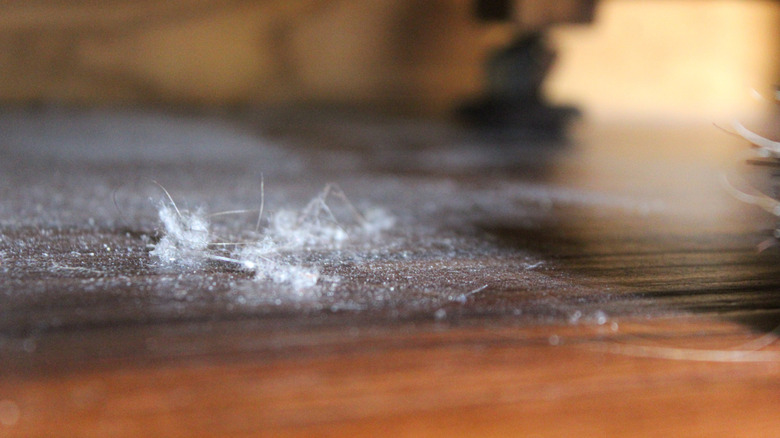
It might shock you to learn just how much humidity matters for your overall indoor air quality. Very dry air allows particles to remain light and prone to becoming airborne, meaning that even the most basic of movements in your home can easily kick up dust. In other words, every step taken, door opened, or heater turned on — all of it can cause dust to recirculate, creating unhealthy and unpleasant air for you and your loved ones. Additionally, dry skin tends to shed more particles, adding to the amount of dust in your home overall.
So what exactly is the best humidity level? Between 30% and 50% is generally ideal. This creates an environment that is comfortable for most people, and in this range, fewer dust particles are produced. The particles can absorb a little bit of moisture, and the added weight allows dust to settle on surfaces without being as easily disturbed by household movement.
Raising the humidity levels in your home will help bring dusty areas of your home back to life, alongside other benefits. However, it is important to note that when you go above 50% humidity, you run the risk of causing more air quality issues. Dust mites and mold thrive in high humidity, so staying in the 30% to 50% range is essential. To make sure you're staying in this range, you can get an inexpensive humidity meter, also known as a hygrometer.
Ways to safely raise humidity levels
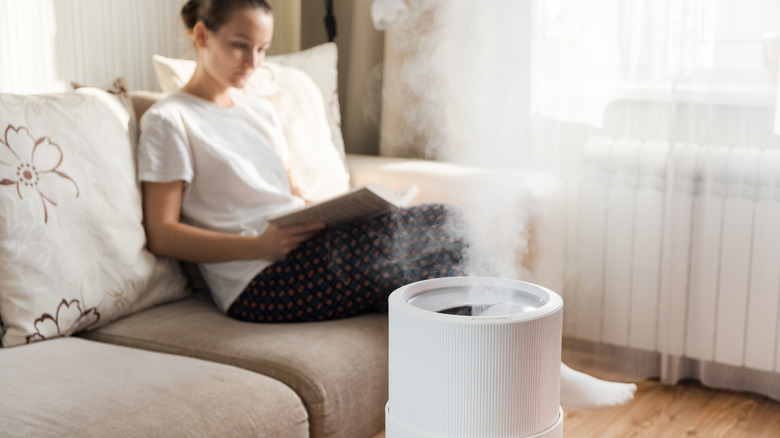
It is pretty easy and affordable to raise your interior humidity to a safe level that allows dust to settle. You can find practical options in a range of budgets, and some may even already be in your home. Arguably the most effective way is to purchase a humidifier that adds moisture to the air in your home with little monitoring. This type of device is especially helpful in living rooms and bedrooms where moisture from the bathroom or kitchen is less likely to reach. There are plenty of brands and models to fit various-sized rooms and budgets. Keep in mind that if you keep a humidifier running continuously or use a large model, it will add more to your monthly electric bill. They also need to be refilled and cleaned regularly.
If you are looking for a way to get started immediately, try simmering a pot of water on the stove, which will release moisture into the air that subsequently latches onto dust particles. This is trickier in larger rooms where you need more coverage, but it could work well in a smaller home or apartment. This method also needs a bit more supervision than a humidifier. You can also try adding houseplants, which naturally release moisture. When grouped together, plants are an aesthetically pleasing way to slightly increase the humidity nearby and help reduce dust in your home. Whichever method you choose, boosting the humidity is a simple way to keep nasty particles from lingering in the air for too long and prevent you from having to dust your surfaces quite so often.