

How To Remove Stubborn Stains From A Dark Composite Sink

We may receive a commission on purchases made from links.
When choosing the perfect kitchen sink, you want something durable and easy to maintain. Composite sinks — made from a combination of granite or quartz, and resin — are fast becoming a popular option for homeowners for just these reasons. Even though they typically come with a hefty price tag, people love the fact that composite sinks are designed to blend in with the countertop. This has led to some homeowners choosing dark-colored sinks to match their existing countertop material. While these midnight hues look incredible, they can be prone to staining. Many manufacturers brag about how easy composite sinks are to maintain, and for the most part, that's true. However, they occasionally need to be scrubbed with mild to strong cleaners and dried completely to retain their sleek appearance.
If composite sinks are touted as being easy to clean and maintain, you might be wondering why they're so prone to staining in the first place. Part of the issue lies in the matte surface of the sink, which traps residue much easier than a slick sink surface, such as ceramic or stainless steel. Hard water is one of the biggest causes of staining in composite sinks — and lots of other kitchen materials. The water leaves behind calcium and magnesium deposits as it evaporates. Soap scum and general grime may also leave a white chalky residue on the surface of the sink. Dark drinks, such as red wine and coffee, can stain the finish. It's these kinds of blemishes that can make your kitchen always feel dirty no matter how much you clean it — or the sink.
How to safely remove stains from a dark composite sink
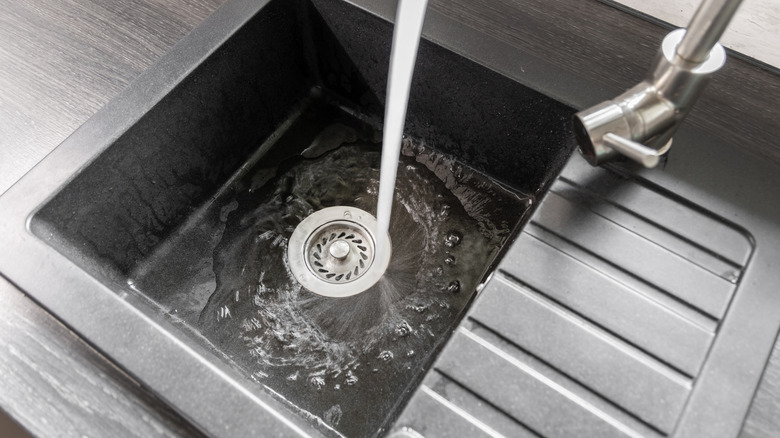
What to know before you buy a composite sink, particularly one with a dark finish, is which products and tools to avoid when caring for it. Use them and you risk scratching or otherwise marring the surface — potentially making stains worse. For example, bleach and other ammonia-based cleaners can damage the top layer of the material. You should always use soft sponges and soft-bristled brushes on composite sinks, too. There is also plenty of daily maintenance you can do to help prevent stains in the first place. For starters, your sink is one of the dirtiest spots in your kitchen and should be cleaned daily. However, when those stubborn stains eventually rear their ugly heads, you can take these steps to remove them.
First, give your sink a wash to remove any surface-level dirt and grime. A great DIY solution is a mixture of one cup of water, one cup of vinegar, and one teaspoon of a mild dish soap, like Dawn Platinum. Spray the entire sink and let the solution sit for 30 minutes. Scrub it with a non-abrasive brush — a Scrub Daddy sponge works great — to prevent scratching the finish. Once these steps are complete, you can repeat the same process with a stronger, composite sink-safe cleaner like Bar Keepers Friend Soft Cleanser Liquid. Spend a little more time scrubbing any deep stains. Once the stains are removed, rinse the sink and dry it with a clean towel to prevent new mineral deposits from forming. Then apply some food-grade mineral oil to a paper towel and rub it over the surface of the sink to restore its shine.