

Is The Toaster In Your Kitchen Causing Invisible Harm? What To Know About Its Health & Safety Risks
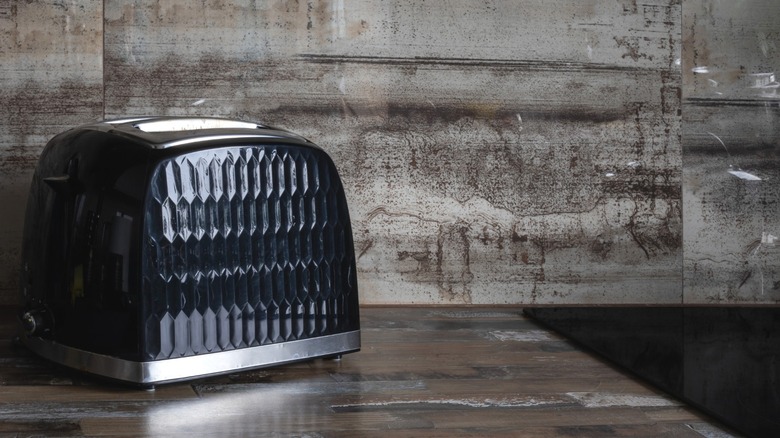
We all take careful steps to ensure that our home is clean and safe. From greener alternatives to sustainable products, there are countless ways we try to keep outside pollutants from breaching our personal spaces. But how often do we stop and think about the less obvious harm happening from within? It is not surprising that most of the scary dangers that are lurking around your home are in the kitchen, a room with a scorching hot oven and sharp utensils among its many unique hazards. It also happens to be full of familiar products and appliances that could be affecting the healthy environment you are trying to create. In fact, a recent scientific study published in the Journal of Hazardous Materials suggests that some of your most-used appliances, like your toaster, can actually be causing invisible harm in the form of ultra-fine particles (UFPs).
UFPs are miniscule airborne pollutants smaller than 100 nanometers, or 0.1 micrometers, in diameter. Their small size allows them to linger in the air longer than particles like dust, and they still manage to dominate a significant amount of particles in the air despite how tiny they are, making them a growing concern in the world of public health. The particles can bypass your body's defense system, penetrating areas that other types of pollutants can't reach, like the smallest bronchioles and alveoli in the lungs, and traveling through the bloodstream to affect virtually any organ. An even bigger problem arises when you factor in that no official regulatory standards are in place to monitor airborne UFPs, which has led to local efforts attempting to measure their impact.
What the research says about UFPs from toasters

The 2025 study conducted at Pusan National University (PNU) in South Korea actually took common household appliances and examined the indoor air pollution produced by them. Experts tested products that contained heated coils and brushed motors in a special lab chamber to measure just how many airborne UFPs were emitted by each appliance. While many of your most used items emitted some UFPs, including air fryers and hair dryers — surprisingly pop-up toasters were by far the biggest offender.
The study found that without any bread inside, the toaster released an average of 1.73 trillion ultra-fine particles per minute, putting it well above other products. Since a lot of kitchens are small with limited airflow, it creates the perfect atmosphere for UFPs to linger. While the study didn't directly measure the long-term impact of these products on human health, these particles have been linked to a variety of issues including heart disease, high blood pressure, COPD, asthma, diabetes, and cancer. The study mentioned the need for stronger regulations and concern for more vulnerable groups of individuals, particularly children. However, this does not necessarily mean you need to ditch the toaster for a safer alternative; you just need to take steps to minimize health risks.
What you can do to help limit UFPs from your toaster

The key takeaway from this study is not to feel alarmed but instead to have awareness of what you might be inhaling on a daily basis, especially in a world of ever-changing air pollution and health concerns. Continuing to use your toaster isn't an issue as long as you take some safety precautions that will help you minimize the potential risks and improve your home's indoor air quality. One of the biggest steps to take is to maintain proper ventilation in your kitchen. It's no secret that fresh air is good for you. Open any windows that are available, and consider using your toaster near it. You can also turn on your stove's exhaust fan to create more airflow and work near the hood. This is especially helpful if you have a small kitchen that doesn't have a window. Even the smallest amount of air helps disperse UFPs so they don't build up.
Another way to help minimize risks is keep your toaster clean. Built up crumbs and residue that stay behind on your toaster's coils can burn and contribute to unhealthy air particles. Creating a regular cleaning schedule will not only reduce health concerns but also make your toaster more efficient. You should also only run your toaster when you need it, which means you should avoid letting it heat up without any food inside. Even though researchers are still exploring the long-term effects of ultra-fine particle exposure, taking careful steps will allow you and your family to safely use your convenient kitchen appliances, like your toaster, while helping you avoid many common mistakes that diminish your home's air quality.