

The Bold & Unique Dwarf Fruit Tree That You Can Grow In A Container
We may receive a commission on purchases made from links.
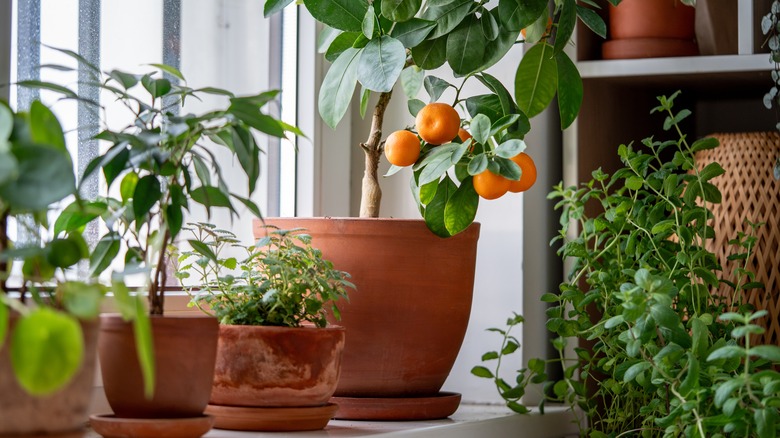
A lack of garden or yard is no reason to deprive yourself of the joy of harvesting home-grown fruit. As long as you can arrange a space large enough to fit a 15-gallon container beside a window, on the balcony, on the patio, or in a sunny room, you can easily grow dwarf and semi-dwarf fruit trees. Our advice? Start with Eureka pink variegated lemon trees (Citrus x limon 'Eureka Pink Variegated'). They're easy to grow, are ornamental, and reach only about 8 feet high; though if you're good with pruners, you can keep them much shorter without missing out on the fruit!
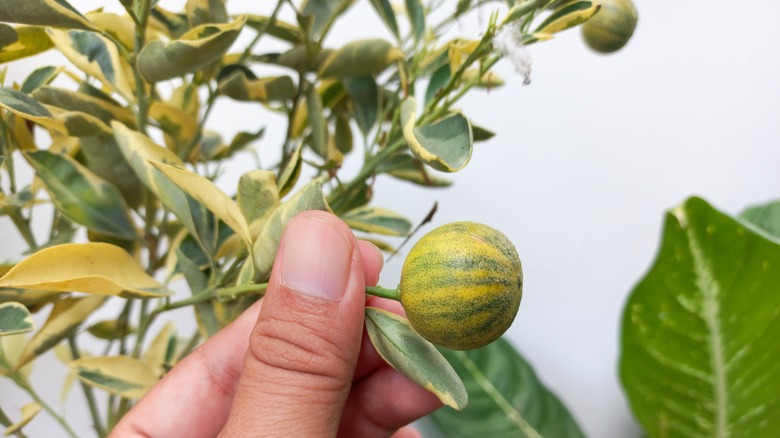
A natural mutation of the grocery-favorite Eureka lemons, Eureka pink variegated lemons pack a massive punch in terms of visual appeal and fruit quality. New foliage and buds are fuchsia pink and instantly draw the eye in spring. As the leaves age, they display variegated yellow-green patterns, though they fade into typical green by the time they're shed. What makes them truly bold and unique are the fruits. When young, they feature green stripes on their yellow bodies, which later fade, leaving behind a slight pink flush, signaling they're ripe for harvesting. Sliced open, they boast a pink pulp. However, their juice is still clear and tart with mild undertones of a pink grapefruit. The best part, though? In mild climates, this fruit tree will give you harvests all year round.
Growing Eureka pink variegated lemon trees in containers
Eureka pink variegated lemon trees are slightly less hardy vis-à-vis other citrusy varieties. For this reason, you can grow this beautiful lemon tree year-round with no issue — outdoors — only in zones 9 to 11. In colder climates through zone 4, you must overwinter it inside when temperatures drop below 32 degrees Fahrenheit, or maintain it as an indoor plant if you can meet its sun requirements (a south-facing window works).
Any experienced gardener would tell you that the key to helping your fruit trees grow and produce faster lies in offering them more sun — and it stands far truer for Eureka pink variegated lemon trees. For all its prettiness, their variegation does entail a lower concentration of chlorophyll, which impacts photosynthesis. So, they require at least six hours of direct sun exposure; eight if you want to maximize the output. This means you must screw up grow lights in the cold months when sun exposure is scarce. Apart from sunlight, pink variegated lemons are absolute hogs for water but dislike wet feet. Therefore, you must use soils that drain well, like Soil Sunrise's Citrus Tree Potting Soil Mix, apart from ensuring the pot has adequate drainage holes.
Caring for container-grown Eureka pink variegated lemon trees
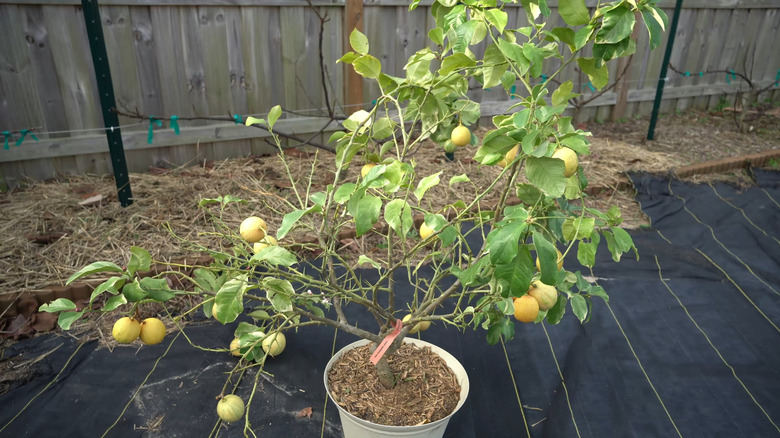
Since container-grown fruit trees have limited soil, they require a bit more care than their garden counterparts. You must fertilize them every eight weeks during spring through fall. Espoma's Organic Citrus-Tone Fertilizer is an ideal option. Although self-fertile, you must hand-pollinate the flowers if you're keeping the pot indoors. Remember, lemon trees typically take around nine months to bear fruit after flowering, which usually begins in November.
Additionally, give your pink variegated lemon trees a deep water soak every week. In particularly hot climates, you may water frequently. Just make sure the soil is dry down an inch or two before you water. Otherwise, the plant will rot. To keep your plant vigorous, prune it annually in early spring, removing any diseased, dead, decaying, or crossing branches as well as suckers on the rootstock, as they won't bear the same fruit. Also, keep an eye out for pests like aphids, whiteflies, and mites. And finally, consider refreshing the soil by repotting every couple of years.