

13 Mistakes Everyone Makes When Using Landscaping Fabric To Prevent Weeds
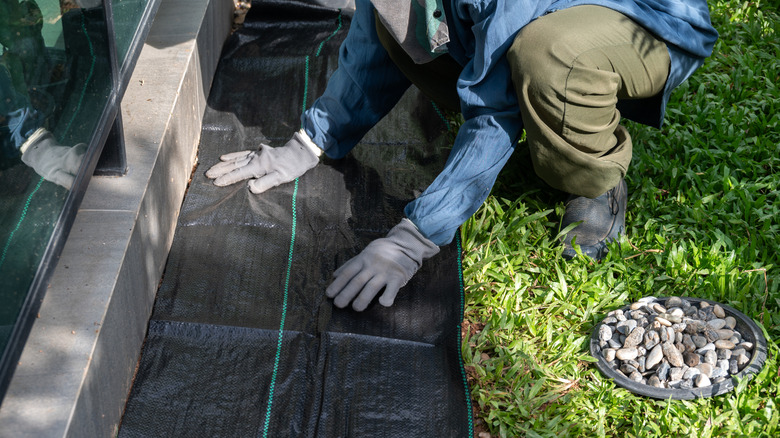
I'm a permaculture-focused grower and master gardener, and I really don't like landscaping fabric. I've seen it misused in so many gardens, and even made some of these mistakes myself before I learned the error of my ways. It's very easy to get it wrong when it comes to using landscaping fabric, and you can create more problems than you're trying to solve. It's not the magical fix for a weed-free garden that it's marketed as. I'm not saying you should never use it. Landscaping fabric definitely has its purpose. But used incorrectly, it can harm soil health and actually cause more weed problems. Plus, it can be incredibly difficult to remove and often complicates planting.
You need to know how and when to use landscaping fabric properly. This will help you understand if you're better off relying on other options, including building healthy soil and incorporating smart planting design instead of over-reliance on synthetic barriers. The most common mistakes I see are usually a result of not understanding if landscaping fabric is really right for the project, a lack of preparation, improper application, and choosing the wrong type of fabric.
Not clearing weeds and leveling soil first
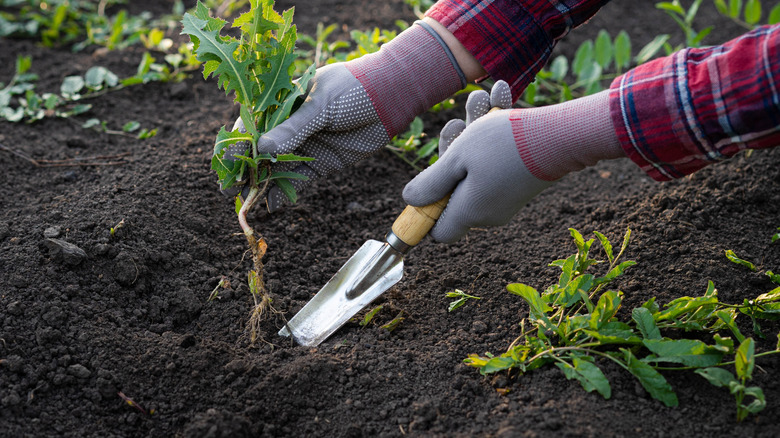
The whole "roll and go" thing is really a marketing tactic that promises landscaping fabric is a simple fix-all. And rolling one thin layer of cheap fabric straight over grass, dandelions, creeping buttercup, nettles, docks, and rough, lumpy soil is begging for trouble. Especially problematic are your tough perennial weeds that have stolons, rhizomes, or deep tap roots. Those weeds will just push straight up through a single layer of fabric. Stubborn, strong weeds with tap roots like dock leaves will just keep pushing up until they break through. Uneven and lumpy ground creates air pockets and stress points because the fabric can't lay evenly and flat. The constant strain weakens the fabric, and weed seeds and questing roots take full advantage, pushing through, germinating, and causing more fabric destruction.
Using landscaping fabric is not a shortcut that eliminates weed removal. It requires preparation if you want the results to last. So, start by stripping out as much vegetation as you can. Be thorough. Dig out roots and rhizomes from persistent weeds. Once you're done pulling as many weeds as you can, it's time to level the soil as best you can. Remove sharp stones and debris, and run a leveling rake across the area to create a fairly smooth, even surface that the fabric can lie flat and snug against. I also like to firmly press and drag the back of the rake across the area to firm it to prevent air pockets as it settles.
Using impermeable plastic sheeting instead of breathable fabric

A really common mistake I see is people buying the wrong type of fabric. Very often, "weed barrier" rolls are solid, impermeable plastic sheeting, not actual breathable, weed suppressant fabric. These thick plastics block all water and air. Yes, you want to stop weeds growing through, but you still need to keep your soil and the organisms that live in it healthy with plenty of air, water, and food. If you use impermeable plastic sheeting, water puddles on top or runs off, and the roots of the plants you do want, the soil organisms can end up starving and suffocating because there's no hydration or gas exchange. This is especially damaging to long-lived plants like hardy perennials and trees that can take many years to recover, even if they do survive.
Non-permeable plastic has a few very specific uses, including solarizing soil and weed beds, when you cover the area temporarily and let heat and darkness do their thing to eliminate weeds and kill off weed seeds and fungal spores in the top few inches of soil. But, these are temporary measures, and the soil still takes months to properly recover afterwards. You should never leave impermeable plastic down indefinitely. Instead, if you must use a weed barrier, choose a permeable, horticultural-grade geotextile specifically designed for landscape use, and keep it to areas where soil health is less important, such as under gravel and pathways. In most planting beds, I strongly recommend you skip fabric barriers if you can, and instead use organic mulch (there are plenty of eco-friendly mulch options), dense planting, ground cover, and hand weeding instead.
Leaving gaps at the seams and edges
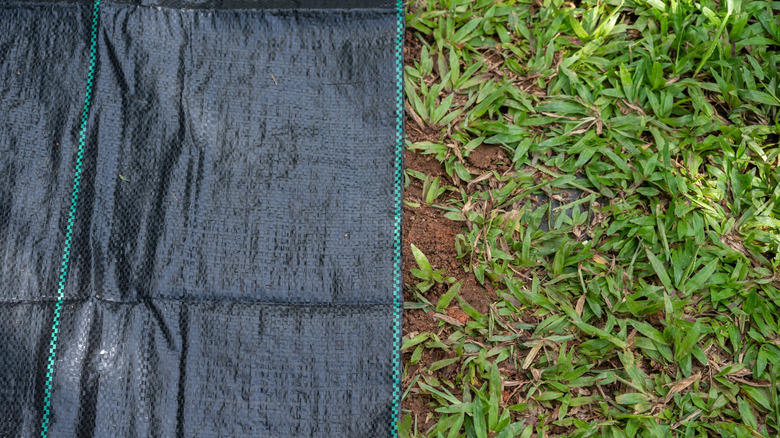
For some reason, most people don't realize that if they need more than one strip of fabric, they need to overlap it. If you just butt the two pieces together, you immediately give the persistent weed seeds and searching rhizomes a place to grow through with no effort. The same goes for the outer edges. If you just leave raw edges exposed, weeds will find their way under from your lawn or whatever the fabric sits next to, and they'll cause you problems, pushing through the fabric at the first gap or weak spot.
When you overlap, do it by at least 6 inches — but preferably 12 inches. A couple of inches just isn't enough. Weeds are persistent, and they grow rapidly. And don't forget to anchor or pin the overlaps and outer edges very generously with strong landscape staples so that nothing can easily lift the fabric and get underneath. I also recommend that you tuck any exposed edges under pavers, decorative edging, or even under a shallow trench of soil.
Skimping on pins and not anchoring the fabric properly
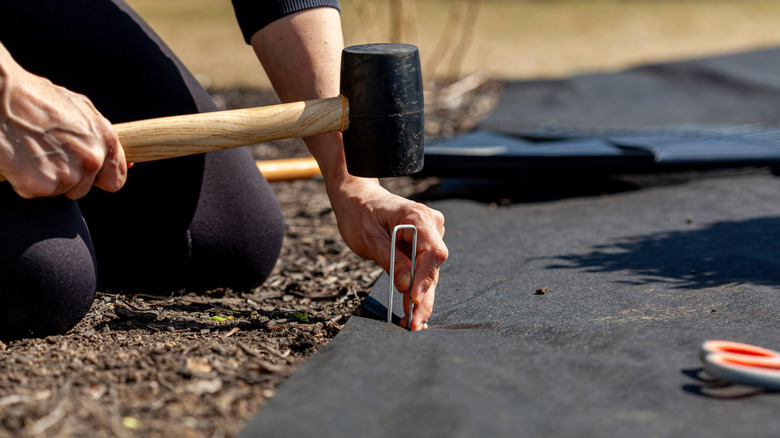
By the time most people have laid their fabric, they've really had enough and just want to be done with the whole thing. So they staple each corner, then add one or two in the middle just to be "extra safe". Then they just shovel on the mulch and think they've finished the job. But, wind, foot traffic, pet zoomies and digging, kids playing, and settling soil all cause billowing, shifting, and tearing. This ends in exposed soil that weeds quickly shoot through. The loose fabric can also run against plant stems and irrigation lines, causing friction damage over time.
To anchor fabric properly, assuming you've removed vegetation and leveled the soil, is to add a staple every one to two feet in all directions. You'll also have to use extra pins if you're working on a slope or around curves, posts, tree trunks, or other obstacles. Basically, if you spot any areas of strange tension, where the fabric wants to strain and buckle, add extra anchors.
Using thin or unsuitable mulch on top of the fabric
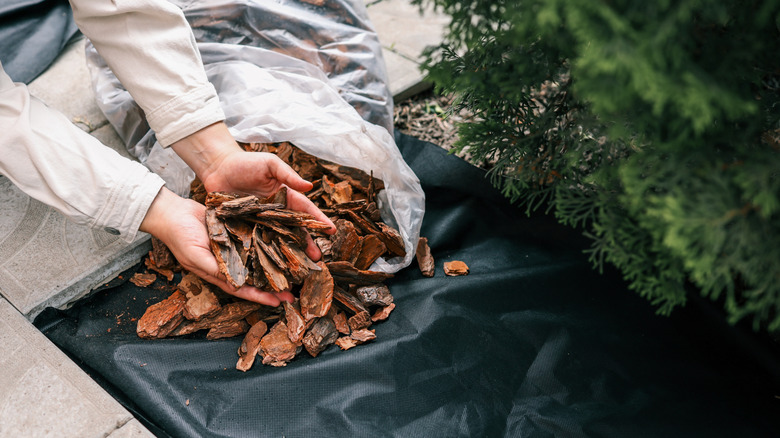
Landscape fabric, even expensive stuff, doesn't look good on its own. To hide it, most people just throw on a thin dusting of mulch and move on. But a shallow, patchy layer of mulch breaks down quickly and looks pretty awful. Plus, it washes off at the first sign of heavy rain and leaves exposed fabric that dries up, looks hideous, and quickly degrades and frays in sunlight. And bam. It's weed central again. The type of mulch you choose is also important. Anything that breaks down quickly, like leaf mulch and compost, creates a potential planting layer. And unless this is intentional and you really are going to plant it up and fill the gaps with low-growing ground covers, you are creating a new soil layer where weeds can take root above the barrier.
I recommend a deep layer of coarse wood chips or bark chunks that take many years to break down. You can also use gravel as a permanent option. Whichever you choose, be generous and make a layer that's at least 3 inches deep. Unless you're using something like gravel, you'll need to top it up occasionally as the organic matter breaks down and loses volume.
Running fabric tight against tree trunks and shrub stems
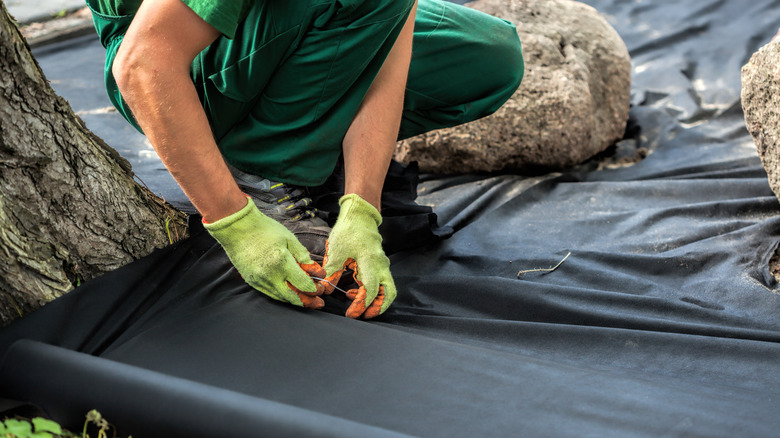
Wrapping trunk and shrub stems too closely in landscape fabric is something I'd never recommend. What tends to happen is people want to get that perfect weed-free circle around the base of their tree, and they think the best way to achieve that is to place landscape fabric right up against the base of the trunk, then make a mulch mountain over the top, piled against the trunk to hide the fabric. This is disastrous because it traps moisture against the bark and hides and encourages pest activity. Over time, this stresses trunks and stems and can cause girdling and eventually weaken the tree sufficiently for disease to set in.
Instead of creating a fabric-and-mulch choker for your tree, keep a clear, fabric-free ring around the trunk or around the whole base for shrubs. This makes sure there's plenty of opportunity for gas exchange, so the soil, and therefore the plants, get plenty of oxygen. Use a layer of natural mulch, like wood chips, a couple of inches deep to help keep weeds down, protect roots, stabilize temperature, retain moisture, and slowly release nutrients. But use the donut method, where you pull the mulch back at least two inches from the actual trunk. Growing plants and trees need room to grow and breathe and expand, and they need to dry out between rainfalls.
Cutting tiny planting holes that choke plants over time
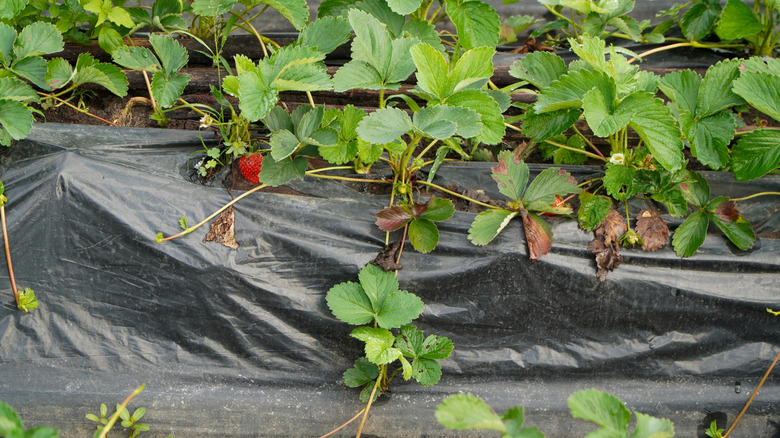
This is a mistake so many beginners make. They see something online about planting strawberries or something similar through weed barrier fabric to keep weeds down and make harvesting easier, and they cut a neat little hold or cross just big enough for the juvenile plant. But, if that plant takes, it'll grow and rapidly exceed the size of the hole. Stems thicken, and crowns expand. If the fabric is cheap, it'll rip. If it's not, it'll dig into the bark or fleshy stems, rub and restrict the plant, creating a girdling effect. The restrictive fabric will also choke the root flare, limiting root growth into surrounding soil. Eventually, the plants will just wither and die, never reaching their full potential.
Cut a larger flap, X, or more generous circle, and just accept that there's at least a small portion that you'll have to keep weeding by hand. If you go with an X or a flap, pin the loose bits back so the fabric frames the plant without throttling it. Even better, rely on mulch, ground covers, and other fabric-less methods.
Using fabric in beds that need frequent replanting
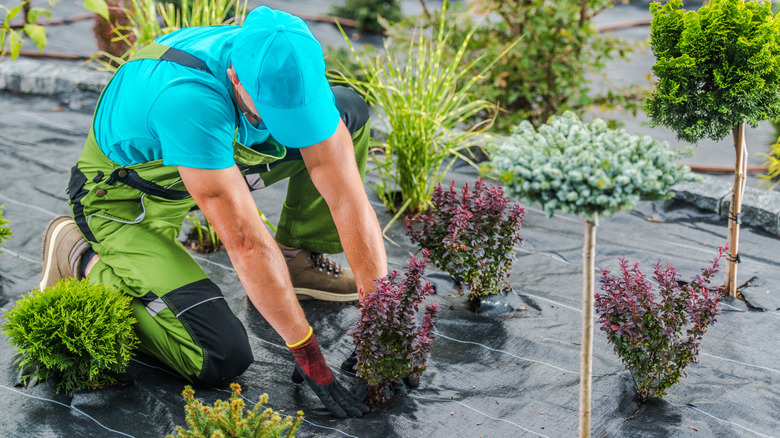
Landscaping fabric and high-turnover beds really don't mix. In any bed or border where you've got perennials, annuals, vegetables, or short-lived plants, burying landscape fabric just creates a nightmare — especially if it's the cheap stuff because it just shreds whenever you try to work with it after a season in the soil. Basically, if you're going to swap or divide plants regularly in a particular area, don't put fabric in it.
Fabric works best in static areas rather than dynamic planting zones. A static area is one without plants or where plants won't be moved around often. For beds you work every season, use deep organic mulch instead. You can also plant quick-growing ground covers between larger plants. Or, if you want plenty of space between plants, perform regular shallow hoeing or get in there and pull tiny weeds by hand as soon as they appear. Pay extra close attention to weed control in the fall, too. Believe me when I say it is much easier to build healthy, rich soil with an open structure that's easy to weed than it is to try and correct a bed that's filled with a tattered mess of old, semi-degraded plastic landscaping fabric.
Leaving fabric down for years without maintenance
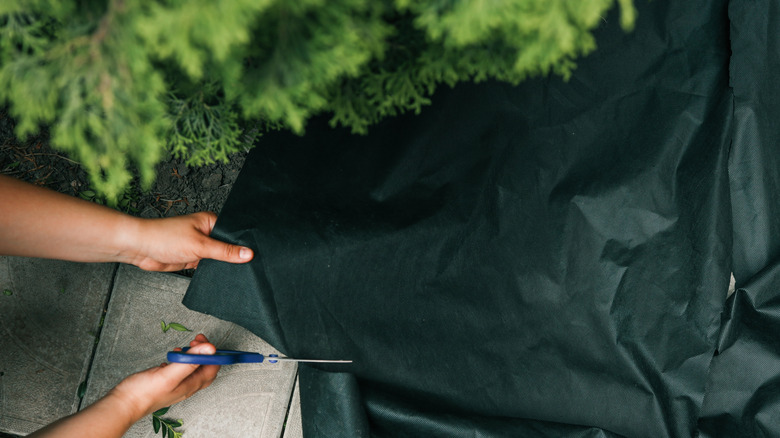
Landscaping fabric is comparatively low-maintenance if you use it correctly, but it isn't no-maintenance. Over time, the tiny holes in the fabric become clogged with dust, debris, fallen leaves, and decomposed mulch. This limits water and air movement, so it starts behaving more like a waterproof plastic sheeting, starving and dehydrating the soil below. And persistent weeds that don't need much nutrition will just start rooting right on the top of the fabric, and they'll start to drill through to the soil, further degrading the fabric.
Really, landscaping fabric used anywhere apart from at the base of pathways or gravel areas should only be considered as a short- to medium-term helping hand, not a permanent solution. Every other year or so, inspect key sections of fabric and check for brittleness, clogging, and root penetration, and remove or replace anything that exhibits any of these signs. Once roots have firmly rooted through the fabric, there's no choice but to lift it, as it's no longer suppressing weeds.
Rolling fabric over slopes without thinking about water flow

Many people think that using landscaping fabric on slopes can help stop erosion, but if it's not done correctly, it can actually make the problem worse. An exposed, smooth layer of fabric on a slope can act like a slipway for water, causing more runoff problems because it doesn't give the water time to penetrate into the soil. As water races down the slope, it whisks away mulch, too, leaving exposed patches of fabric or even bare soil, which are also vulnerable to an increased rate of erosion. Then, as the slope bottoms out, the fast-moving water suddenly drums its soil and mulch in a heap and continues on its way.
A better way to limit erosion on a slope is to use deep-rooted ground covers that knit the soil together with their roots and protect soil from runoff with their foliage. The right plant, like ice dance sedge, reduces erosion and suppresses weeds. Contour planting and terracing are also excellent choices for reducing erosion. Biodegradable erosion-control netting combined with sensible planting choices stabilizes the soil and controls weeds while the new plantings establish themselves.
Expecting rock or gravel over fabric to be weed-free forever
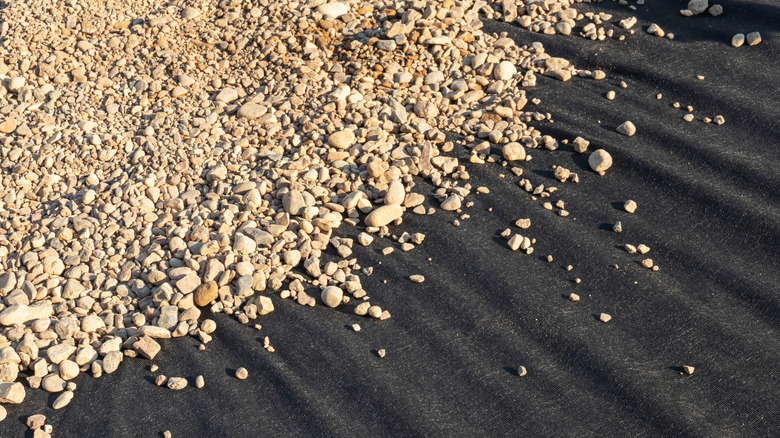
Even rock and gravel overlaying landscaping fabric won't be weed-free forever. It's true this setup is initially low-maintenance. But over time, dust, little bits of soil, and other organic debris filters through the gravel and reaches the fabric layer. Eventually, there's enough of this organic matter for wind-blown seeds to take root. They root into the debris and eventually through the fabric, creating pathways for weeds below the fabric to also start pushing up.
To minimize weeds growing in gravel, rake the gravel regularly. You can also use a leaf blower to blow out as much organic matter as possible. It's also a good idea to pull even tiny weeds as soon as you spot them so they don't have chance to penetrate the fabric layer deeply. Top-ups of gravel can also help to suppress new weed growth by burying stubborn root fragments.
Relying on fabric instead of healthy soil and planting design
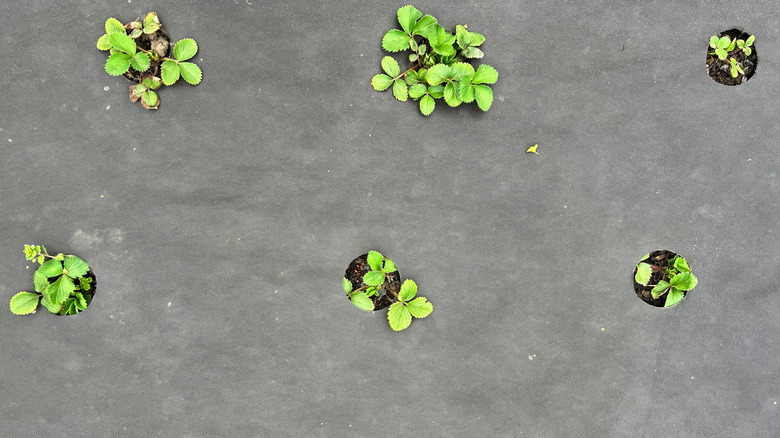
One of the biggest mistakes for gardeners with landscaping fabric is thinking it will permanently solve their weed problems. It won't. And eventually, it could make them much worse. Where you've got landscape fabric in a planting area, even a static one, you are restricting soil and plant health. Soil structure gets damaged, less organic matter gets to the root zone, and you disrupt soil life. And weeds, tough little blighters that they are, eventually just bust their way through anyway. Lifeless soil is much harder to work with and bring back to life than just keeping on top of weeds in a dense mulch layer atop healthy, thriving soil.
Healthy, well-mulched, biodiverse soil is the very basis of a healthy garden. So, work on building rich, healthy soil with an open structure. And look at planting. If you want to control weeds naturally, use layered companion planting. For example, in a vegetable garden, suppress weeds between rows of root crops like carrots, or mid-height crops like brassicas by planting shallow-rooted quick-cropping things like radishes and lettuce leaves. Their root zones are different, so they don't over-compete for nutrients, and you'll be harvesting the quick crops before the larger crops are big enough to shade them out. The same principles can be applied to ornamental gardens. You can grow clover, creeping thyme, and other low-growing ground crops to suppress weeds between larger plants and around trees. One of the many benefits of companion planting is that it's a low-maintenance, budget-friendly option that saves you a lot of headaches later when you're trying to heave out root-riddled degraded strands of brittle fabric.
Buying the cheapest fabric that shreds into plastic confetti
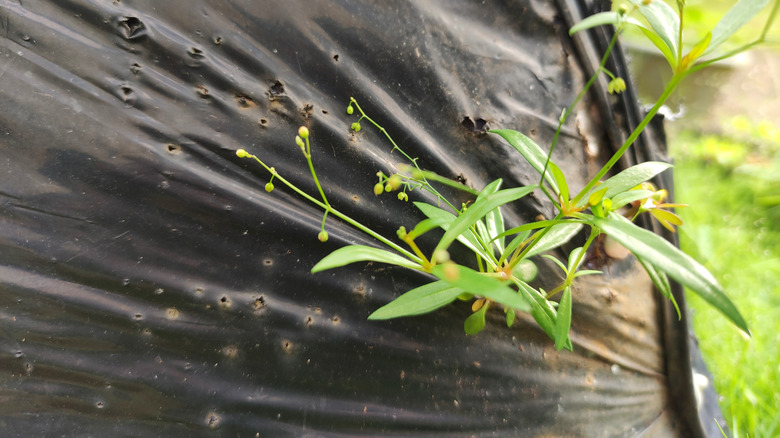
The worst mistake you can make is cheaping out on landscaping fabric. That "bargain" roll from the dollar store might seem like good value, but believe me when I tell you it is not. It's thin, weak, and will undoubtedly cause you real gardening woes. These budget products break down really quickly under UV and physical stress, and they rip and fray when you try to lift them or pull weeds from them. Depending on the product, you either get tiny bits of plastic confetti or you get the long plastic strands as the woven fabric unravels, and it gets tangled in your tools and around plant roots and really is a complete nightmare. I took over a piece of land next to mine, and the previous owner had used this stuff everywhere. It's years later, and I'm still digging it out.
If you really do need landscape fabric, choose UV-stable, horticultural-grade fabric. Yes, you'll pay a little more. But you'll also be able to go more than a single season before it degrades and needs replacing. You may also find cthat ardboard or thick layers of newspaper covered with topsoil and mulch is just as effective for short-term weed suppression, and they'll safely break down into the soil.