

The Spring Flower You Can Grow In The Winter For Longer-Lasting Blooms

Spring is a gardener's favorite time of year. All the patience and time spent planning a garden through the cold season is finally realized as a living artwork. New beginnings sprout from the freshly thawed ground in the form of spring flowers, inviting wildlife back to your yard. While some spring flowers are planted in the fall to germinate in the ground throughout the winter, others can be grown indoors for the winter to promote a long bloom season.
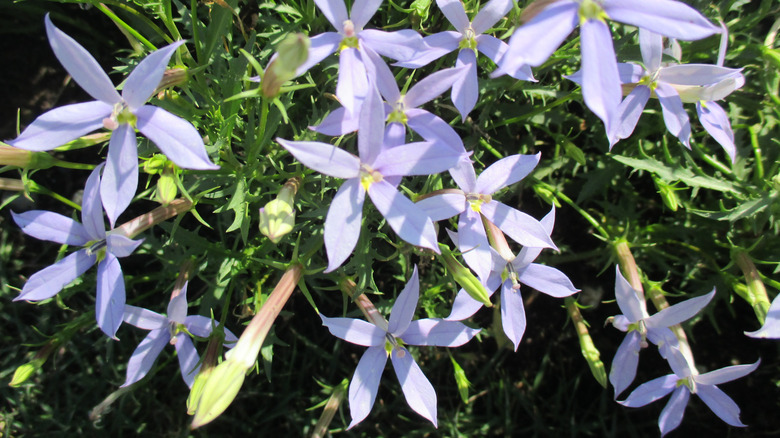
Laurentia (Isotoma fluviatilis) is an evergreen perennial that grows outdoors in USDA hardiness zones 6 to 8, and can be grown as an annual in other zones. In the spring, it produces fern-like foliage with delicate star-shaped flowers that can be purple, pink, or white. They fall off naturally, so you don't have to worry about deadheading. If you want long-lasting blooms in the spring, you may actually want to get started planting laurentia seeds indoors in the winter. It takes about four months for laurentia to produce blooms from the date the seeds are sown.
Sowing laurentia indoors in the winter
When sowing seeds indoors in the winter, start by determining the best planting date based on your local frost dates. You will want your laurentia to be ready to transplant as soon as the last frost passes in the spring. It takes about four to six weeks for laurentia to be established enough to transplant, so count backward from your last frost date by at least four weeks. Usually, that means the absolute latest you should be sowing your indoor laurentia seeds is sometime in February, but dates may vary by location. For longer-lasting blooms, consider planting earlier and providing a heat source through the winter. With the right setup, you can plant as early as December to get blooms that will last from frost to frost.
Laurentia is a heat-loving plant, so you will need to make sure you provide optimal growing conditions throughout the winter to ensure the plant is healthy and ready to bloom by the last frost date in the spring. Start by sowing the seeds according to the package instructions in a soil mix that is rich in organic matter and store in a light location while they germinate. During this time, maintain a temperature of 65 to 68 degrees Fahrenheit. When they begin sprouting (about two weeks), transplant the seedlings to a new container. Water about once per week when the soil begins to dry.