

22 Plants You Should Always Remove Snow From During Winter
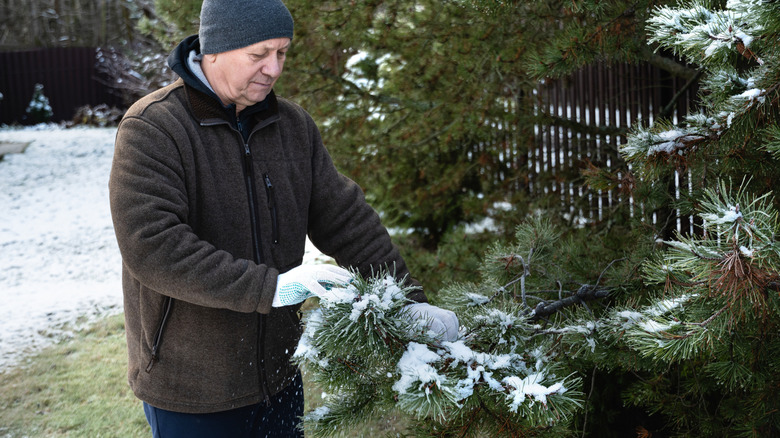
Trees and shrubs draped in snow flurries can instantly transform your landscape into a winter wonderland. However, that striking display can also raise concerns about long-term plant health and structure. Light snow has a positive impact on plants, as it protects them against wild temperature variations, snaps, and freezes. These benefits are quickly outweighed when snow accumulates heavily, weighing down boughs and branches, until the dreaded snap echoes in the dead of winter.
Plants most susceptible to snow damage have a few tells. They may be multi-stemmed or multi-trunked (think junipers) and can split away at their joints. Others retain their leaves through winter and have upright forms that become top-heavy under snow, with arborvitae being a classic example. You may similarly face issues with weak-wooded trees and shrubs, especially if they've narrow crotches (where the branch meets the main trunk) and ingrown bark tissue. Poplars, forsythia, and lilac are a few such examples.
When removing snow from plants, remember to sweep the snow upwards with a broom or a pole to avoid exerting further pressure on the branches, and protect your head while doing so. Avoid shaking the limbs, or the damage could get worse. Moving forward, pre-emptively protect your plants with burlap on a teepee structure or tie their limbs together before the snowstorm. Just be sure to remove winter protection by spring.
Arborvitae

Arborvitae (Thuja spp.) are beautiful, fast-growing conifers that are commonly grown to add privacy to your yard. But to continue enjoying their evergreen benefits year-round, you must stay on top of snow removal in winter, particularly in the case of columnar and upright forms (think 'Emerald Green' and 'Green Giant'). Their branches bend out of shape under the weight of heavy snow and may even snap off. While light damage can sometimes be corrected with pruning and training, brushing off snow early is far easier than repairing damage later.
Eastern hemlock
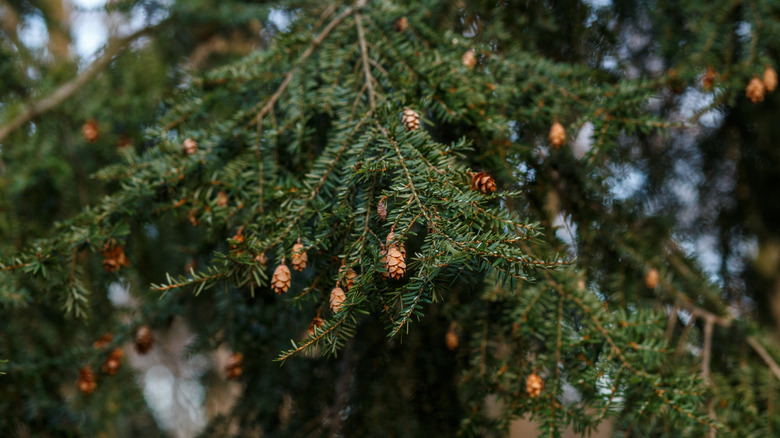
Eastern hemlock (Tsuga canadensis) strikes up a breathtaking display when its limbs are encased in white snow. However, if it lies too thick and, worse, is wet, consider sacrificing this whimsical display for your evergreen conifer's long-term health and vigor. Snow's accumulated weight can cause the branches to sag and develop cracks, especially around the crown area. Iif you remove the snow in time, the trees will still be able to bounce back into shape, and you won't have to undertake restoration pruning and shaping.
Yews
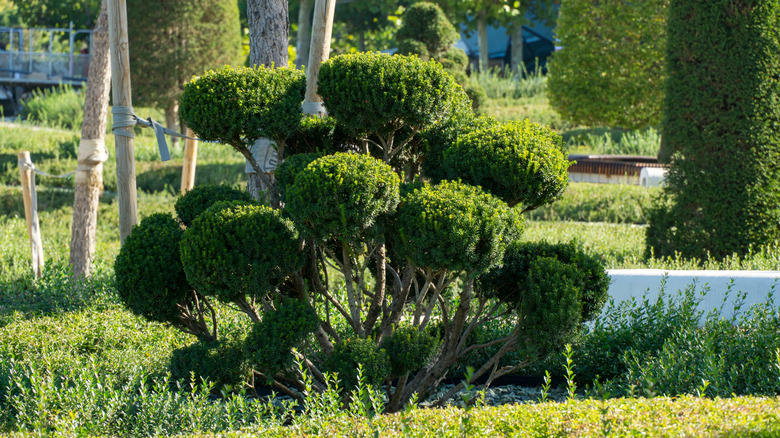
Many homeowners utilize yews (Taxus spp.) to create evergreen hedges for year-round privacy. Unfortunately, they can splay open and bend under the weight of heavy snow. Their branch tips also turn brown. Aside from compromised privacy, this leads to a dead center, making the hedge unsightly — even more so in mature yews, as their new growth emerges at the margins. The only way to help rescue your plant is to cut into the woody growth and remove the damaged parts. Unless you're prepared to wait several years for them to bush out, you may have to replace them.
Juniper
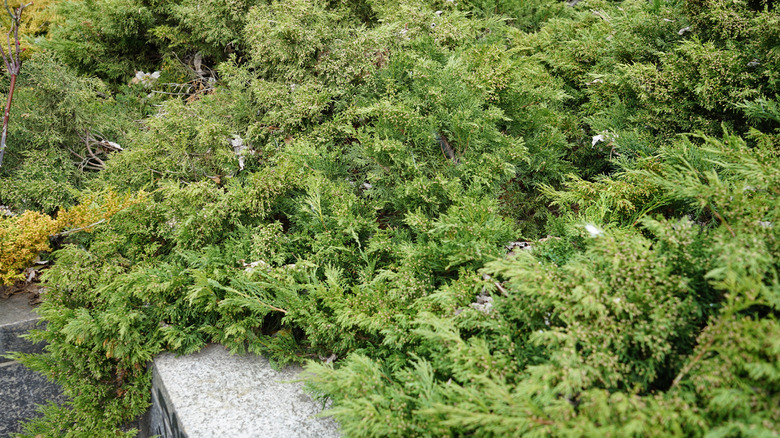
Most junipers (Juniperus spp.) grow multiple branches, rather than a dominant, central trunk. That's why, during a heavy snowstorm, they carry a risk of suffering limb breakage. Snow loads can cause the branches to splinter off where they meet the base. Mature specimens may bend down completely — thanks to the combined weight of snow and dense foliage — exposing their crowns and root systems. Once damaged this way, junipers often require years of corrective pruning — if they recover at all. Most homeowners end up replacing them with sturdier, single-trunked specimens.
Cedars
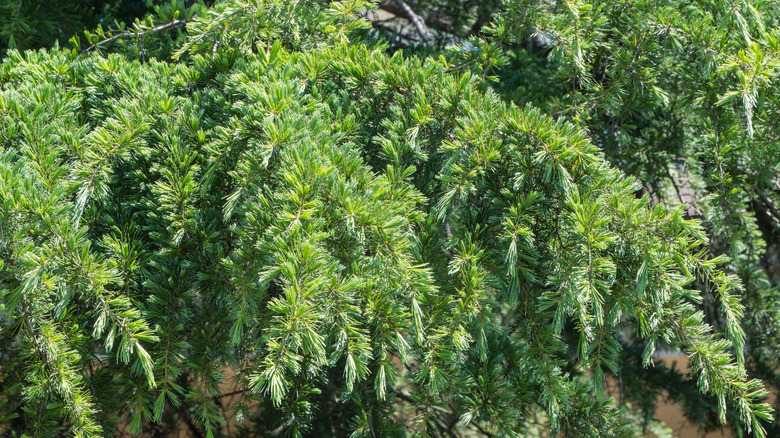
Cedars (Cedrus spp.) are flexible enough to bear light snow loads and may even benefit from it because of the insulation. However, it's a different matter altogether when they're dealing with a large amount of wet snow. If not removed in time, the added weight causes the branches to droop or split apart, disfiguring the trees permanently and reducing the probability of a successful recovery. To spruce them up, you must clip off the damaged sections, without leaving any stubs, which is a huge hassle and could create bare spots that may take multiple seasons to fill out.
Leyland cypress
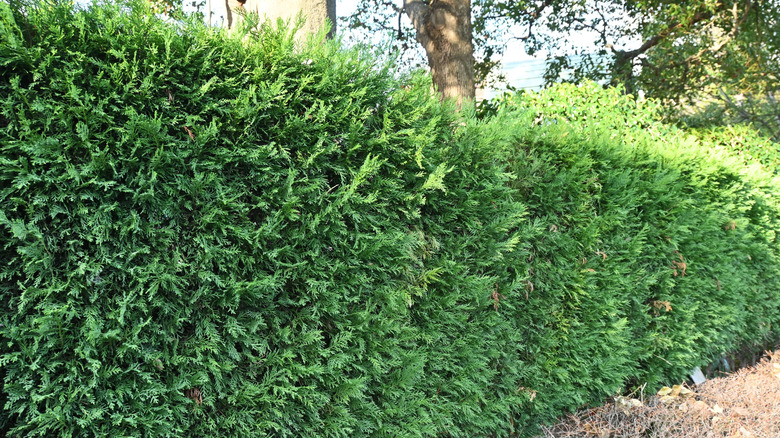
It may seem that Leyland cypress (x Hesperotropsis leylandii) is the best kind of cypress tree for a substantial privacy fence. It grows fast, is cold-hardy, and has fragrant, evergreen needles. However, if you live in an area that receives lots of snow, be prepared to brave the cold to give your trees some reprieve. Excessive snow buildup can cause breakage inside the plant, leading to canopy separation. This damage is often irreversible. While tying up the stems and pruning may help, you may need to replace the plant if the damaged area exceeds ⅓ of the total growth.
Pine
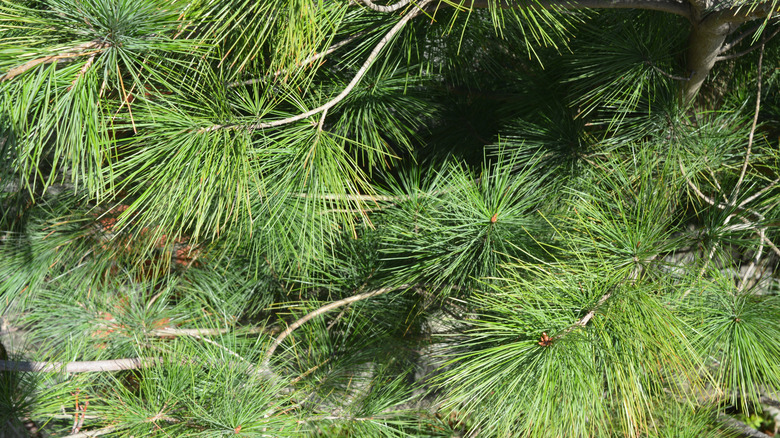
Young pine (Pinus spp.) trees, especially white pines, cannot handle heavy snowstorms. As the snow layers up, their branches droop down, causing cracks and splinters. Sometimes, they may lose their tops entirely. Unable to support their weight due to the lopsided structure, they may topple over. To avoid dealing with that, knock off the snow from their branches. Be sure to remove the snow before it freezes solid, as ice buildup increases the risk of permanent damage.
'Sky Pencil' Holly
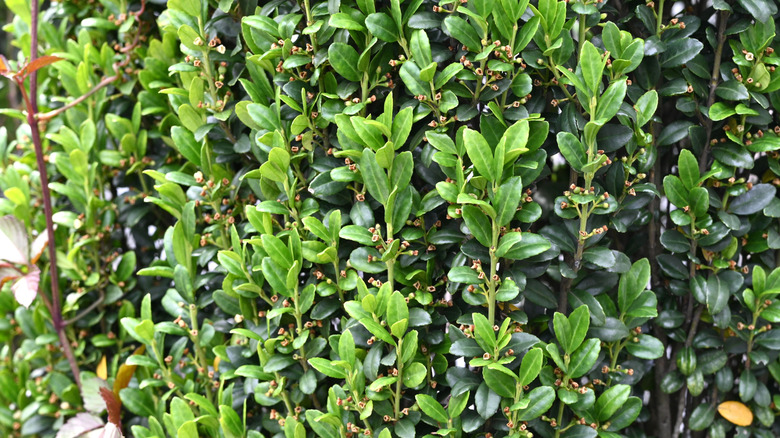
'Sky Pencil' Holly (Ilex crenata 'Sky Pencil') is a space-saving shrub that thrives in tight spaces and stays green year-round until winter temperatures and wet snow have their way with it. Although their upright-growing branches hold strong to their columnar habit, they are usually weak at the plant's base and catch a lot of snow. As a result, these plants splay wide open from their center or suffer branch breakage after a heavy snow event. Without adequate winter protection in place (binds and burlaps), you must brush off the snow before it ices over.
Magnolia
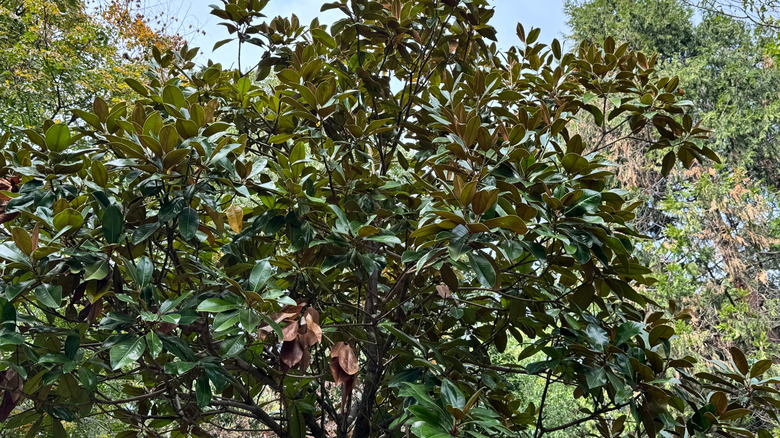
Evergreen magnolia varieties, such as southern magnolia (Magnolia grandiflora) and sweet bay magnolia (M. virginiana), as well as weak-wooded deciduous varieties like star magnolia (M. stellata), can get damaged after a snowstorm. They usually have brittle branches that break under the weight of snow and may completely detach from the base at their joints. To reduce stress on the plant, gently brush off snow once the storm passes. Moving forward, loosely wrap the plant in burlap until spring, making sure it doesn't touch the foliage to avoid trapping moisture.
Siberian elm

One problem common to fast-growing trees like Siberian elms (Ulmus pumila) is that they sacrifice structural integrity for rapid growth rates. As a result, their branches are usually fragile and are unable to bear heavy snow. Unless you want your garden riddled with twigs that make walking over snow-laden landscape hazardous, make sure to sweep off the branches after the storm. That being said, if you live in a state that considers Siberian elm an invasive species, consider removing it from your yard to protect the local biodiversity.
Maple
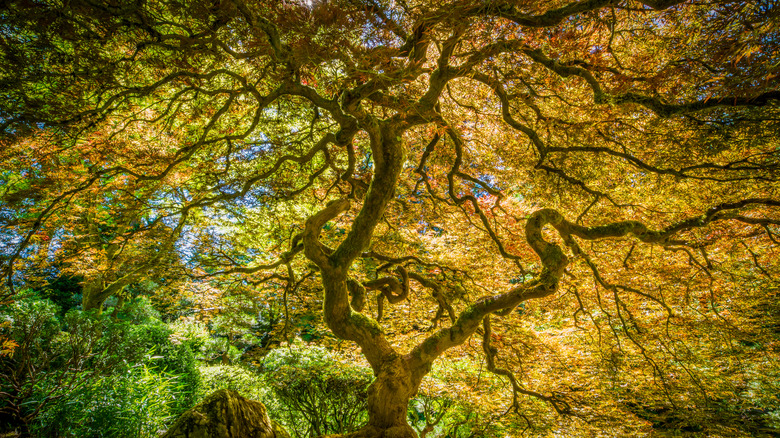
Maple trees (Acer spp.), but especially silver maples (A. saccharinum), require your aid after a snowstorm. Although they grow to majestic heights, they typically produce weak growth. So, when they're left unprotected in the winter, a single snow event can greatly damage the growth, with limbs dangling precariously from the bark, or in worst circumstances, wholly ripped apart from the tree. Trees that sustain this level of damage often struggle to recover and may need to be removed. However, if you're quick to remove snow, there's still a chance to revive them through proper pruning.
False cypress
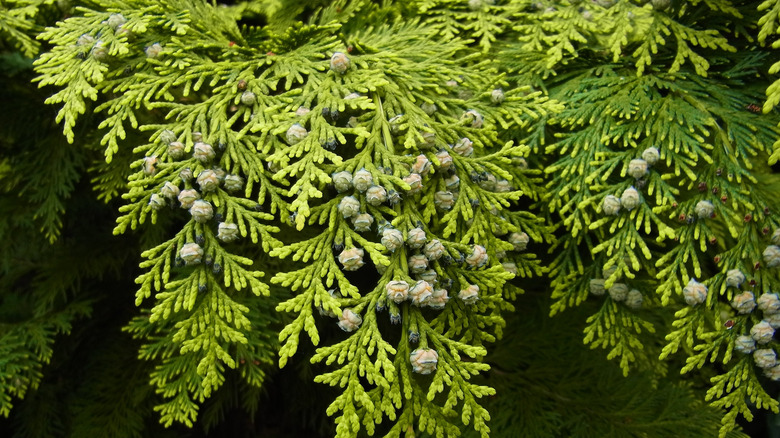
Many homeowners tap into false cypress (Chamaecyparis spp.) trees for a low-maintenance, privacy screen, ignoring the fact that they require wind and snow protection. Heavy snow loads weigh their branches down, causing the trees to develop a lean, which can be hard to fix, as they grow quite tall. Although, given a year, the plants will eventually right themselves to some extent, they're unlikely to return to their pre-storm form. So, consider removing the snow from them before it gets too thick.
Poplars

Poplars (Populus spp.) make beautiful specimens in most yards, and their fast growth further drives their popularity. Sadly, they're susceptible to heavy damage if they shoulder wet snow for long. Poplars develop weak branches that are narrowly attached to their trunk (V-shaped crotches) and may even include ingrown bark tissue. Such joints easily fracture under the heavy weight of snow, necessitating corrective pruning to restore balance and health.
Boxwood

Apart from screening your boxwood (Buxus spp.) shrubs and hedges for blight, you must also monitor their foliage for snow loads. In small amounts, the flurries can protect the foliage from winter burn, ensuring it remains green and doesn't develop any browning tips. However, when they pile on thickly, the branches get ripped off from the shrub, leaving it misshapen. While boxwoods tolerate heavy pruning, removing excess snow early can help you avoid it altogether. Or better yet, if you protect the plants beforehand with burlap.
Rhododendrons
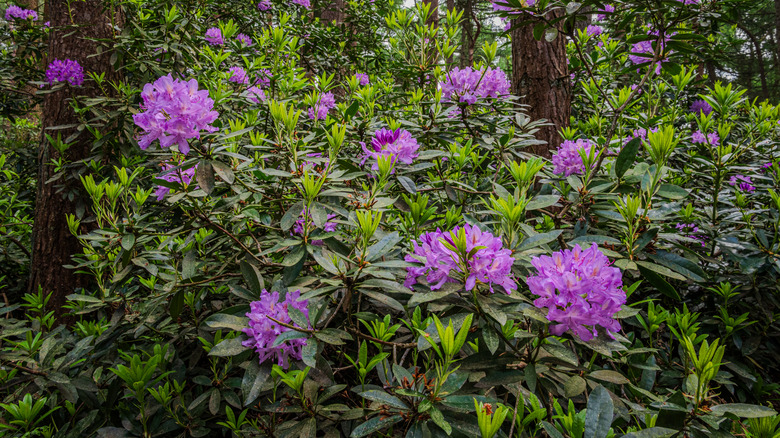
Similar to the case of boxwoods, rhododendrons and azaleas, including Encore azaleas, will benefit if you remove wet snow from their leaves. Since they have a large surface area, they can collect heavy amounts of snow, which can weigh down their limbs. Eventually, these limbs break under the pressure, opening the shrubs to rot and decay. To ensure healthy growth, brush out the heavier layers and blanket them around the roots so they're protected from any extreme temperature swings. You may also want to secure a netting or burlap around the shrubs until spring arrives.
Camellia
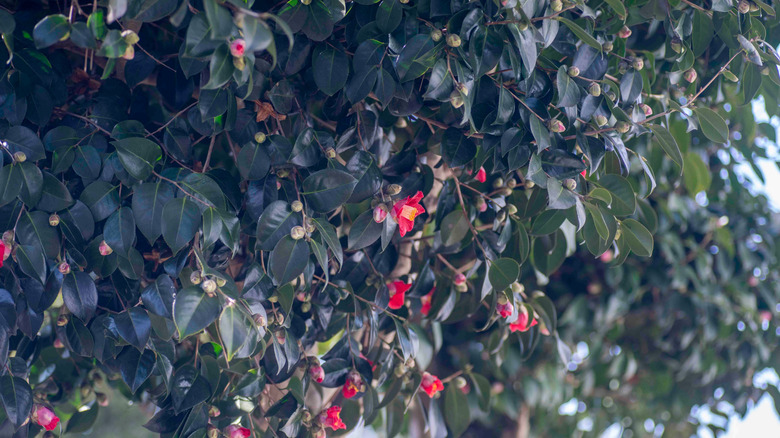
You'd think that broadleaf evergreen shrubs like camellias (Camellia spp.), which inject a pop of color in dreary winter landscapes with their large blooms, would easily withstand snow. And they do, when it's an inch or two thick. Past that stage, they may start taking damage because of the large surface of their leaves. If the snow isn't brushed off in time, not only will the plant appear flat, with the stems bent or cracked, but you may also lose any unopened buds, and by extension, the season's blooms.
Hydrangea
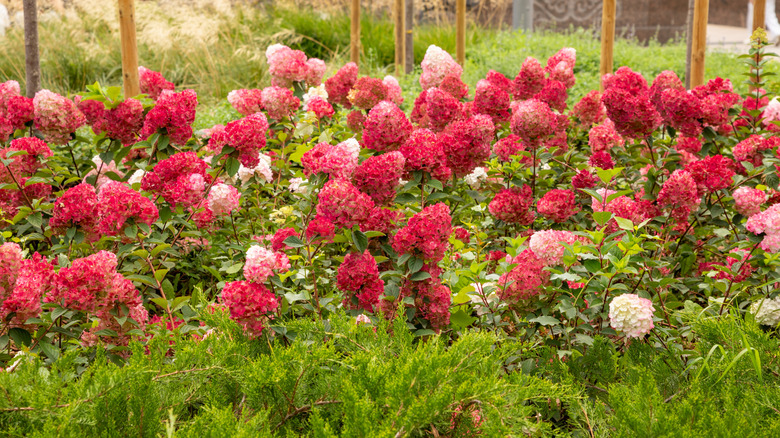
Hydrangea (Hydrangea spp.) shrubs are beloved across shaded gardens for their beautiful blooms and the pollinators they attract. In order to keep enjoying these benefits, you must winterize them properly. Most hydrangea varieties, especially when young or newly-planted, have delicate stems that bend under heavy snow layers. If you don't knock them off in time, they may crack. Pruning back the snow-damaged branches in spring may induce recovery, but it often leaves you with a misshapen plant and fewer blooms for the season.
Wax myrtles
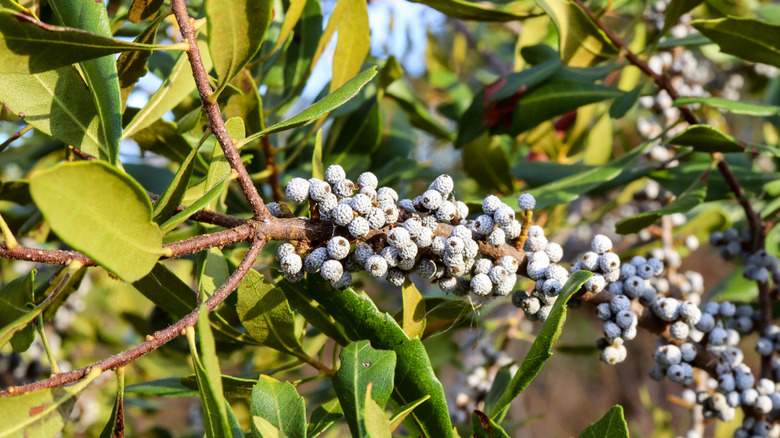
Wax myrtles (Myrica cerifera) are highly versatile plantings and are usually deployed around driveways or walkways where their ability to tolerate salt drift is handy. However, because they're usually grown as multi-stemmed trees and produce evergreen foliage, they can amass a heavy amount of snow, which eventually flattens them down. So, unless you remove the snow before it adds up high, you risk branch breakage. While you may be able to save the plant by cutting it back to the ground in spring, you'll lose the flowers and fruits for a couple of seasons.
Forsythia

For the most part, forsythia (Forsythia spp.) can handle winter snow with ease and requires no protection. In fact, many cultivars benefit from a light dusting of snow so their unopened buds are insulated from the cold temperatures and can unfurl in time for spring. However, if your shrubs are planted in foundation beds where they may be exposed to snow sloughing off the roof or experience heavy storms, their branches can splinter under the additional load. Extend them a helping hand by leaving a thin layer of snow in place and gently removing the rest.
Lilac
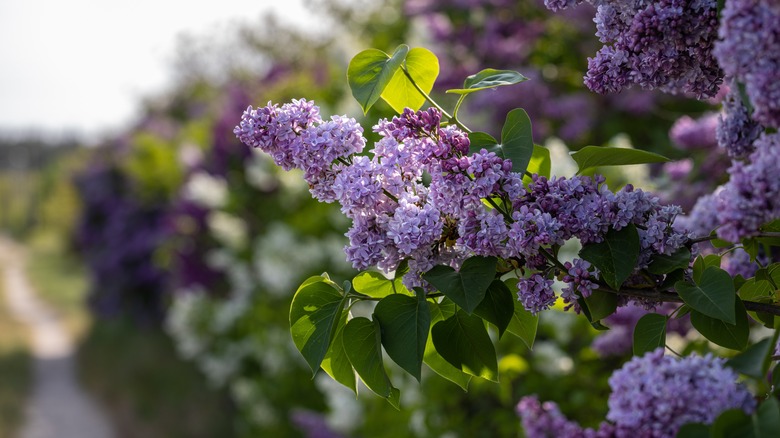
Although lilac (Syringa vulgaris) shrubs are quite hardy and a staple planting in northern climates, you should remove wet snow from them when it piles on too thickly. Their twiggy branches are usually flimsy and can bend from heavy snow loads. In extreme cases, the entire shrub may collapse, with stems broken or stripped of bark. Brushing off snow can help alleviate some weight and better the chance of recovery. Otherwise, pruning becomes necessary, which can reduce blooms since lilacs flower on old wood.
Spruce
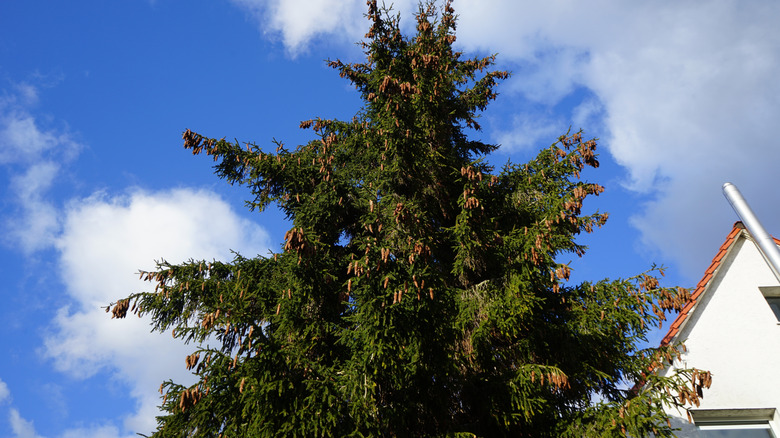
Much like their conifer cousins, spruce (Picea spp.) trees can become damaged in the event of a heavy snowfall. While their branches are usually flexible and can bear light loads, they eventually reach a breaking point. It's not uncommon for them to lose their top growth and canopies. Top-heavy plants may even heave out, as their shallow roots are unable to shoulder the weight. As soon as you can safely access the tree, lightly brush off the snow with a broom in the upward direction. Any broken limbs may be pruned out to their joints in late winter.
Avocados

Avocados are notoriously sensitive trees that require careful protection to produce fruit, or they won't bear fruit. Even when you grow cold-hardy specimens, it's advised to provide frost and snow protection through a burlap or a frost blanket. Their leaves can hold a lot of snow, which causes their branches to bend. If enough moisture seeps into the twigs, their bark may separate, curl up, and splinter. To avoid losing the harvest or pruning the tree heavily to restore balance, brush away any heavy snow buildup when you get the chance.