

The Cold-Hardy Cherry Tree Variety That'll Attract Birds In The Spring
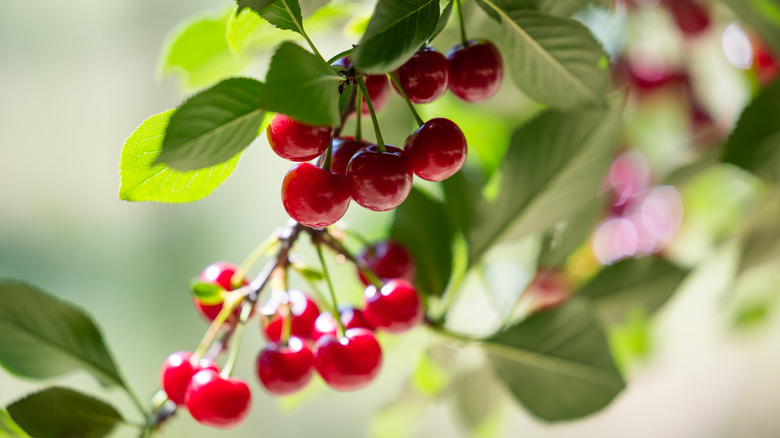
Prunus cerasus, better known as the pie cherry tree or sour cherry tree, is a cold-hardy variety that grows in USDA Zones 3 through 8, depending on the specific cultivar. It can be found across most of the United States and is an excellent choice for areas with cold winters, as it's rugged and can withstand wind chills. As the name suggests, it produces a bounty of sour cherries. While bakers prize the tart fruit for pies, birds love it just as much, making this tree a great option for attracting feathered friends to your yard.
These bird-friendly cherry trees are also relatively easy to care for. They are small to medium in stature, growing to about 8 to 15 feet tall, and feature lanky branches with glossy, dark green leaves. However, if you're looking for compact cherry tree varieties that will thrive in your small garden, the pie cherry tree is also available in dwarf and semi-dwarf varieties. Most cultivars are self-fertile, meaning they can pollinate themselves and produce a nice harvest. They flower in late spring and are ready to harvest in the summer.
How to care for pie cherry trees
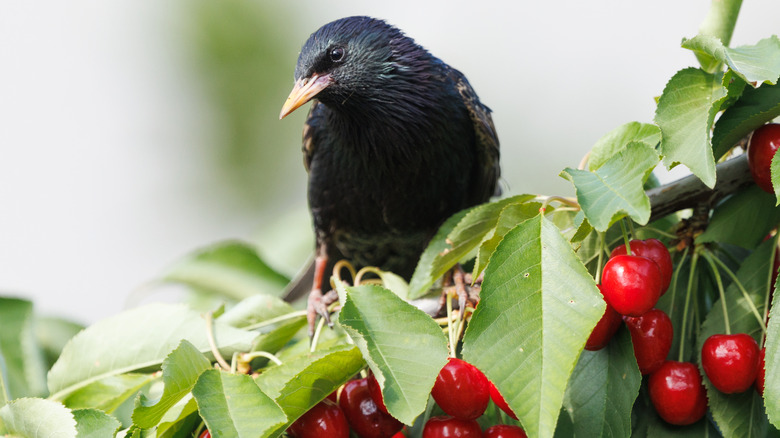
Pie cherry trees are not only wonderful bird attractors, but they're also beautiful when in bloom. Because they are susceptible to root rot, pie cherry trees should always be planted in well-draining soil. Sunlight is also an important consideration before planting, as these fruit trees require at least eight hours of full sun exposure per day. Dwarf varieties can be spaced 6 to 12 feet apart, while more standard varieties will require spacing of 20 to 24 feet between trees.
Pie cherry trees benefit from staking during their first two years of growth. They will mature in 3 to 5 years and then will need to be pruned annually. The best time of year to plant a cherry tree is typically in early spring, after the ground has thawed. It's important to watch out for signs that you might be overwatering your cherry trees, as this can make them more susceptible to disease. It's also important to note that pie cherry trees are considered invasive in Maryland and Virginia and should not be planted there.