

12 Home Maintenance Tasks You Should Be Doing More Often Than You Realize

Home ownership is the goal of many, but it's easy to ignore all of the upkeep that comes with buying a house. Not only do you have day-to-day cleaning routines, but you also have larger maintenance tasks to keep the home in good shape. While many of those tasks — like changing the HVAC filter and testing your smoke detector — are tasks you know you should do, you might not realize how often they need to be done. Or, you might get so caught up in all of your other responsibilities that you don't realize how long it has been since you last sealed your grout lines or deck. Other home maintenance tasks might be things you don't realize you're supposed to do, especially if you're a first-time homeowner. This includes tasks like draining your water heater, testing your sump pump, and cleaning your sewer lines.
Whether due to a lack of knowledge or a busy schedule, skipping these tasks could cause serious issues. Delaying some maintenance tasks could trigger damage that requires expensive repairs. You could be unknowingly creating safety hazards — not handling pest control could expose you to rodents that can affect your health, and not maintaining your plumbing could encourage mold growth, for example. Additionally, waiting too long between maintenance sessions can make the job more challenging. Not trimming branches over your roof could create an overgrown situation that requires more effort to remove safely. The following 12 home maintenance tasks are jobs that many homeowners overlook or wait too long to complete.
Changing your furnace air filters before they get clogged

You're supposed to change your furnace filter how often? Changing the air filter on an HVAC system is one of those tasks that's easy to forget — the unit is usually tucked away where you don't see it. You may find yourself forgetting when you last changed it since it's a task you need to do fairly often. Day-to-day life keeps people busy and makes it easy to forget. But if you don't do it regularly, you're potentially causing problems for the unit and your health. Clogged filters put more strain on your heating and cooling equipment, which could increase energy consumption and wear and tear. Since the filter affects indoor air quality, not changing it often enough can increase indoor pollutants and worsen allergy symptoms.
So, when should you change your filter? A general recommendation is to change the filter every two to three months, but that's not accurate for all filter types. Thin filters that are 1 or 2 inches thick usually need to be changed every one to three months. A filter that is 3 to 4 inches is usually ready after six to nine months, and 5- to 6-inch filters could last nine to 12 months. However, other factors also affect the timing — living in a dusty climate or a large city with lots of pollution could clog air filters faster. Pets also contribute to clogged filters with their fur and dander. Check the filter monthly for signs that it is getting dirty, which may include discolored patches or a thick layer of dust on the filter.
Draining your water heater to eliminate sediment
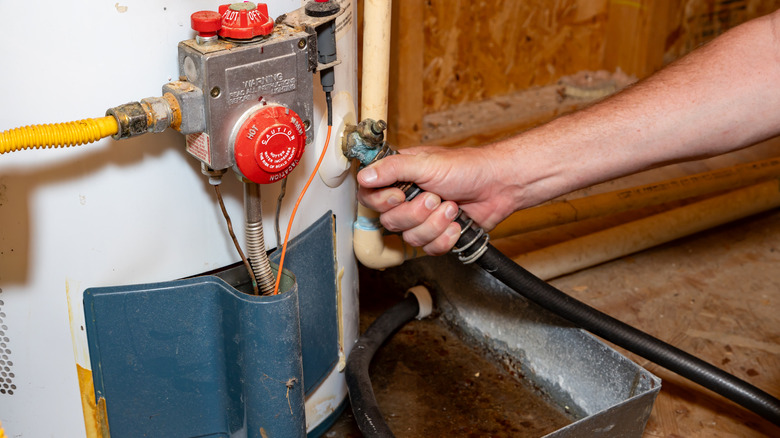
Did you know you are supposed to flush your water heater at least once per year? If not, you're not alone — it's a common home maintenance task that homeowners don't realize they need to do. The purpose of the task is to empty out the sediment that can settle at the bottom. If you skip this task, you could be dealing with accumulated minerals and sediment, which can decrease the efficiency of the tank. That can cause an increase in your power bills because the water heater has to work harder. Over time, the buildup of sediment can lead to corrosion and leaks.
If you've never drained your water heater, do so now, and then get on a yearly cycle. More frequent flushing may be necessary if your water heater is old or you have very hard water in your area — in those situations, you may need to flush it every six months. There are telltale signs it's time to drain your water heater, including discoloration in the water, strange noises, unusual smells, and reduced hot water. If you notice those issues, even if it hasn't been a year since the last flush, drain the water heater to see if that fixes the problem. Hiring a professional to flush the system can cost around $200, or you can do it yourself by locating the drain valve and attaching a garden hose (just be sure to turn the unit off first).
Inspecting and testing your smoke detectors, carbon monoxide detectors, and fire extinguishers
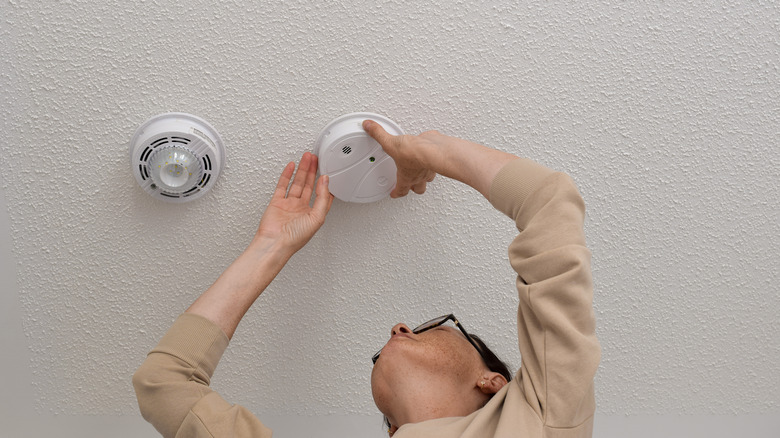
You know how important smoke detectors, carbon monoxide detectors, and fire extinguishers are to your home, but they are also not things you think about too often. They tend to blend in with the surroundings because you're so used to seeing them there. In fact, you might not think to check the batteries or press the test button unless a battery warning chirp goes off. Forgetting to check those devices could result in them failing when you really need them, which puts lives at risk.
How often should you be checking your smoke and carbon monoxide detectors? Test smoke detectors monthly, replace the batteries at least yearly, and replace the alarm after 10 years. You'll also want to check your carbon monoxide detector monthly, but keep in mind that the button on the unit is just to tell you if it's getting enough power. You'll need a CO test kit to check the sensor's accuracy. Replace the batteries twice a year, and replace the carbon monoxide detector after five years. Do a visual inspection of your fire extinguishers monthly to make sure they're free of leaks, dents, and other damage. They typically need to be replaced every 10 to 12 years, inspected by a professional yearly, and undergo hydrostatic testing after about five years.
Checking plumbing pipes and drains for leaks and clogs
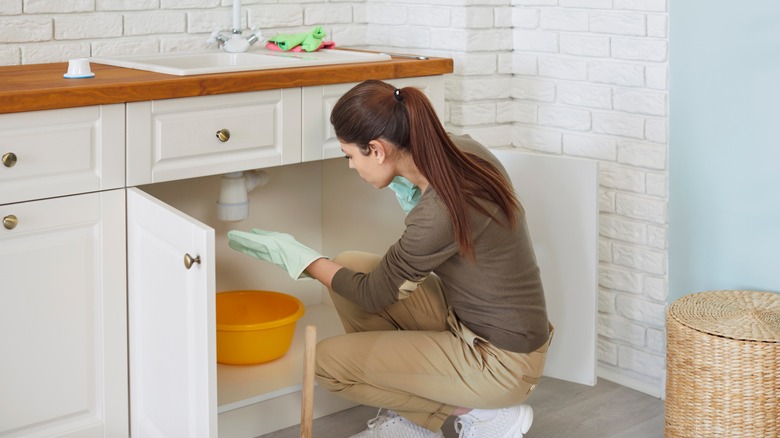
Your plumbing is another home system that you probably don't really think about unless it has issues. It's a mistake to assume the pipes are secure and working fine, though. Leaks and clogs are common issues that affect household plumbing, and both can cause serious problems. Even small leaks can weaken materials like drywall, warp flooring, cause stains, and encourage mold growth. Clogged drains can weaken or crack pipes, cause backups, accelerate corrosion, and encourage bacterial growth. The longer those issues go undiscovered, the more potential for damage there is.
Checking for leaks is one of several monthly tasks to maintain your home. Look at the exposed pipes under your sinks and in your basement or other unfinished areas to check for damage, leaks, or signs of moisture. To inspect your drains, run water in sinks and tubs to see how well it drains. A flashlight is also helpful to look down the drain to check for buildup that you can clear away. Since a lot of the pipes are hidden by walls, floors, and ceilings, it's also a good idea to have a yearly professional inspection performed by a licensed plumber.
Lubricating garage door springs to get more life out of them
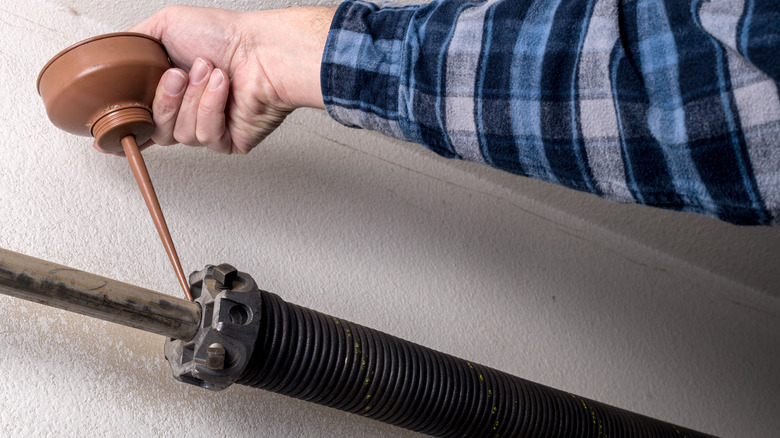
Most garage doors get opened and closed a few times a day. The torsion springs, which are the large coils that run horizontally right above the garage door's opening, play a big role in lifting and lowering the heavy door. The more you open and close the door, the more wear those springs experience. On average, you will get about 10,000 cycles (each cycle is opening and closing the door once) from your torsion springs. Throughout the year, a typical garage door will go through about 1,000 to 1,500 cycles. Lubricating the springs can help maximize their lifespan — it cuts down on friction, which allows the coils to move smoothly with less wear and tear.
How often you should lubricate your garage door springs can depend on how much use the door receives. The average frequency is once every three to six months. But lubricating two or three times per year may not be enough if the garage door gets used more frequently than normal or if you live in a wet, humid climate where rust is more likely to develop. The coils may need to be lubricated if they make a grinding sound or seem like they're not turning smoothly. When lubricating the springs, use white lithium grease or silicone spray, and never use WD-40, since it's a degreaser.
Sealing grout lines to protect the porous material

If you have any tiled surfaces in your home, are you resealing the grout often enough? There is a good chance that you are not. Standard grout is a porous mixture that's not waterproof on its own, which is why sealing it is a must. Tile grout lines will absorb liquids if they aren't sealed, which encourages the growth of mold and mildew. It's also common for the grout to get stained and dirty just from normal use. Those marks aren't easy to remove when the grout is unsealed. A grout sealer creates a barrier that prevents moisture from entering the porous material, and makes cleaning it easier. Even if you apply a sealer when you install the tiles, it will eventually wear away, particularly in high-traffic and moist areas, which is why it needs to be reapplied regularly.
It's a good idea to clean your grout thoroughly and reseal it at least once per year. However, you may need to seal it more or less frequently, depending on the area. Low-traffic areas that stay relatively dry may only need to be sealed every other year, while showers that are used regularly might need to be resealed every six months. It could be time for a new coat of sealer if the grout starts to get darker, stains easily, doesn't come clean as well as normal, or water stops beading up on the grout.
Testing your sump pump to prevent flooding

There are several things to know before you buy a sump pump, including the fact that you need to test it regularly. It's the best way to avoid surprise flooding when you find out the hard way that your sump pump is not working correctly. Unlike your faucets, electricity, and other features that you use all the time, your sump pump is something that only gets occasional use when it's needed. So you might not realize something is wrong until it's too late. A sump pump that fails to turn on could allow your basement or lower level to flood.
A little maintenance keeps the sump pump in good condition and helps you spot any issues early. Testing the pump typically should happen every three to four months, or once per season. It's also a good idea to check it if you expect heavy rainfall or snow in your area — that way, you'll feel confident that it can handle the incoming deluge of water. During the inspection, check the discharge pipe where the water exits your house to look for any blockages. To make sure the pump is working, pour water into the pit to activate it. If you have a battery backup for the pump, run a second test — shut off the main power source before pouring water in the pit to make sure it activates.
Trimming tree branches that overhang your roof to prevent shingle damage
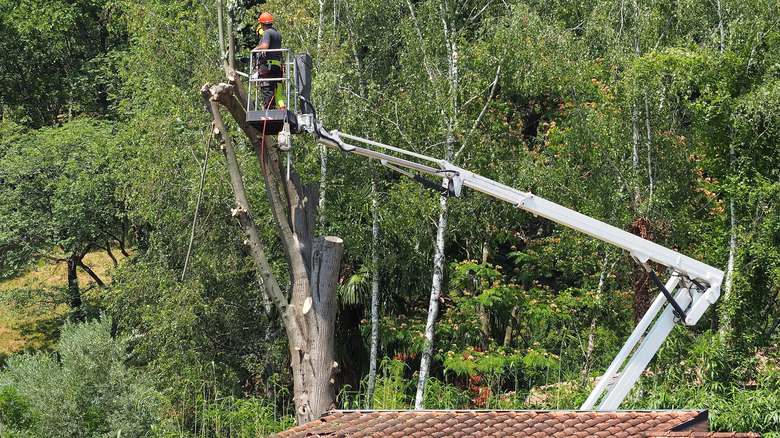
Normally, trees only need to be pruned every three to five years (although some species may vary in their pruning needs). Even with such long spacing between pruning, some homeowners let their shade trees grow for years until they cause a problem. But the branches that overhang your roof are even more of a concern if you don't realize how often you should be pruning them. They often need much more frequent trims to maintain enough clearance to keep them off the roof. Branches that get too close to your roof can damage the shingles, crash through the roof, drop debris, and encourage mold and mildew growth by trapping moisture.
Because of the risks, it's a good idea to schedule tree trimming every year for the branches that grow near your roof. Ideally, you want at least 6 to 10 feet between your roof and any tree branches in the area. Pruning too much can be detrimental to the tree, though. The Nebraska Extension in Lancaster County recommends cutting off no more than a third of the foliage, while the Colorado State University Extension suggests removing no more than 10% of the foliage on a mature tree, with less removed if you prune annually. Regular pruning each year allows you to keep the branches away from the roof without having to remove too much at once. Working with a local arborist allows you to customize your pruning plan based on the trees in your yard.
Applying pest control methods to keep bugs and rodents out of your house
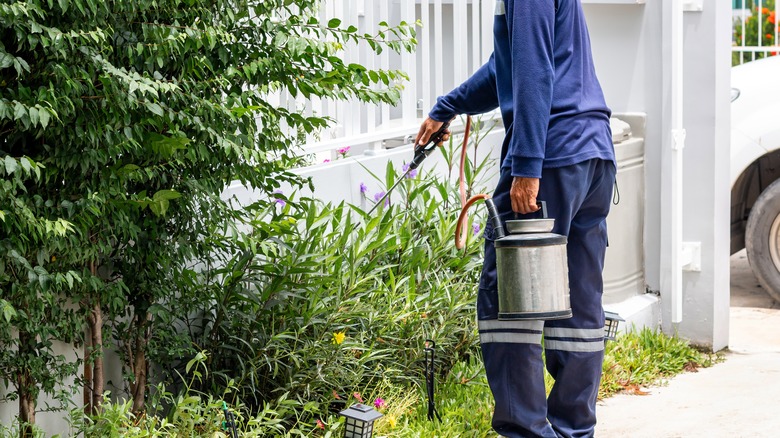
Ants famously come marching into your home in spring and summer, but there are pest threats year-round that you may not be prepared for. Pest control methods help prevent infestations inside your home, so you're not stuck trying to get rid of bugs or rodents that are already living with you. It can feel frustrating to deal with an infestation, and some pests are downright difficult to get rid of. Others are potentially harmful to your health — rodents and their droppings can expose humans to several serious illnesses, for example. What you might not realize is that pest control is not a one-time task — you have to be diligent about it to defend your home against each seasonal threat.
The frequency of pest control application depends largely on the threats in your area and the condition of your home. For example, cockroaches reproduce rapidly, so if you have concerns about them, you may need to treat more often. If your home is already infested, you may need more frequent applications. Common schedules are monthly, bi-monthly, and quarterly.
Checking for and repairing cracks and gaps on foundation, windows, and doors
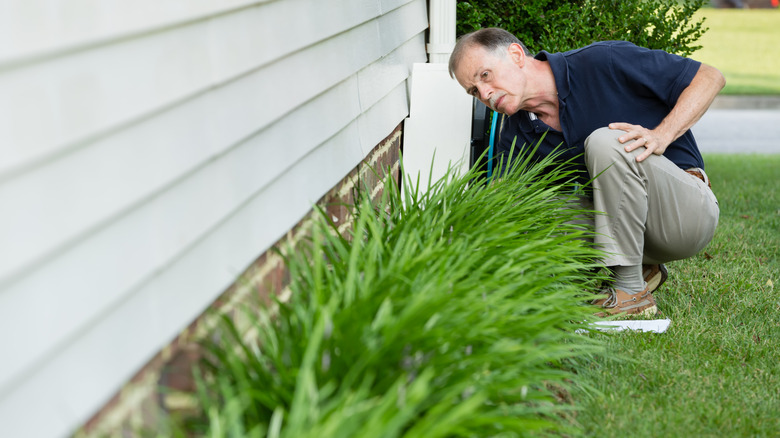
Sealing gaps is a home maintenance task you should be doing for lower energy bills and a more comfortable home. But you likely won't notice that the gaps are there until they're huge if you don't regularly inspect your home. You might be surprised how quickly the condition of your home can change, especially if your area experiences extreme weather — for example, saturated soil can cause damage to your foundation. If the foundation shifts, it could cause larger gaps around your windows and doors. Those gaps can cause a decrease in your home's energy efficiency. Gaps also provide an opening for pests to enter your home.
To keep an eye on changes, walk around your home and inspect the foundation thoroughly once per season. It's also a good idea to check your windows at the same interval — set aside a few hours one day each quarter to check for those gaps and cracks. You may find it easier to detect gaps around doors and windows in the cooler months when the frigid outdoor air blows inside.
Having your sewer lines cleaned to prevent clogs and identify issue

While there are many home maintenance skills to master, cleaning sewers isn't one of them — that's a job that's best left to professionals. But just because you cannot do it yourself doesn't mean you should ignore it. Your sewer could be silently brewing major issues underground, and you might never know it. Since everything that you drain or flush goes through the sewer line, you definitely want to keep it in good condition. The problem is that waste can build up in the pipe. Even worse, moisture-seeking tree roots can grow through the line, causing leaks and major damage. If your home is older, the sewer line could be made of an outdated material that is no longer durable and is susceptible to corrosion.
Since you can't see what's going on in the buried sewer pipe, you need to schedule regular inspections performed by a licensed plumber. For most homes, scheduling a cleaning every one to two years should keep your pipes clean and in good condition. However, if you have a large family where there's heavy use of the plumbing, or there are higher risk issues, such as tree roots or old pipes, you may want to have the lines cleaned every six to 12 months. Even if it's not time for a routine cleaning, you may want to call a plumber if you notice issues, like lots of backups, sewer smells, or slower drains throughout the house.
Sealing your pavers and decks to protect against weather elements

Another important task you might not be doing often enough is properly sealing your backyard patio pavers and deck boards. Sealing helps prevent porous materials from absorbing excess water, which cuts down on rotting, cracking, and mold growth. It also helps maintain the material's appearance, since the weather elements tend to dull and fade the appearance over time. If you wait too long to apply the sealer, you could shorten the lifespan of your outdoor space.
The timing often depends on the climate and the location of the patio or deck. For example, humid and stormy climates may wear down the sealer faster, making it necessary to reapply more frequently. Sealing is also necessary more often in high-traffic areas that you use regularly or in spots that receive lots of sunlight throughout the day. A general guideline for patios pavers is to deep clean and seal every two to three years, unless they needs new sealant sooner. For a wood deck, you may need to seal the surface every year.