

The Mid-Century Modern Glass Item You Don't Want To Miss At The Thrift Store
We may receive a commission on purchases made from links.
Thrift stores are a great source of affordable, unique, and vintage home decor finds. Thrifting offers a budget-friendly way to give new life to old items and elevate your home's style without a large financial investment. The mid-century modern glass item that can do just that is Depression glass. As the name suggests, Depression glass originated in the Great Depression as an affordable alternative to more expensive crystal and china at a time when both families and crystal manufacturers were struggling. Manufacturers started mass production of this colorful glassware because it was less expensive to make, more affordable for families, and helped keep their workers employed.
Depression glass was mass produced from the late 1920s through the 1950s. The glass is thinner than crystal and created from molds with little or no hand finishing. In addition to being sold at affordable prices, Depression glass was often used as promotional items. During the Great Depression, it was often given away in cereal boxes, soap boxes, at gas stations, and movie theaters. The glass was manufactured in dozens of patterns in colors that include pink, amber, yellow, blue, green, and clear. Because this glassware has seemingly little value, it is often donated. However, it is highly collectible, and some rare pieces can be worth a bit of money (or at least more than you'd pay at the thrift store). Learning how to identify vintage Depression glass will make spotting this glassware in thrift stores easier.
Identifying and valuing Depression glass
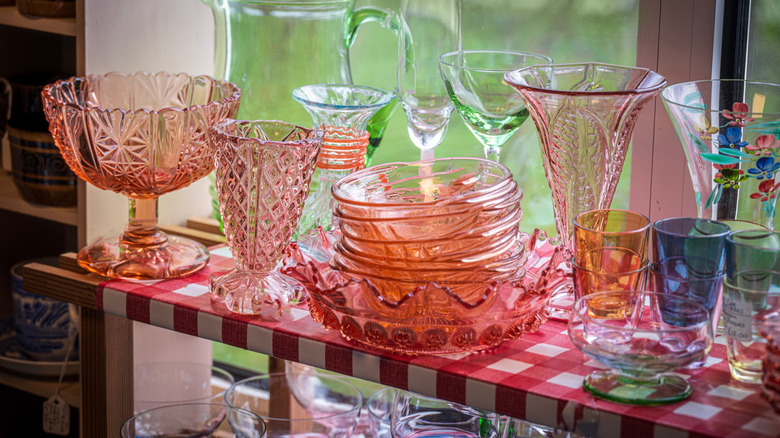
Recognizing Depression glass on the shelves of your favorite thrift store is easier when you know the features to look for. Although this dainty glassware was manufactured in a rainbow of colors, the glass is also transparent. This glass became popular again in the 1970s and several companies began manufacturing reproductions. These are thicker, heavier, and the colors are different, which makes it easier to tell the difference between them and original Depression glass.Although it was made in large quantities, it can be hard to find original Depression glass in good condition today, since it is so thin and easily cracked. Some flaws, such as bubbles in the glass or imperfect molds, are typical in the mass-produced glass from that era.
Depression glass was manufactured in a variety of colors, but some shades were produced in larger quantities than others. Pale pink, green, and amber were the most common colors and these hues are the easiest to find at thrift stores and estate sales now. The most valuable Depression glass colors to search for at thrift stores and estate sales include brighter shades like ruby red, aqua, ultramarine, and amethyst. Individual pieces can resale for around $20 to $40, while complete sets — like this pink 30-piece dinner set for eBay – can be worth several hundred dollars.
Depression glass patterns to look for
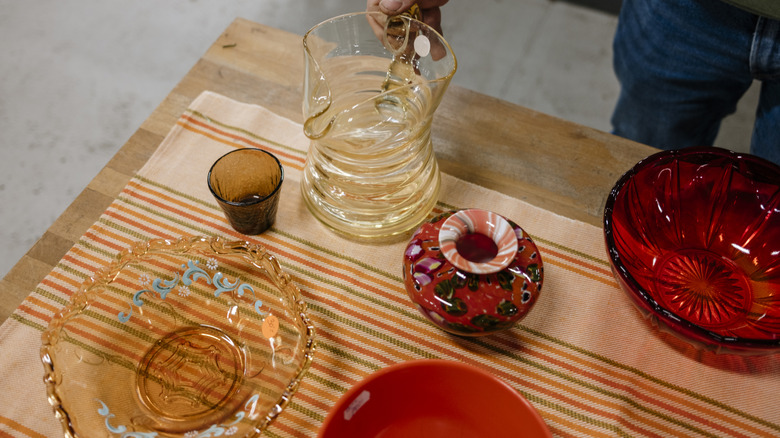
Color is one way to identify and value Depression glass, but it is not the only thing to consider. The pattern of a particular piece of Depression glass can influence its value. As with colors, some patterns were more common than others and rarer patterns tend to be more valuable among collectors. There are a few dozen Depression glass patterns you should keep an eye out for at the thrift store.
Depression glass was manufactured by several companies, such as Anchor Hocking Glass Company, Cambridge Glass Company, Hazel-Atlas Glass Company, and Indiana Glass Company. The glass was made in around 100 different patterns in plates, bowls, glasses, cake plates, teacups, butter dishes, salt shakers, pitchers, and more.
Some of the most sought-after patterns in Depression glass include the Mayfair (Open Rose) and Cameo patterns from the Anchor Hocking Glass Company. Other popular patterns include Royal Lace from Hazel Atlas, American Sweetheart from MacBeth Evans Glass Company, and Madrid from the Federal Glass Company. Finding these patterns in a rare color is a real find. Regardless of the resale value, adding colorful and historic Depression glass to your home is the real prize for avid fans of this unique glassware.