

Flash Flooding: Must-Know Tips And Advice For Protecting Your Home
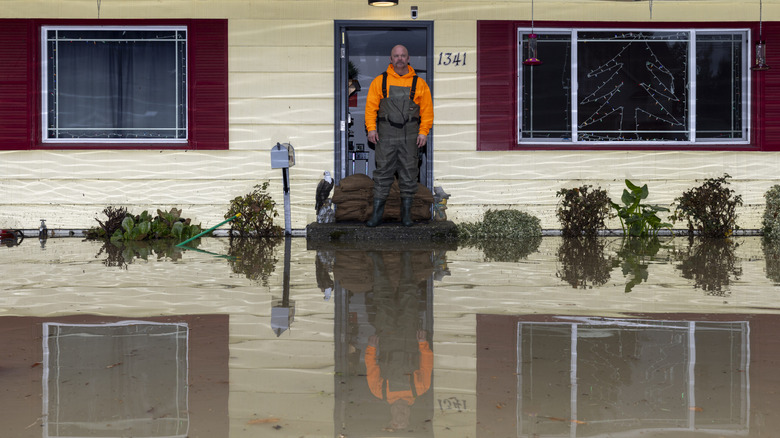
Flash flooding makes its way into the news virtually every year, but you might still be surprised to learn that FEMA ranks flooding as the most common and costly disaster in the United States and notes that it can happen anywhere. The National Weather Service defines flash flooding as a flood caused by excessive rainfall over a period of about six hours. Such floods may be accompanied by torrents of rushing water that can tear through anything in their path. They are also characterized by intense speed.
Do you know your risk? Protection starts with a risk assessment that reveals how much you need to do in advance to keep your home safe from flash floods. Among the most important things to know are your property's flood zone and "base flood elevation," which you can learn from FEMA's online Flood Map Service Center. Base flood elevation refers to the expected level of floodwater during a flood event with a 1% chance of occurring in a given year. You can find additional tools, apps, and commercial enterprises that evaluate flooding risk online. It's also advisable to ask community leaders and neighbors about the history of flooding in your area, like how often floods occur and what level the water has reached. Gathering such data is one of the important ways to prepare your home for a flash flood before it's too late. Once you have a better idea of your risk, you can make smarter decisions about implementing tips and advice for protecting your home.
Obtain flood insurance

Your first questions are probably about how to determine if you need flood insurance for your home. Insurance, of course, will not protect your home from a flash flood, but it will compensate you for damages. Because most homeowner's insurance does not cover flooding and because even properties statistically at low risk for flooding are not free from flooding danger, it's wise to obtain flood insurance. According to data from FEMA, flooding claims from homeowners whose property is outside high-risk areas comprise more than 25% of flood claims. It takes only an inch or so of water to cause thousands of dollars in damages, so you won't want to be caught short. Under certain conditions, such as holding a federally backed mortgage, flood insurance is even mandatory .
The U.S. federal government's National Flood Insurance Program (NFIP) provides reduced premiums for policyholders who modify structures to avoid flood damage. The NFIP has also set flood-resistant building standards, involving modifications such as elevating buildings above flood level, using flood-resistant materials, and ensuring house foundations are well-anchored to the ground. Homes built to meet these standards suffer nearly 80% less flood damage each year compared to those that don't comply.
Flooding, especially flash flooding, is difficult to predict, so the time to get flood coverage is ASAP, as policies take 30 days to go into effect. You'll likely pay lower premiums if you've made flood-resistant upgrades.
Ensure excess water has a place to go that's not your home

Anticipating that a flash flood could affect your area, implement strategies to divert water away from your home. In a flash-flooding situation, any one of these tactics may not be enough to protect your home, but deployed together they will increase your protection. Install one or more rain barrels to collect roof water runoff from your downspouts and reduce flooding. (As a bonus, you can also discover clever ways to reuse rainwater around your home and garden).
Be sure downspouts, gutters, drainage ditches, and storm drains are cleaned of debris three times a year so water flows freely from them and away from your home. Ensure downspouts drain from your home by extending them 6 to 10 feet.
How well does water drain off your property? If it pools up and doesn't drain well, you may need to make sure your lot is graded in a slope away from your home for 10 to 15 feet, so water flows away. Fill in any sunken areas. Consider converting any impervious, paved surfaces into areas that will soak up water. For example, you could convert a sidewalk leading to your front entrance into a mulched path. Swales (shallow ditches) and rain gardens can also be an answer for diverting water.
Prevent water from getting in your home during a flood

Keeping water away from your home from the outside is one way to protect it from a flash flood, but you can also make modifications to the house itself. Be sure, for example, that your home's foundation is sealed and use hydraulic cement or mortar and masonry caulk to fill gaps. It's also good idea to have your foundation inspected annually for issues. Applying a waterproof membrane to your foundation is a smart option for flood protection.
It's also possible to waterproof your basement, addressing both interior and exterior walls. If you hire a professional, the cost to waterproof a basement is not cheap — $3,000 to $7,000, on average, plus the cost of reinstalling or replacing any finishes professionals remove as part of the project. Basement waterproofing may involve interior and exterior hole and crack repair, waterproof sealant application to walls and floor, moisture barriers, and window and door sealing. Drainage systems are also often considered part of basement waterproofing.
Be ready to remove flood water if it enters your home
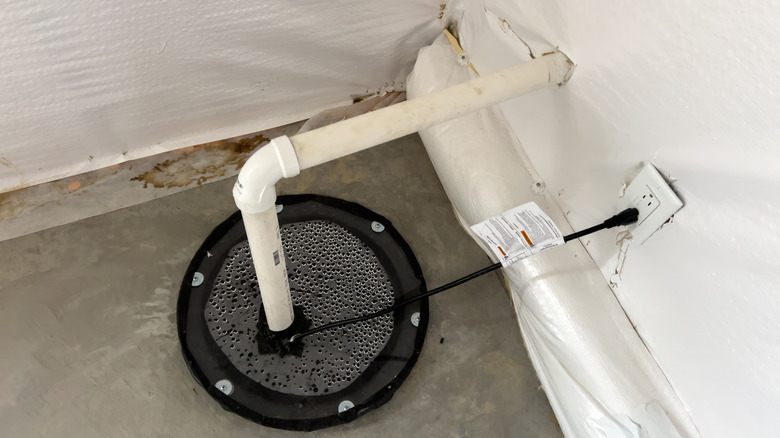
Despite all your efforts to keep flood water out of your home, you'll want to consider strategies for draining it in the event it enters. Your first line of defense is typically a sump pump, which uses sensors to detect rising water and will pump groundwater and direct it away from your home. Consider a sump pump with a battery-operated or water-powered backup in case flooding knocks out power. Check out what to know before you buy a sump pump.
You may also want to consider a French drain, or the similar home drain tile system. Both systems work by collecting water through drainage pipes and channeling it away, avoiding saturated areas or structural damage. French drains are installed at a greater depth in the soil and are less expensive to install. Drain tile systems are best installed during initial home construction. Flood vents can also help protect your home during a storm. Small permanent openings in foundation walls are designed to let floodwater circulate through enclosed spaces, including crawlspaces and garages. Their greatest contribution to protecting your home under flood conditions it to relieve the buildup of water pressure that can send water crashing through walls and the home's foundation. This hydrodynamic pressure is especially present in flash floods because of their velocity.
Though it doesn't get water out of your home, elevation is often used to protect houses, with entire structures being raised above flood level. More common is the practice of elevating utilities, such as fuse and breaker boxes and HVAC systems, at least a foot above flood elevation.