

The Best Way To Mulch Blueberry Plants In Winter For Better Berries In Summer
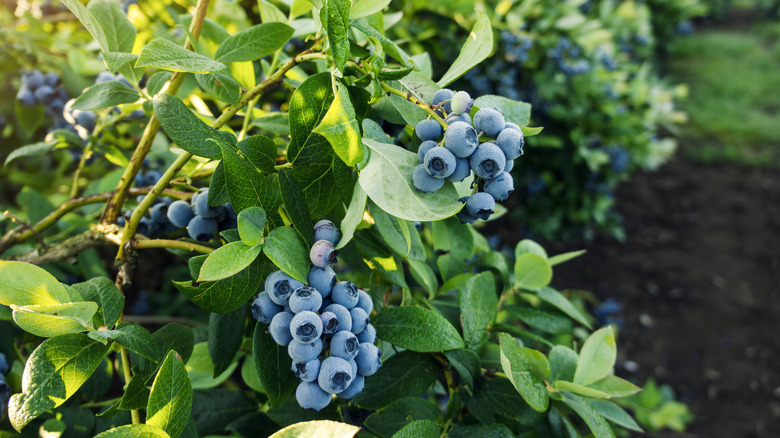
Once temperatures drop, garden maintenance usually slows down, but there are many plants that are still responding to changing conditions in the weather. Behind the scenes, roots and soil continue to react to freezing temperatures, thaw cycles, and winter moisture levels. For blueberry plants, winter soil conditions matter even more because their shallow roots make them sensitive to temperature and moisture changes. When soil repeatedly freezes and thaws, it can expose or stress shallow roots, especially during periods of extreme cold or dry winter conditions. To help your blueberries handle these winter soil changes, you can use low-maintenance measures around the roots to protect them as part of your winter care routine. Mulching is one of the most common winter care steps you can use for your blueberries to protect their shallow root system from the cold.
There are many ways to use mulch in your garden and yard. Mulches made from organic materials such as bark, wood chips, straw, or pine needles perform well around blueberries by helping buffer temperature changes in the soil and maintaining moisture levels. While decorative mulches like stone or rubber can look cool, they usually don't support soil temperature and moisture balance the way organic materials do. An added advantage of organic mulch is that as it decomposes, it naturally fertilizes the soil. Whether you have one blueberry bush or a whole patch, it's better to choose mulches that don't break down too quickly so your blueberries stay protected throughout the cold weather. But choosing the right mulch is just the first step. Knowing how to apply it and how to position it around your blueberry plants will offer the best protection and overall health in winter conditions.
How proper mulching helps protect blueberry plants through winter
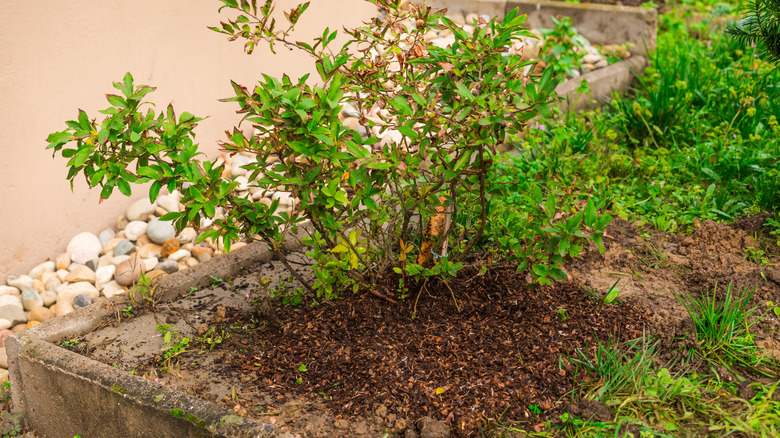
Even the best mulch won't provide much protection if it isn't applied properly. Applying too little or too much mulch can affect how well blueberry plants are protected from the temperature changes that come with winter. When applying mulch, leave a clear space around the main stem and trunk of your blueberry bushes, creating an even ring around each plant. The ideal time to mulch for winter is after soil temperatures begin to drop and before deep freezes arrive. Applying mulch too early can trap warmth in the soil. Waiting for the soil to cool down helps mulch do its job without interfering with your blueberry plants' normal dormancy.
Winter mulching doesn't have to be complicated, but there are some issues that can keep it from working properly. One of the most common mulching mistakes is applying the mulch too deeply, which can create problems for your blueberries. Mulch that's too thick or rests right up against the trunk of your blueberry bushes can trap moisture and create places for pests to hide, which can cause plants to become stressed. A mulch layer thick enough to insulate the soil but not so deep that it smothers the surface works best; usually about 2 to 4 inches deep. Mulch applied at the right time and in the right way in winter creates healthier soil and stronger blueberry plants when spring comes.