

Ghost Sliding Door: What Is It And How To Determine If It's Right For Your Space

If you live in a home with limited space or storage, you may have come across an intriguing interior design approach that involves a ghost sliding door. This is a sleek, minimalist feature you can add to your home to maximize your space and elevate aesthetics without sacrificing practicality. Of course, understanding what this sliding door alternative is and how it works will be a primary factor in helping you decide where it will fit in your home. You should also consider essential aspects like the design, versatility, efficiency, upkeep, and safety features to help you determine if it's right for your space.
Unlike other traditional sliding systems for doors that use exposed rails, a ghost sliding door (which can go by names like a trackless or hidden sliding door) is a type of sliding door with hardware that's concealed from view. Components of the door, such as the tracks and rollers, go unseen, so all you see is the panel. The sliding wheel above is on a small plate mounted to the wall that stays hidden behind the door panel. The rail for the floor (which locks into a floor-mounted rolling point) is inside the panel, creating an illusion that the door floats open and closed. Ghost sliding doors are helpful for maximizing storage space in small spaces since there is no door swing to block furniture or fixtures on adjacent walls, potentially saving you 10 or more square feet of clearance when upgrading from a hinged door. You just have to measure and make sure there's enough wall clearance on the side so your door can slide over.
The key considerations when deciding on ghost sliding doors
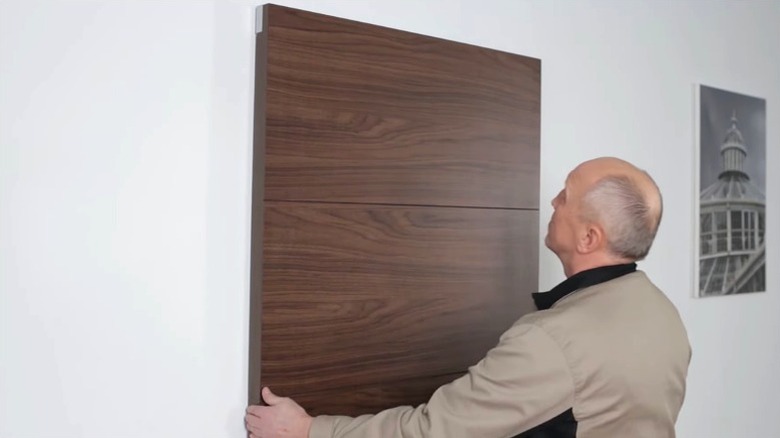
Ghost sliding doors supply many advantages to your space-saving needs, but they are not necessarily perfect for every home. These doors work well for remodeling when you're looking to save some space and create a sharp, minimalist aesthetic. Similar to the clever disappearing door solution for small spaces, ghost sliding doors can be installed to new constructions or added to existing designs to maximize the usable area around the entrance. They are also highly versatile and customizable to your space, with materials ranging from metal to mirrored glass to solid wood.
There are many important considerations around the ghost sliding door's limitations too. For instance, these types of doors require precise installation, which may involve more costly professional help, and you'll have to be comfortable drilling the foot piece into your floor to secure the lower track. Since they don't create a firm seal around the opening, ghost sliding doors don't offer the best sound-proofing either. Repairing ghost sliding doors may also be more expensive than fixing a traditional door. However, they do offer quiet operation, thanks to their sliding mechanisms. Many have soft-close features for safety and sound reduction as well. Another great benefit to these types of doors is how easy they are to maintain, adding to their safety and longevity. Cleaning is simple, since there is no track. Finally, it's important to note that if you get automatic sliding doors, they need electricity to run. If you lose power, they will only work manually unless you have a backup power supply in your home. As long as you are mindful of the upfront costs and installation requirements of these doors, they can be a thoughtful and streamlined architectural feature to consider when prioritizing space and style.