

The Exotic Monstera Variety That You Can Grow As A Houseplant
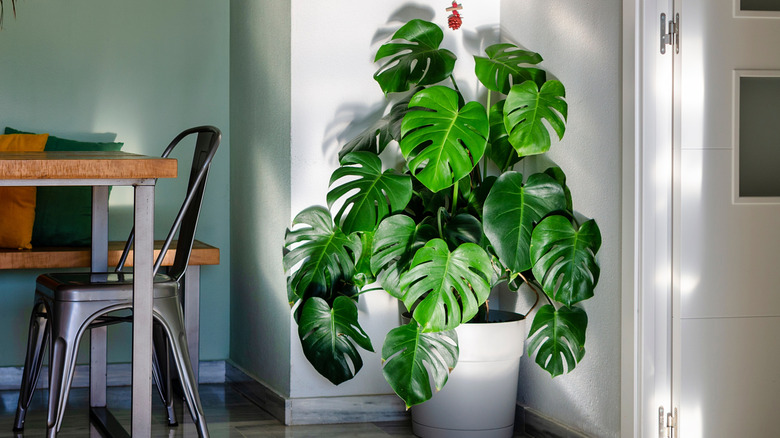
Of all the leafy houseplants that have appeared in living rooms over the past decade, few have reached the near-mythical status of Monstera obliqua. Yes, it's certainly one of the many monstera varieties you should know about, because this is one that'll set you back the most. Some plants are even estimated to be worth anywhere from $1,500 to well over $4,000 depending on size and condition. What makes Monstera obliqua so unusual is it has paper-thin leaves which are intensely fenestrated and incredibly delicate with more open space than actual solid leaf tissue. In mature specimens, the holes dominate the leaf to such an extent that it looks almost skeletal, with just fragile pieces of leaf holding it together. This fragility is part of the appeal, but it's also why genuine plants are so rare to come by.
Adding to the confusion, Monstera obliqua is frequently mistaken for the far more common Monstera adansonii, and many plants sold online under the obliqua name are actually adansonii varieties with heavy fenestration. But true obliqua grow very slowly, produce fewer leaves, and have a noticeably thinner texture, which are details that are easy to miss if you're not familiar with both species. This widespread mislabeling has only increased the value of verified and authentic plants.
How to actually grow one at home
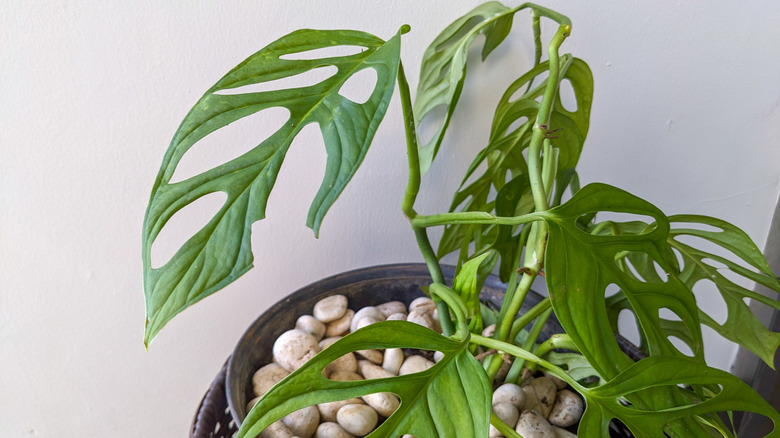
Despite its reputation, it isn't that hard to grow and maintain a monstera – but the obliqua does demand more care than other types. This is a plant that thrives in high humidity, consistent warmth, and indirect bright light. That's why many successful growers keep it in controlled environments like greenhouses to protect those fragile leaves. Its watering schedule also needs to be precise; the obliqua likes soil that dries out between watering but never for long. And keeping a monstera healthy over winter is very important since dry indoor air and temperature swings can stress these plants out. Keep your obliqua houseplant away from doors or other drafty locations, and use a humidifier or mister to maintain humidity.
If you are drawn to this plant, that's no surprise, but you may feel hesitant about the commitment or cost. For that, there are also more forgiving alternatives such as the previously mentioned Monstera adansonii or the Monstera esqueleto (whose name translates to "skeleton" in Spanish). These can offer a similar appearance without quite the same fragility, with leaves that are still heavily fenestrated but thicker and more resilient, making them a more practical choice for most homes. For collectors who want to learn the quirks of the Monstera obliqua, it can be grown successfully indoors, but its cost and demanding nature may not make it the best choice for amateur house plant owners.