

The Fragrant, Winter-Flowering Shrub That Is Perfect For Your Entryway
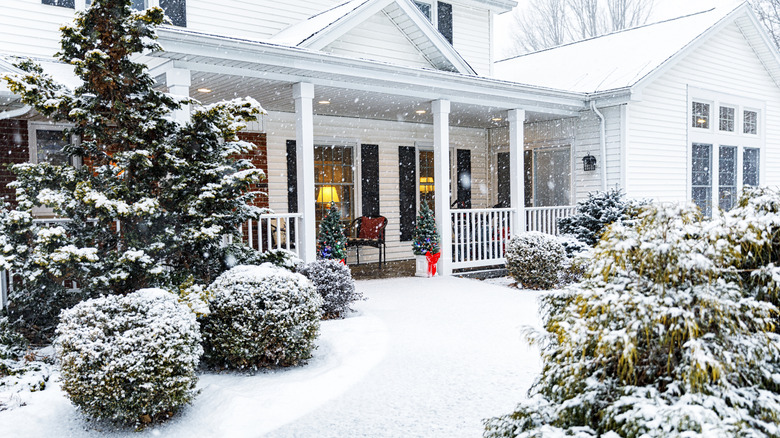
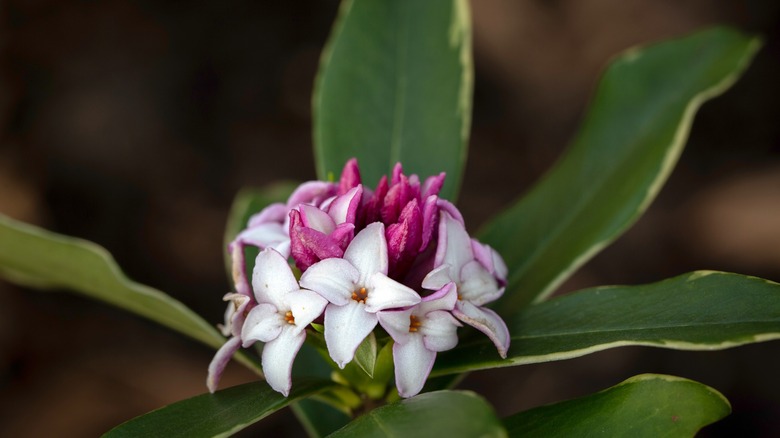
Entryways are the first thing visitors notice about a home. It is like the home's main introduction. This is why homeowners are always trying to make their entryways look more appealing and welcoming. One way people do this is by adding ornamental and fragrant plants. But in the winter, when not many plants are blooming (or even growing), finding a plant for the entryway can be a problem. That's where winter daphne (Daphne odora), a winter-flowering shrub, can help. It can brighten your home's entryway with its striking, eye-catching pink-white flowers, which appear from mid to late winter and fill the air with their delightful fragrance.
The best part? Once it is established, you don't have to spend much time on its upkeep. Also, winter daphne comes in several cultivars, each with its own unique look. You can choose the one that works best with your decor. Daphne odora 'Perfume Princess' White, Daphne odora 'Aureoamarginata', Daphne odora 'Marianni', Daphne odora 'Rogalski' — the list goes on.
All you have to do is choose which cultivar you like the best and figure out how to place shrubs in a front yard for the most aesthetically pleasing look. Then provide your winter daphne with the right care. Before long, you will have an entryway visitors won't want to leave.
Growing conditions that make winter daphne thrive
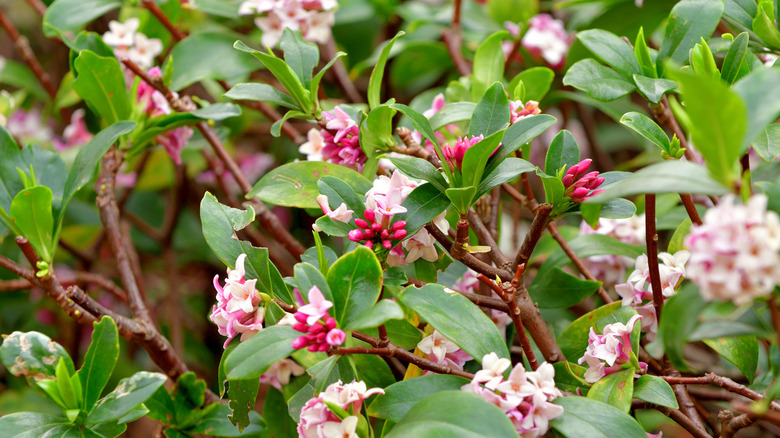
Just like with any perennial flowering shrub, the very first thing is to confirm that winter daphne will thrive in your hardiness zone before planting it in your entryway. Winter daphne thrives only in USDA zones 7 to 9. If you live outside these zones, you might want to look into other beautiful plants to grow for a fragrant garden in the winter. Once you have that out of the way, it is time to find the perfect spot around your entryway to plant winter daphne.
The good thing about winter daphne is that it is really adaptable. You can plant it as a hedge, place it near doors or patios, use it in groups, let it shine as a standalone specimen, or even incorporate it into foundation plantings. It works equally well everywhere. Just make sure the place you plant it has nutrient-rich, loamy, moist, and well-drained soil. You cannot let the soil dry with winter daphne.
Even though well-established plants have some degree of drought tolerance, dry soils tend to reduce the number of blooms. So, they are not recommended. As for the spacing, plants need to be at least three feet apart. Also, they should not be disturbed once planted. Winter daphne does not like root disturbance at all.
Winter daphne problems, pests, and diseases
One of the most significant problems when growing winter daphne shrubs is that, despite their expected lifespan of five to ten years, they seem to die for no apparent reason whatsoever. They are temperamental and unpredictable. Another very common problem with winter daphne shrubs is their susceptibility to root rot. Even though these shrubs like it moist, too much moisture or waterlogged conditions can make the plants wilt and develop this root issue.
Likewise, winter daphne also does not like too much sun. In hot areas, even if planted in dappled sunlight, the plants are prone to leaf burn and wilting. The ideal planting site for them is somewhere that gets morning sun for a few hours. They won't tolerate full-day exposure to the sun except in winter. So, make sure you account for sun exposure across all seasons.
Besides this, crown rot, twig blight, canker, leaf spot, and botrytis can also be problems in winter daphne bushes. And if your plants have been affected by winter injury, they will be at more risk. So, make sure you keep an eye out for the signs of winter injury in your trees and shrubs and take measures as soon as needed. It is the best way to protect your flowering shrubs in winter.