

The Highly Sought-After Monstera Plant Variety That Is Easy To Care For

Each year, the National Garden Bureau names a "Plant of the Year" across several categories, including houseplants. In 2025, the honor went to Monstera. Also known as the Swiss-cheese plant, Monstera is loved for its bold, sculptural leaves and easy-to-care-for nature. But with more than 50 species and countless cultivars, choosing the right one can feel a bit overwhelming. That's where Monstera Burle Marx Flame (Monstera deliciosa 'Burle Marx Flame') shines. Unlike the average, easy-to-find houseplants, the Monstera Burle Marx Flame is a true rarity. On top of that, its unique foliage can instantly brighten indoor spaces and draw people's attention.
Also, with the plant's name carrying a bit of history, you will never run out of things to talk about with your guests. The "Burle Marx" in its name pays tribute to Roberto Burle Marx, a Brazilian landscape architect, whereas "Flame" refers to the shape of its mature leaves. The leaves are thick, shiny, and deeply contoured, with wavy edges that somewhat look like a dancing flame.
Despite its relatively early discovery in the 1970s, it isn't easy to find to this day. However, it is still highly sought after, and if you could somehow get your hands on it, it will truly turn those dull corners in your home into vibrant living spaces.
Ideal growing conditions for Monstera Burle Marx Flame
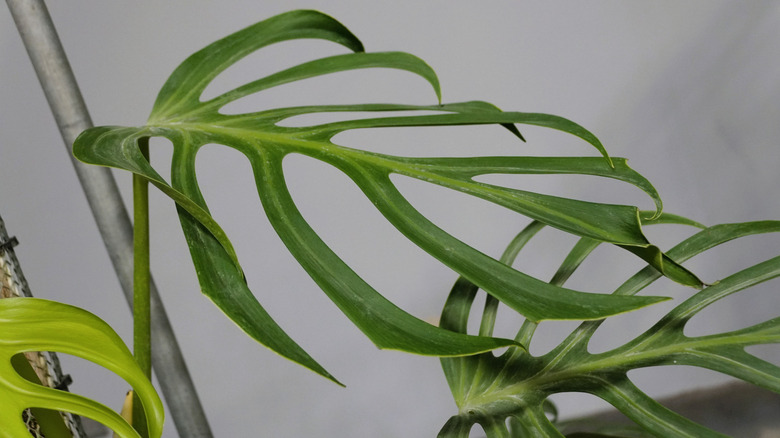
While the Monstera Burle Marx Flame can survive in a low-light indoor environment, if you really want it to thrive, place it in a spot that receives good light. Somewhere within a few feet of an east or west-facing window is probably the perfect place. However, you must keep it out of bright, direct sunlight, which can burn the plant leaves. In winter, supplement your lighting using the best grow lights for indoor plants. If grown in a dim environment, the Burle Marx Flame can become leggy.
For temperature, this Monstera variety feels most comfortable in the same range as people, so aim to keep it between 70 and 80 degrees Fahrenheit during the day, with slightly cooler nights around 65 to 75 degrees Fahrenheit. As for humidity, it thrives in moist conditions and won't die if it becomes dry; however, drought will cause its leaves to become crunchy and yellow. You need to maintain indoor humidity around 50 percent for these plants to grow their best. It's recommended to place the plants in groups and use a humidifier.
Other than that, the Monstera Burle Marx Flame may also need some support. Being a climbing plant, it can benefit from a small trellis or pole. It will help it grow better and develop larger, more beautiful leaves. Lastly, when it comes to pruning, you only need to do so when it reaches the top of its support. Regular pruning isn't really necessary with the Monstera Burle Marx Flame, but you may do it at any time to remove dead or damaged leaves.
Potting, watering & fertilizing the Monstera Burle Marx Flame
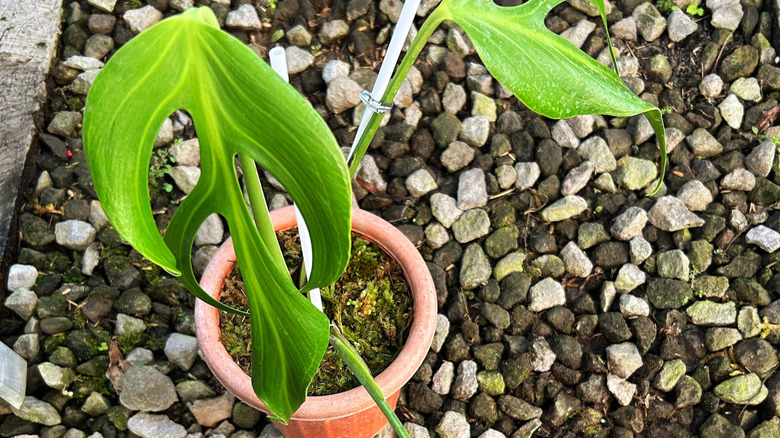
Your Monstera Burle Marx Flame will grow best in well-draining, moist soil. A mix of six parts good-quality indoor potting mix with two parts chunky coconut coir or orchid bark, and one part each of charcoal and perlite can give good results. Besides that, select an appropriately sized pot. If you notice roots growing through the drainage holes of the container, it is time to repot.
Since the Monstera Burle Marx Flame grows and looks its best when kept hydrated, a houseplant self-watering system is a good investment if you can afford to switch. But if you want to water your plants the usual way, let the top few inches of the potting soil dry between watering sessions. A good way to tell when you need to water is to perform a simple finger test. Just insert your finger into the top few inches of the soil; if it feels dry, it is time to water.
As for fertilizing, you will need to feed your Monstera Burle Marx Flame every four to six weeks during the growing season. A liquid fertilizer with a 10-10-10 NPK ratio works well when diluted to half-strength, but as with any fertilizer, ensure you follow the package instructions. And in winter, when plants are dormant, reduce your fertilizer applications. Overfertilizing can be just as harmful as underfertilizing, and it can even kill plants.