

The June Beetle Lookalike Pest You Don't Want In Your Yard
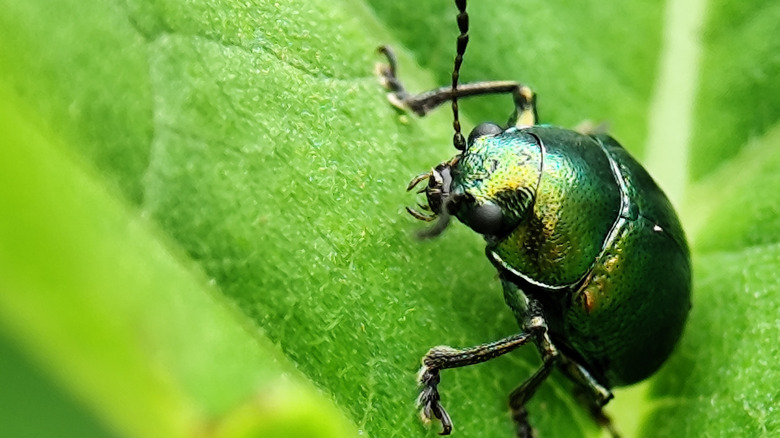
When those warm spring evenings start to roll in, you might hear a frantic thumping against your window screens. While many homeowners dismiss these clumsy, bumbling visitors as the harmless June bugs, they might actually be the May beetle (Phyllophaga). In the world of garden pests, the name "June bug" is thrown around as a catch-all for anything in the Phyllophaga genus, which contains over 900 species. However, the daytime-flying metallic green June beetle (Cotinis nitida) is actually a different species, and shouldn't be confused with the May beetle, which is the one that really spells trouble for your yard. While their bright green cousins are mostly a visual nuisance, the May beetle's arrival signals a two-pronged attack on your property, both above and below your lawn.
Biologically, these pests are built for destruction, and are one of many garden pests you'll want to banish from your yard. The adults emerge from the soil in late spring to feast on the foliage of your prized oaks, maples, and fruit trees. They often leave behind leaves that look skeletonized and ragged. However, the real danger lies in how they act underneath the surface. Female May beetles can lay dozens of eggs in your soil, which hatch into ravenous C-shaped larvae known as white grubs. Unlike other beetles that might only nibble on grass, these grubs are generalist feeders. They stay underground for up to three years, silently devouring everything from the fibrous roots of your lawn grass to the tender roots of prized ornamental shrubs (like your roses) and even important garden vegetable crops like potatoes and carrots.
How to protect your yard from this underground invasion
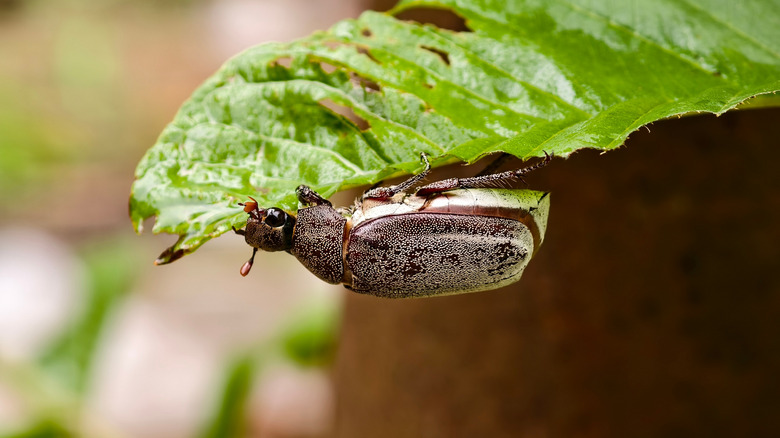
Detecting a May beetle infestation early on is key to saving your curb appeal and your sanity. Because the pests are mostly a hidden danger that's ruining your yard, many homeowners don't realize they have a problem until their lawn develops mysterious brown patches. If your grass feels spongy when you step on it, or if you can peel back a section of turf like a piece of loose carpet, the grubs have already severed its root system. Furthermore, these pests are a dinner bell for other intruders. If you see critters like skunks or moles suddenly digging up your yard, they are likely hunting for the fat, protein-rich May beetle larvae hiding just inches below the surface.
Eliminating these pests requires a strategic approach that targets their multi-year life cycle. And if you don't have any diatomaceous earth lying around, one DIY approach is to use helpful nematodes. These are microscopic organisms that hunt down grubs without harming your pets or local pollinators. Another long-term option is Milky Spore powder, which primarily targets these destructive grubs. To prevent adult May beetles from choosing your yard as a breeding ground, try swapping your bright white porch lights for yellow LEDs, which are less attractive to the nocturnal beetles. By staying vigilant and seasonally treating your soil, you can keep your landscape lush and free from these hungry subterranean squatters.