

20 Types Of Stink Bugs You Should Know About (& How To Keep Them Away)
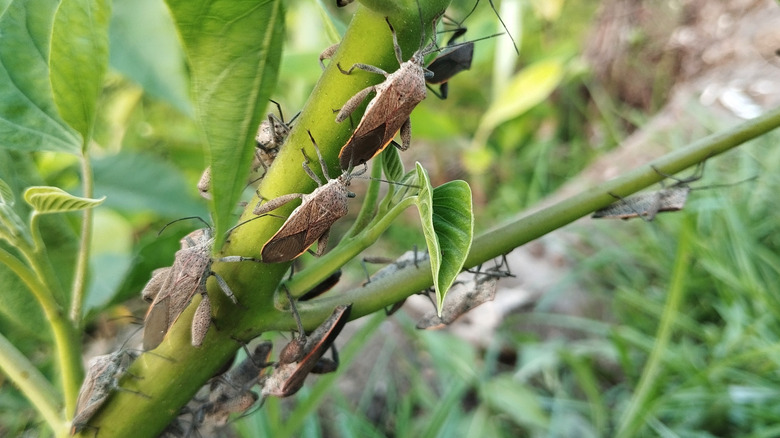
If you've ever accidentally squished one of these tiny, shield-shaped intruders in the garden, then you know exactly why they're known as stink bugs. But even beyond their distinctive, odorous defense mechanism, stink bugs are a complicated bunch. As gardeners, we sometimes have to play detective to figure out what kinds of stink bugs are visiting the yard, and whether or not they're true intruders or harmless (or even beneficial) guests.
Some are villains of the garden, like the brown marmorated stink bug, which is an invasive species that decimates fruits and scars veggies growing in your backyard. Others like the green stink bug, though native to the U.S., also wreak havoc on common garden crops like tomatoes and beans. They can be kept away with strategies like eliminating attractors or even with insecticides, so not all hope against these foes is lost for your growing season.
However, some of these bugs protect your garden, including species like the spined soldier bug, which is a fierce predator that hunts down other pesky pests that eat away at your plants. With some diligent monitoring (and maybe a magnifying glass), you'll be able to identify the right kind of stink bug and keep the bad ones away.
Brown stink bug
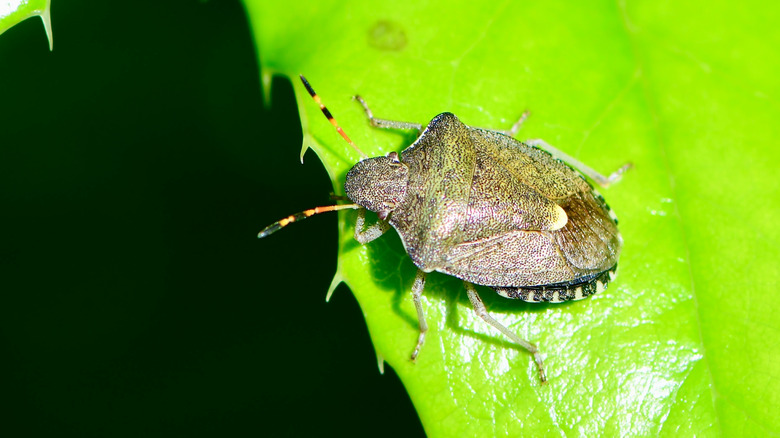
The brown stink bug (Euschistus servus) is a common North American pest, notorious for damaging fruit crops, nuts, seeds, and grains. A winter hibernator, it emerges in time for the blooming season and feeds on most plant parts. Controlling this bug is challenging, as insecticides often have limited effectiveness. Researchers recommend planting "trap crops," such as sunflowers, to lure brown stink bugs away from prized plants. Homeowners should also consider "stink-bug proofing" during summer to prevent them from entering and hibernating indoors. Small — less than 5/8 inches — they can slip through the tiniest crevices, making prevention essential for other parts of the year.
Green stink bug
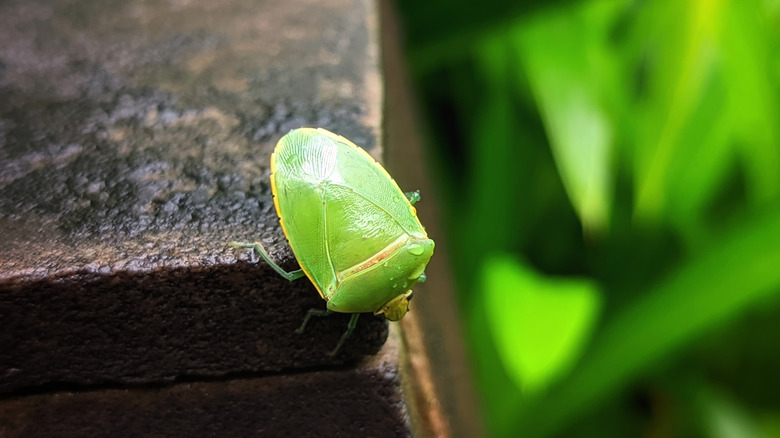
A larger, bright green bug with distinctive yellowish marks that run along its edges, the green stink bug (Chinavia hilaris) is a major pest that attacks many different crops, including tomatoes, beans, and peaches, causing the fruits to drop prematurely. It lays eggs on the undersides of leaves, particularly those of dogwood, basswood, and pine trees. Switching out what plants you sow every year can help disrupt this stink bug's lifecycle and is a great prevention tactic. Pheromone traps and insecticides can also be effective against this species, though they should be used judiciously and carefully.
Southern green stink bug
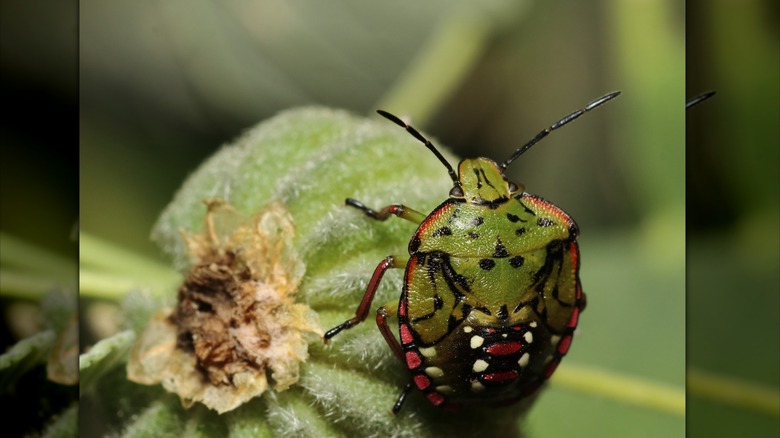
A smaller critter at only 1/2 inch long, the southern green stink bug (Nezara viridula) thrives in warmer climates in the Southeast, the Midwest, California, and Hawaii. Identifiable by its color and spots on its shield, it's particularly fond of eating young fruits and shoots. To prevent these fruit-loving bugs, remove old plant debris and weeds from your yard during the late fall to get rid of their favorite overwintering spots. Be sure to vacuum and kill any southern green stink bugs you see indoors or on your house siding.
Dusky stink bug
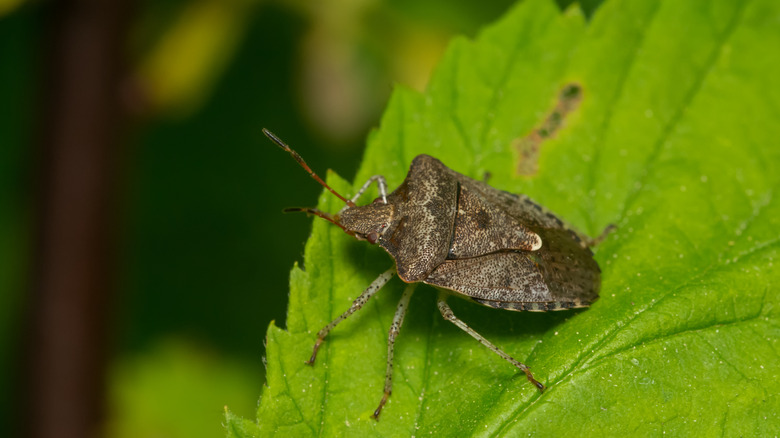
Known to devour all kinds of fruit trees, the dusky stink bug (Euschistus tristigmus) injures fruits and makes them prematurely drop from their branches. Known for its dark brown color, pointed shoulders, and banded pattern along the edges of the shield and legs, this bug is a similar-looking cousin of the brown stink bug. It can be prevented with pesticides, and eliminating attractors, like broadleaf weeds and some legumes, will also minimize its impact on your fruits. Regular monitoring of your garden during the growing season will help you catch infestations early and protect your crops.
One-spotted stink bug
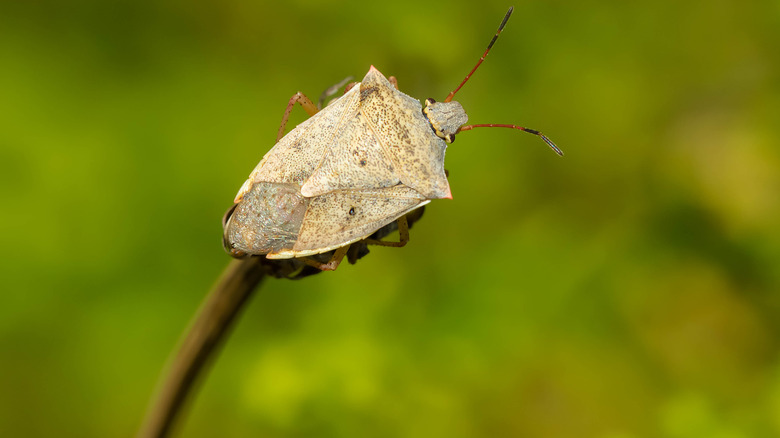
Light brown and nearly identical to other brown stink bug species, male one-spotted stink bugs (Euschistus variolarius) have a single, distinct dark spot on the underside of their abdomen. These bugs are common across the northern U.S. and are known to attack corn and grain plants. As with other similar brown stink bugs, you can prevent infestation by removing other tempting attractors like weeds from your garden space, or consider trap crops to keep them at bay. During the growing season, keep an eye on the garden to ensure your bigger backyard crops aren't attracting these stinkers.
Conchuela stink bug
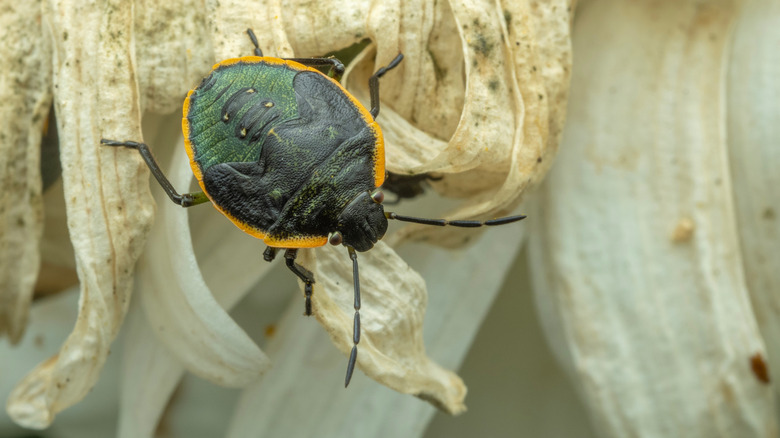
A striking bug with a dark olive body with a bold red border, the Conchuela stink bug (Chlorochroa ligata) can also range in color from dark brown to lighter brown. It lives mostly in the arid and semi-arid regions of the U.S., like New Mexico. A similar size to the brown stink bug, it enjoys cotton, but for the small gardener, it targets blackberries, grapes, English holly, hawthorn, and apples. In the Conchuela stink bug's warm, dry habitat, trap crops may be more difficult to grow, so chemical insecticides might be the best solution to keep them away.
Say's stink bug
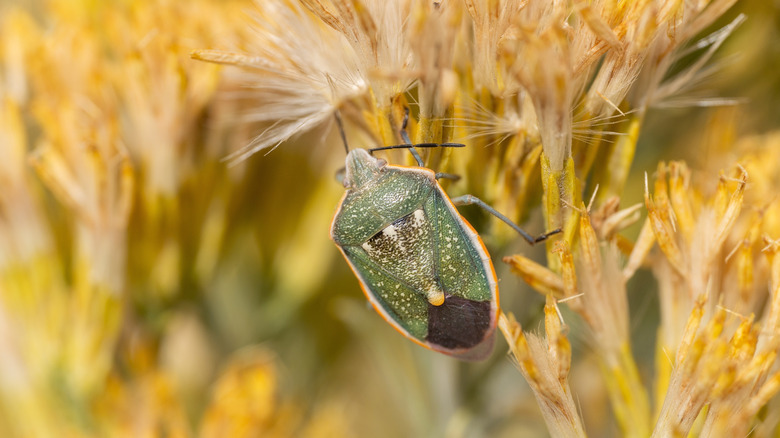
A species native to the western region of the U.S., the Say's stink bug (Chlorochroa sayi) loves grasses and winter wheat above all else. Their bodies are green and more rounded than those of other stink bugs, which is a unique identifier, though they are similarly sized to their other stink bug counterparts. Eliminating ground cover is key to keeping Say's stink bugs away from your home and yard. Remove weeds as well, where they multiply before moving to other hosts.
Twice-stabbed stink bug
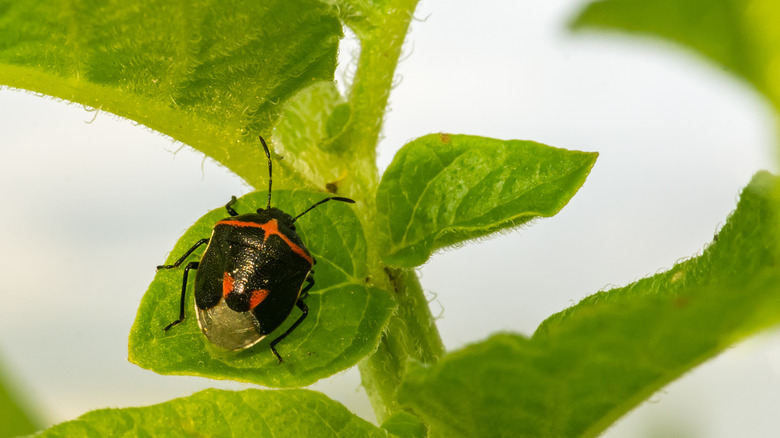
Twice-stabbed stink bugs (Cosmopepla lintneriana) grow in leaf litter during the colder months, and when they reach maturity, they love to feed on milkweed, a monarch butterfly favorite in the garden, as well as echinacea, goldenrod, mint, and asparagus. This is one of the easiest stink bugs to spot due to its small, rounded black body and two bright red spots on its rear. Tinier than most, at just 1/4 inch, they're also known as Wee Harlequin bugs. Don't let their size fool you, though; they're incredibly hardy creatures. Remove leaf piles in the fall to prevent these bugs from nesting.
Red-shouldered stink bug
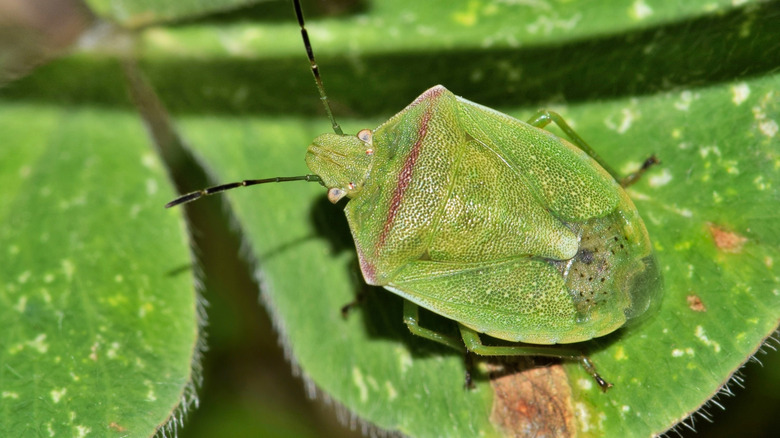
A small, pale green bug with a pinkish tint across its shoulders and base, the red-shouldered stink bug (Thyanta custator) feeds on a range of plants, including corn, peaches, beans, and wheat. They're a petite 1/2 inch, and yet mature easily within the cover of weeds and other hosts with grain-like structures. Like their wee friends, the twice-stabbed stink bugs, they also overwinter in leaf litter, and they're attracted to warm houses outside of the growing season, so be sure to clear leaf piles and seal the home.
Rice stink bug
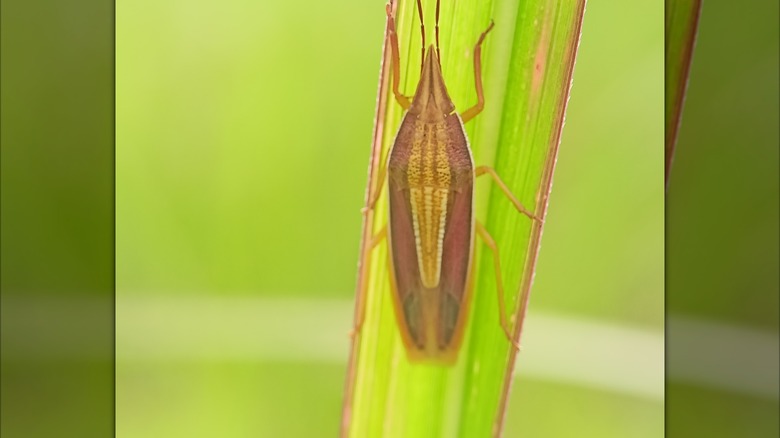
A regional southeastern bug, rice stink bugs (Oebalus pugnax) are identifiable by their straw-colored, greenish-yellow hue. Only up to 1/2 inch long, they develop among wild grasses, and as their name would suggest, they fly towards and feed on rice and sorghum, a superfood you can grow in your own yard. You'll know if you have these bugs on your crop, however, if you observe yellow and black spots on the plant. While weed management is an effective prevention tactic, insecticides should be used if the infestation gets bad. Just don't spray within two weeks of harvesting your sorghum.
Spined soldier bug
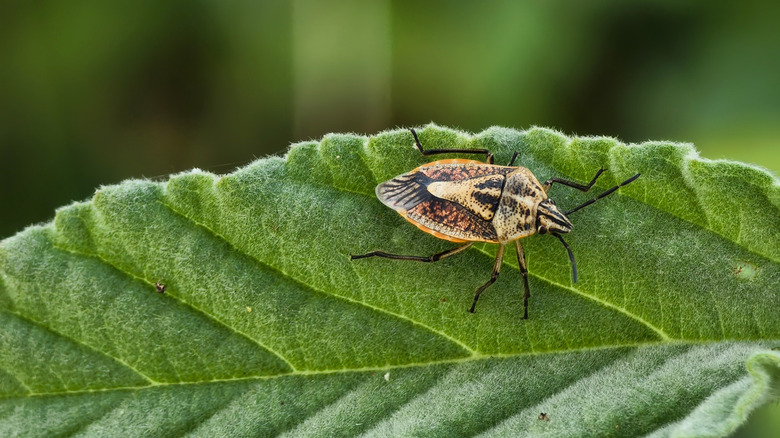
Not all stink bugs are havoc wreakers, as evidenced by the spined soldier bug (Podisus maculiventris), a pale brown stink bug with a distinctive triangle and orange and black striping. Unlike the bugs on this list that feed on plants you work so hard to get bounty from, spined soldier bugs are predators against sawflies, beetle larvae, and caterpillars that eat your leaves and stalks. Despite being less than 1/2 inch long, their presence in gardens, fields, lawns, and landscaping may prevent pesky pests, including other plant-eating stink bugs.
Anchor stink bug
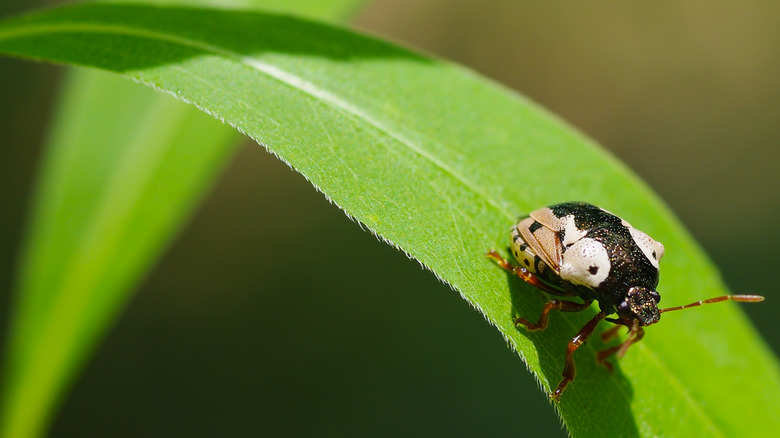
Named for the anchor shape on its back, the anchor stink bug (Stiretrus anchorago) is another predator stink bug that mainly pursues beetle larvae and caterpillars. That's great news for the crops that these plant-eating bugs love to go after, but anchor stink bugs can be hard to identify as their coloration can vary quite a bit. Their long oval shape may give them away, though, and when you spot them, welcome them into your garden — don't kill them! They're fighting the good fight against bugs that would otherwise harm your plants.
Brown marmorated stink bug
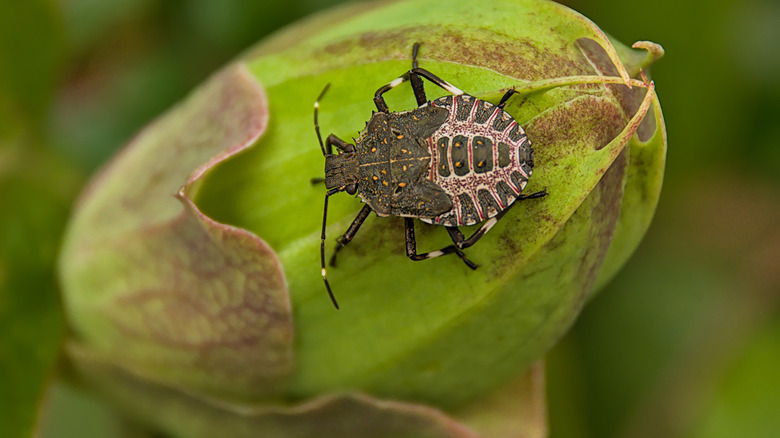
An invasive species, the brown marmorated stink bug (Halyomorpha halys) loves to feast on common edible plants grown in backyard gardens, such as tomatoes, peppers, peaches, and apples. It pits and scars fruit during feeding, which can also leave the plants vulnerable to disease. These stink bugs are about the size of a dime, and are identifiable by their banded brown, black, and white bodies and antennae. They're also known to infest homes during colder weather, so seal any gaps to keep them out. Clear away any dead vegetation from yards to dissuade these stink bugs from visiting there, as well.
Hedge-nettle stink bug
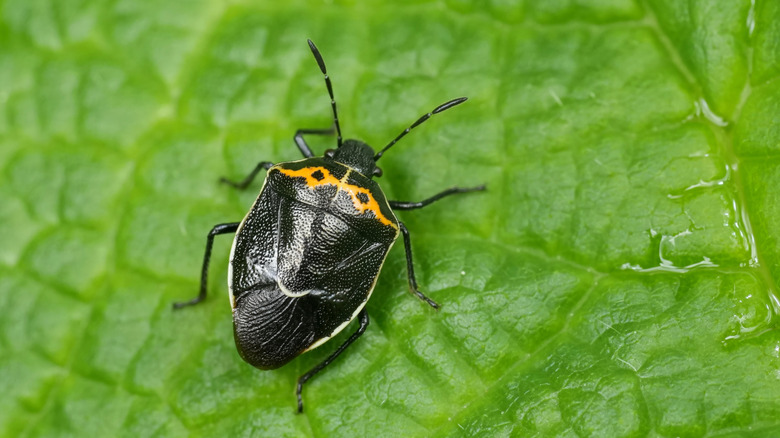
The hedge-nettle stink bug (Cosmopepla conspicillaris) gets its name from one of its favorite resting spots, the hedge nettle, but it's also known to prefer columbine and lambs' ear. Most common in the western U.S., these small black and orangey-red bugs only grow to be about 1/4 inch long. Given their preferred environments, it's best to monitor their host plants during the growing season, and as with many other stink bugs, seal your home during the colder months.
Two-spotted stink bug
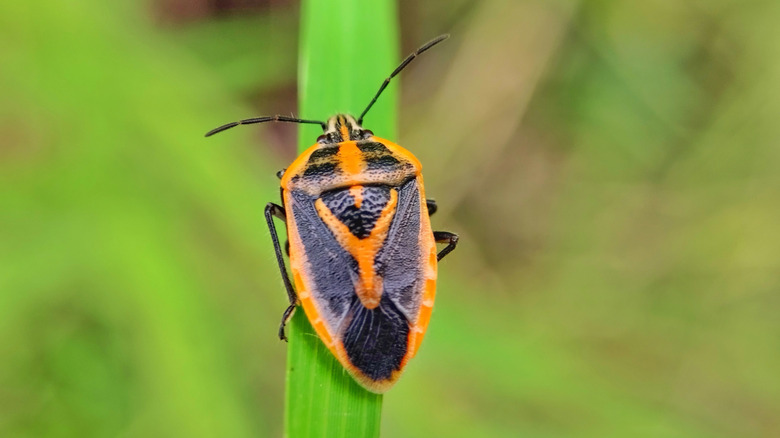
Similarly colored to its hedge nettle counterpart, the two-spotted stink bug (Perillus bioculatus) is another beneficial backyard visitor that preys on other insects that commonly cause issues in your garden. Identifiable by its black, orange, and red coloring, this stink bug can get up to 2/5 inch long. Though petite, two-spotted stink bugs go after caterpillars, beetle larvae, and other soft-bodied bugs. While a friend in the garden, it's still not so fun to have them in your home, so clear any host plants from around your house before winter.
Green burgundy stink bug
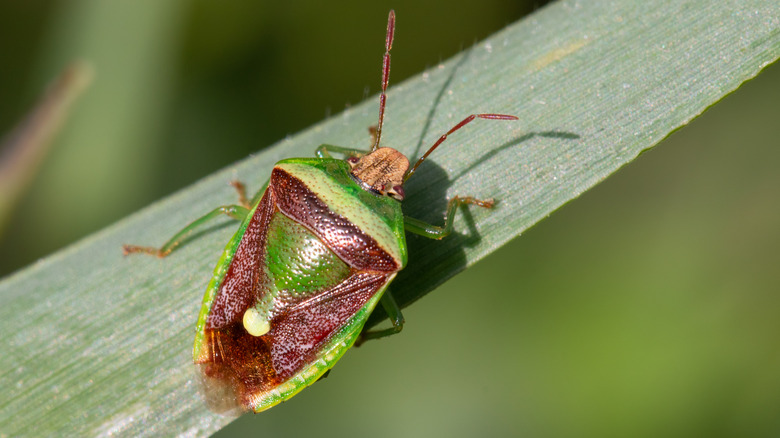
The green burgundy stink bug (Banasa dimidiata) is similar in size to the two-spotted stink bug and striking in color. Glossy and vibrantly hued in emerald green and a dark ruby red, it uses conifers, lilac, and English holly as hosts, among other arbor varieties. These bugs are incredibly common throughout the country, so be sure to monitor your trees, especially if you have any of the aforementioned stink bug favorites close to your home.
Black stink bug
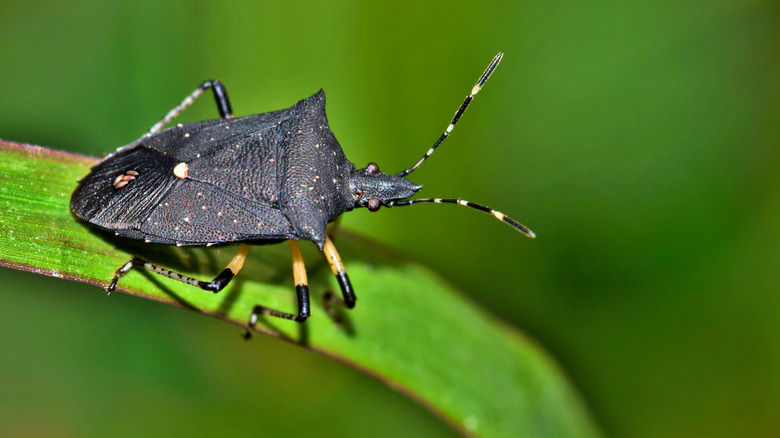
The black stink bug (Proxys punctulatus) is a little good and a little bad. They don't cause significant damage to plants because they aren't very prolific, but they can still be somewhat of a nuisance in the yard. Commonly found on citrus, black stink bugs feed on plant juices, disfiguring leaves and discoloring stems, which may affect the aesthetics of your garden. For the most part, though, black stink bugs aren't a major problem and are even known to attack the larvae of other bugs from time to time, helping mitigate other pests.
Rough stink bug
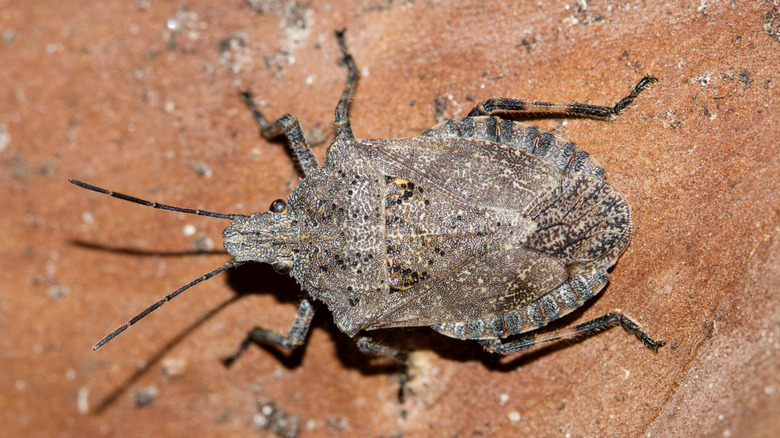
Known for its rippled shield and mottled gray, orange, and black coloring, the rough stink bug — sometimes referred to as a shield bug — (Brochymena arborea) is another garden guardian, preying on the larvae of beetles. It also eats aphids, adult beetles, and other soft-bodied insects that cause more damage to your plants than the rough shield bug itself. If you find these on your landscape or fruit trees, don't be alarmed. Likely, the rough stink bug is looking for its next meal in other insects rather than your apples.
Small stink bug
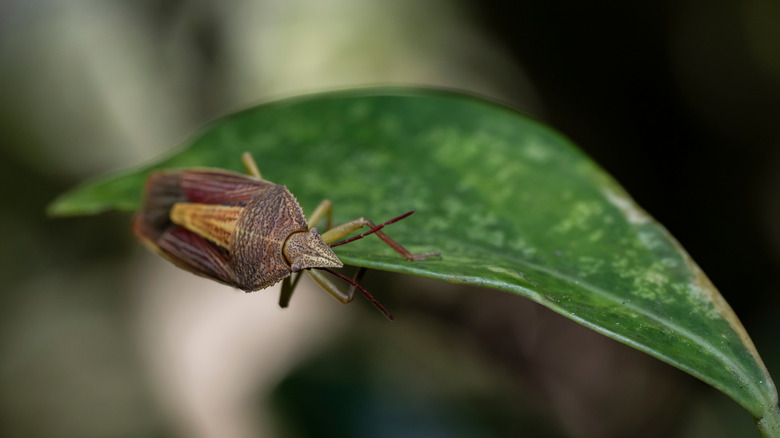
While many of the stink bugs on this list are quite small, the aptly named small stink bug (Cosmopepla intergressa) only grows up to 1/5 inch long and easily camouflages its round, brown, striped, and speckled body. Commonly found on berry bushes, these stink bugs are sap-suckers that are known to damage the plants they use as hosts, like currants. Usually found in the western U.S., these pint-sized pests aren't the carnivorous type, so keep these bugs at bay by clearing your berry bushes of any debris where they can overwinter.
Blue shield bug
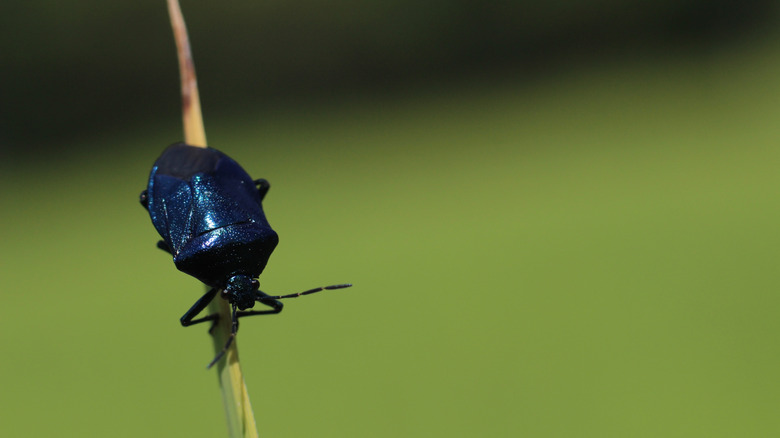
The blue shield bug (Zicrona caerulea) is another vibrantly-colored stink bug whose beauty is more than skin deep — it also preys on damage-causing beetles and their larvae. Commonly found across the pond, these striking critters are also common in various U.S. states, like Wisconsin. About 1/4-inch long, their color makes them easy to spot in their preferred leafy and grassy environments, so leave them be when you come across these little (good) stinkers.