

The Deer-Resistant Shrub With Stunning Spring Blooms That's Perfect For A Shady Garden
Looking for greenery that thrives in shade, deters hungry deer, and brings seasonal beauty to your garden all at the same time? While that sounds like an impossible-to-find unicorn plant, there's an evergreen shrub native to the southeastern U.S. and northern Mexico that has all these attributes and more. It's long been loved by gardeners in the know for its glossy, deep-green foliage and its stunning spring flowers that bloom in rich shades of burgundy to wine red. The plant in question is the Florida anise tree (Illicium floridanum), and we think it just might be exactly what you're looking for.
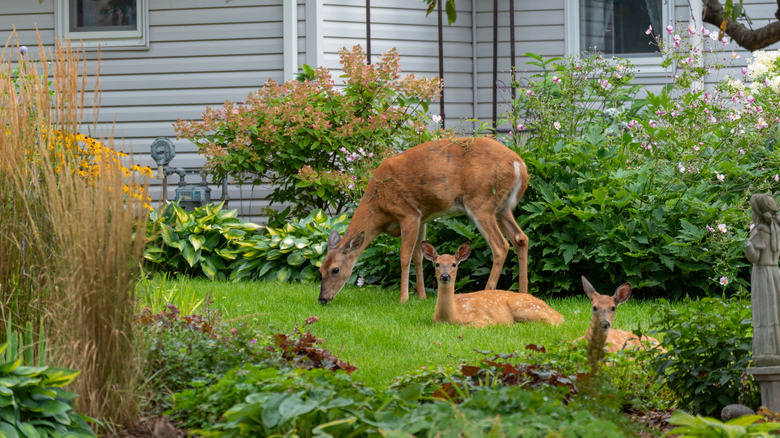
Unlike many flowering shrubs that require full sunlight to bloom abundantly, Florida anise trees thrive in partial to full shade. This Zone 7 to 10 perennial is well-suited for gardens with heavy tree cover or small backyards shaded by nearby buildings. What's more, its aromatic leaves release toxic oils and the subtle aroma of anise when crushed, both of which can repel deer from your yard and garden — and other pests like insects. In this way, the Florida anise tree keeps itself and possibly even other nearby plants safe from predation. At the same time, it adds a new sensory layer to your landscape. With stunning spring flowers, quirky fall fruit, and green winter foliage, Florida anise trees are low-maintenance evergreen shrubs that will brighten up your yard throughout the entire year.
How to grow and care for Florida anise in your shade garden
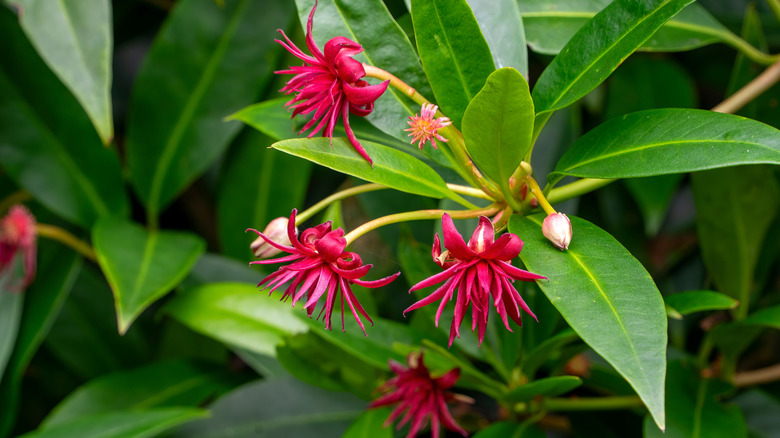
As mentioned, Florida anise trees are gorgeous flowering shrubs that thrive in the shade. In the wild, they grow in shady woodlands and moist ravines. To mimic this natural habitat, consider planting the shrub in dark, damp areas of your garden where most other plants struggle to thrive. The Florida anise tree can tolerate a range of soils, including acidic, sandy, loamy, and clay. What's more important is that the soil is rich in nutrients, drains well, and stays consistently moist. Choose a spot for your new plant accordingly.
You can buy this shrub in one- or three-gallon pots from nurseries specializing in native plants year-round or for shipping in mid-spring. There are numerous cultivars worth considering. For example, 'Swamp Hobbit', a dwarf variety, is the most deer resistant, while the variegated leaves of 'Pink Frost' turn pink when cold.
If you're planting more than one young Florida anise tree, space the shrubs 3 to 5 feet apart. Water the plants deeply and regularly throughout their first growing season to help them establish a sturdy root system. After that, they should only need watering during extended dry spells. Adding mulch to the base of the plant helps to retain moisture and suppress weeds. Florida anise generally doesn't require fertilizer, especially if you plant it in fertile soil. To maintain your shrub's shape or remove dead wood, prune lightly in late winter or early spring.