

Pine Straw Vs Mulch: Only One Reigns Superior For Your Garden
We may receive a commission on purchases made from links.
One of the decisions that can have a surprisingly big impact on your plants is what you put around them. Cover is important for suppressing weeds, retaining moisture, enhancing soil health, and retaining soil temperature. Pine straw and mulch are two of the best ingredients to use in DIY mulch. While both materials do similar jobs, they look and behave quite differently. Location, climate, maintenance needs, and plant species can influence whether pine straw or mulch is the right option for your garden — or specific areas within it. Understanding the strengths and weaknesses of each material is the key to deciding which one reigns superior for your specific needs. In short, pine straw is best for slopes, organic gardens, or less wind-prone areas, whereas mulch has a wide array of applications.
It's not easy to choose the best type of mulch for your garden. To understand the difference between these two popular covers, you first need to know what they're made of. Pine straw consists of fallen pine needles that are raked up, dried, and baled. It's widely considered an eco-friendly and organic option. Mulch is the term for any organic and inorganic material that is spread over the soil. Organic mulch includes (but is not limited to) wood chips, compost, or bark, while inorganic mulch includes materials like rubber and gravel. Some organic mulch products are dyed to make them look more attractive, which means they may not be eco-friendly. What pine straw and mulch are made of is just one factor to consider. Each product also has unique uses, sometimes even in different places within a single garden.
Where in your garden mulch or pine straw works best
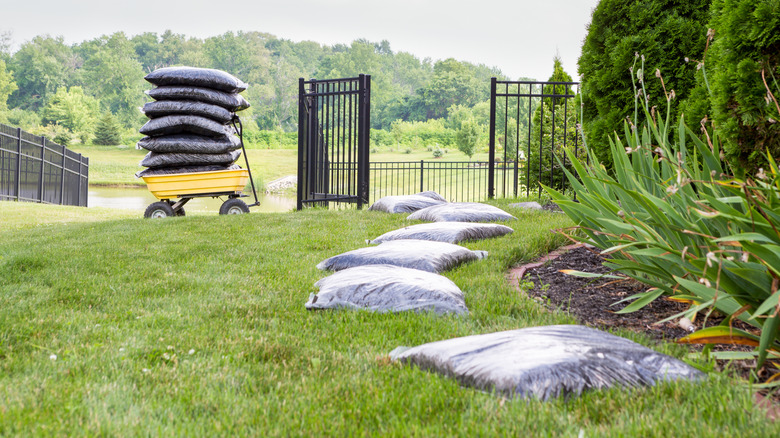
Mulch is especially useful in flower beds, vegetable gardens, and mixed plantings where moisture control, weed reduction, and improving soil health are vital. For example, one or even a second layer of mulch can help your garden plants survive winter. If applied too thickly, mulch can hold too much moisture or reduce airflow around plant roots, leading to rot. Pretty much all mulch materials are more expensive than pine straw, but they tend to last longer, which helps to offset the higher prices. Aesthetically, mulch wins big. Organic mulch, like cedar bark and hardwood chips, comes in a range of earthy hues, from gray to reddish-brown to deep chocolate tones. Mulch made of rubber, which is inorganic, is available in many colors, including black, blue, red, and green.
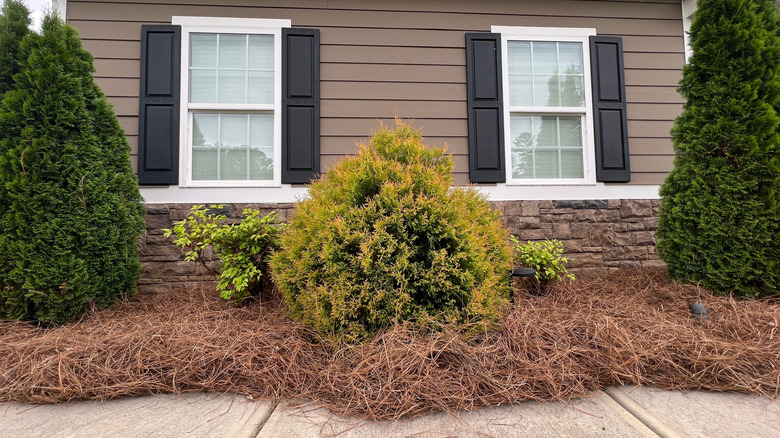
Pine straw is a good choice for erosion control and extensive gardens. It's extremely lightweight, making it easy to move around and spread out. If your yard has steep slopes or gets lots of rain, pine straw can help keep the soil in place. Because it breaks down relatively quickly, pine straw usually needs to be replaced more often than most types of mulch. Another potential issue is that pine straw blows away fairly easily. If you live in a windy area, expect to top up your cover constantly. In places outside of the Southern U.S., you may find it challenging to buy pine straw in bulk. Online is your best bet, such as this USA Premium Pine Straw bale, which covers 65 to 80 square feet and costs about $45. In areas where pine straw is prevalent, look for it at home improvement stores, garden centers, or for sale privately.