

11 Hardy Plants That Can Grow In Last Season's Old Potting Soil
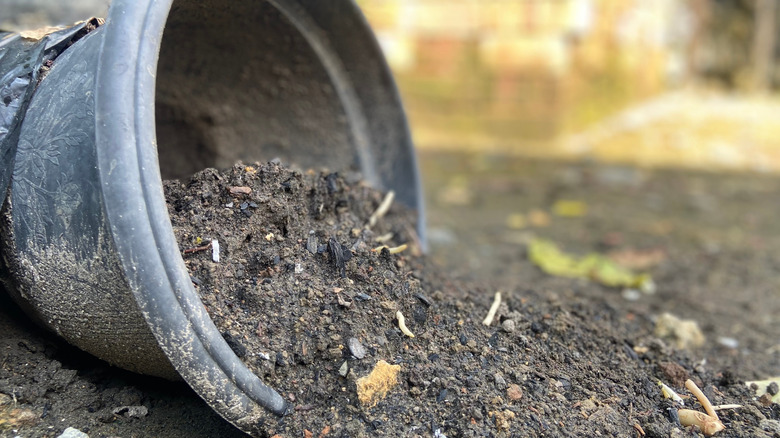
Buying new potting or garden soil season after season can get to be a bit of a pain, but it's largely considered a necessary task. You need a healthy base for good plant growth, right? However, there are some brilliant ways to reuse old potting soil instead of tossing it out, including simply reusing the soil for plants that are hardy enough to tolerate it. "The good news is most old soil isn't bad, it's just tired," says Donna Letier, CEO and co-founder of Gardenuity (via Martha Stewart). It may feel wrong to use soil in which the nutrients have all been sucked out by last season's crops. But some plants — for example, most Mediterranean herbs and cacti — prefer soils low in nutrients. Unlike vegetables, you don't need to stimulate their growth. Other plants, like daylilies, marigolds, yarrow, cosmos, and more, easily withstand challenging soil conditions.
Consider recharging spent potting soil to give a boost, too — whether it's alfalfa meal for nitrogen or rock dust for remineralization. That way, you don't have to solely rely on a plant's hardiness. No matter what you use to breathe new life back into old soil, you're shoring it up for another growing season. Just keep in mind that many of the plants that tolerate reused soil do so because it's lacking, not abundant, in nutrients. Also, if there was any evidence of fungal, bacterial, or viral diseases in the plants growing in the potting soil, it should be thrown away. Otherwise, consider what you want to grow, then try to strike the perfect balance between the old soil and your budget for amendments. Though rest assured there are plenty of plants that will do just fine in untouched recycled soil!
Day lilies
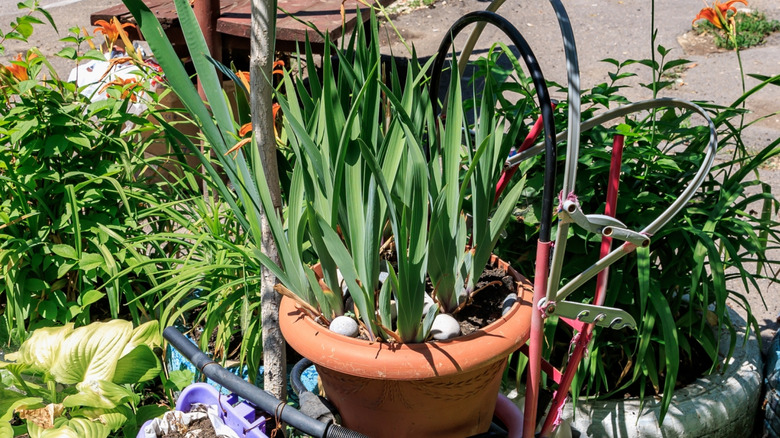
Daylilies (Hemerocallis spp.) are tough flowering perennials that thrive in Zones 3 to 9, even when grown in nutrient-deficient recycled potting soil. With a robust, tuberous root system, daylilies grow vigorously in a variety of environments. These beautiful blooms may require a little extra help, such as the occasional application of compost or fertilizer. But if left alone, they'll likely still sprout up quickly, even in reused growing medium. Their fleshy roots do prefer good drainage, though, so make sure your old soil isn't compacted or you risk trapping excess moisture.
Black-eyed susans
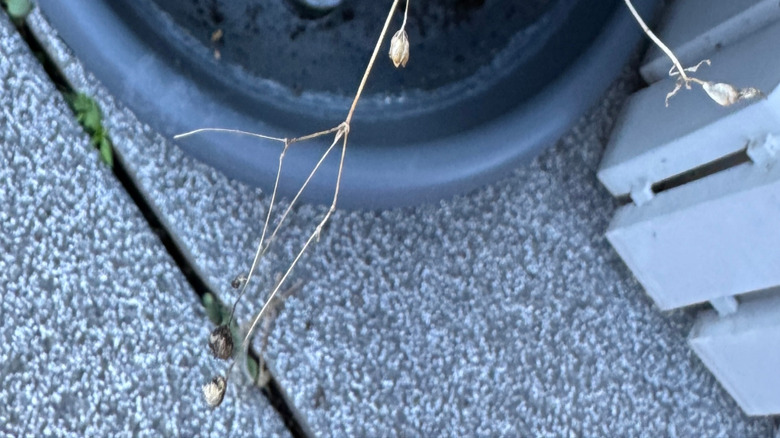
Black-eyed Susans (Rudbeckia hirta) are another robust flower choice for recycled soil. They're hardy in Zones 3 to 8 and fully tolerant of clay, loamy, sandy, and generally poor soils. Black-eyed Susans dislike excessive nitrogen, making them a great candidate for old soil that once had heavy nitrogen feeders growing in it, such as most leafy greens. As an added bonus, these flowers are a native pollinator plant. Their golden-yellow, nectar-filled blooms attract beneficial visitors, like butterflies, to your garden. Black-eyed Susans are tall, reaching heights of 4 feet, making them great for hilly landscapes.
Cacti
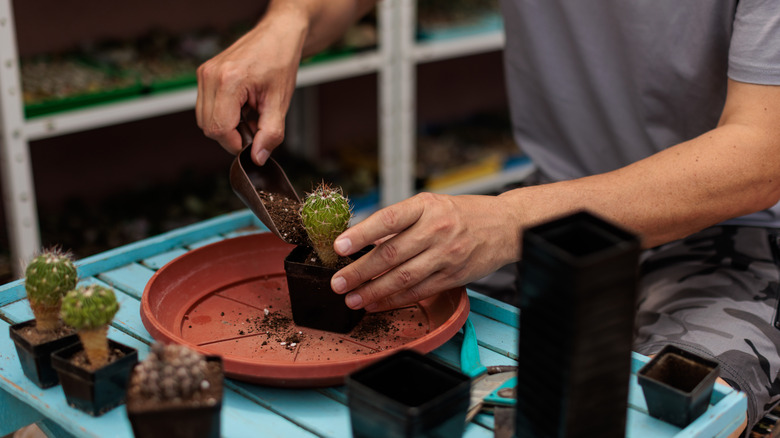
Most cacti species and cultivars are adapted to growing in nutrient-poor environments, making them uniquely qualified for planting in recycled soil. Unlike leafed plants, which need a lot of nitrogen and other nutrients that aid in plant growth, cacti can thrive in the most challenging conditions the earth has to offer. Cacti specifically like low nitrogen soils, so mixes that housed heavy nitrogen feeders work well. Cacti do, however, need phosphorus and potassium for healthy roots and beautiful flowers, so amending used soil with bone meal and potash wouldn't hurt. Maintain good drainage to avoid root rot.
Mediterranean herbs
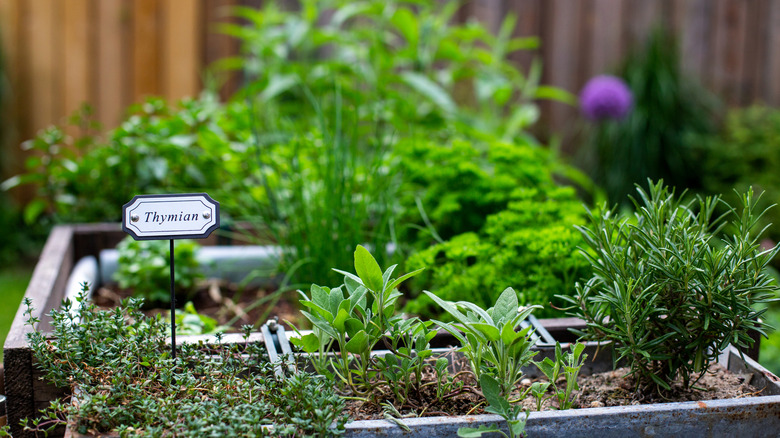
The Mediterranean has many easy-to-grow herbs that can take the heat and will thrive all summer long, even in reused soil. Rosemary (Salvia rosmarinus), thyme (Thymus vulgaris), and lavender (Lavandula angustifolia) — among many others — grow naturally in rocky, nutrient-depleted spots. This means they likely won't mind being planted in last season's potting soil. In fact, herbs grow too quickly in fresh soil, resulting in less flavor and fragrance. The main risk to look out for when using recycled potting soil is compaction. Mix in a gritty material, like sand or gravel, to ensure drainage isn't an issue.
Hostas
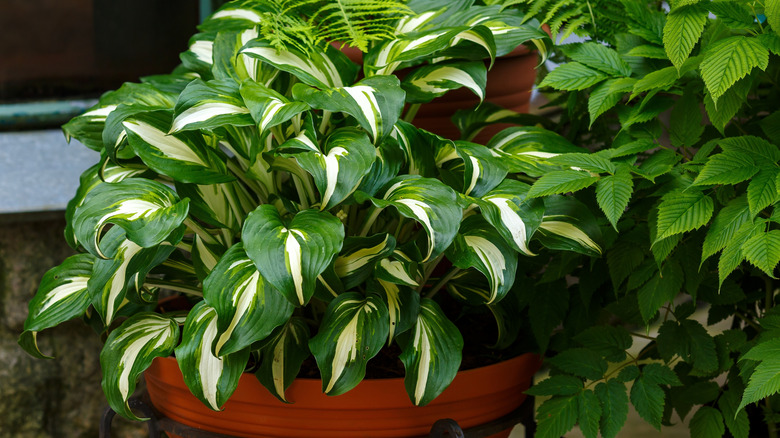
Hostas (Hosta plantaginea) are resilient perennials that grow in Zones 3 to 9. They're native to China and will grow in conditions that aren't entirely ideal, be that in garden beds or planters. However, keep in mind that hostas are heavy feeders, so you'll need to amend your reused potting soil with compost or fertilizer to ensure these plants get all of the nutrients they need to thrive. Hostas also need a lot of room above and below ground, meaning they need a lot of soil. In this case, recycling your potting mix is beneficial for your wallet.
Marigolds
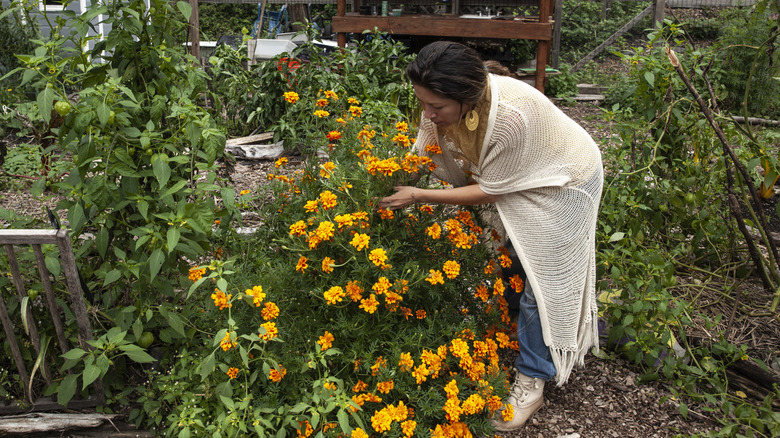
If you love growing plants from seed, then marigolds (Tagetes spp.) and reused potting soil are the perfect pairing for you. There's an incredibly easy way to plant marigold seeds. Rather than sowing them one-by-one, first, mix the seeds into the spent soil. Then scatter the marigold seed-filled soil mix over a garden bed or large planter. Lastly, cover the seeds with a light layer of the potting soil sans seeds. If you garden in Zones 2 to 11, this technique creates a wildflower vibe while also reusing old soil that you would have otherwise trashed.
Coneflowers
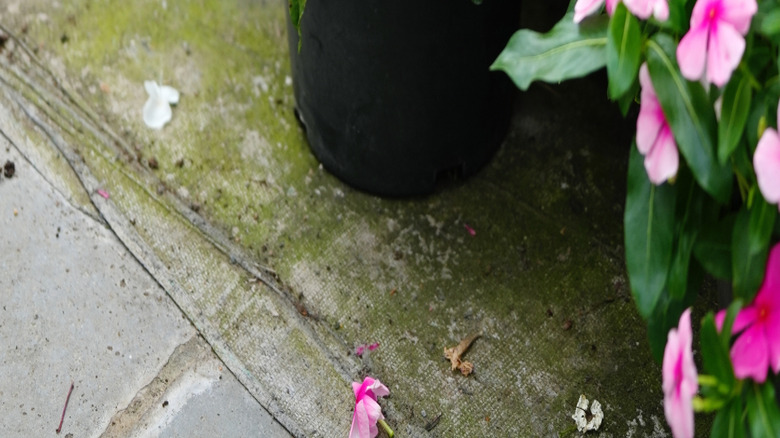
Coneflowers (Echinacea spp.) are another resilient grower that are hardy in Zones 3 to 9. They will do just fine in that nutrient-depleted potting mix from last year. Known for their signature purple, pink, white, or yellow flowers, the plant's robust root system keeps it healthy in poor-quality dirt. One of the best plants for your pollinator garden, coneflowers need space so their stems can grow tall (up to 4 feet in height) without crowding. They are a stunning statement flowering plant, made even more attractive by the fact that they're very low maintenance.
Yarrow
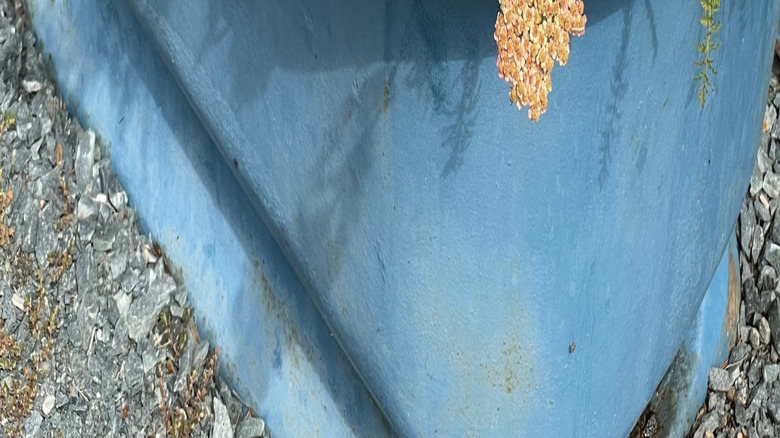
Yarrow (Achillea millefolium) is an herbaceous perennial that's hardy in Zones 3 to 9. It's often considered indestructible and is yet another flowering plant that prefers lean soils. However, it does need decent drainage, so you may need to dig over or amend compacted reused soil. If you get the conditions right, this adaptable plant will grow up to 3 feet tall. While some yarrow cultivars, like the hot-pink flowering 'Firefly Fuchsia,' produce colorful blooms, most of the time, you'll be rewarded with the species' signature fluffy white sprays.
Blanket flowers
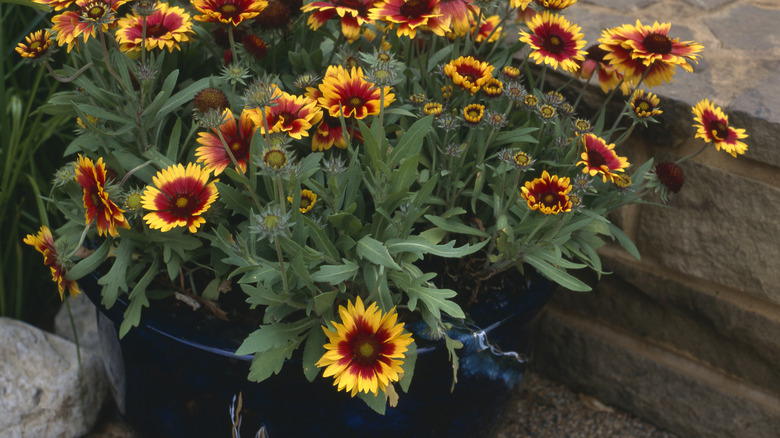
Blanket flowers (Gaillardia spp.) go against the grain and actually prefer tired soil. The plants, which are hardy in Zones 3 to 9, often do better in reused potting mix than in fresh, rich material. As with many of the other plants on this list, be sure your recycled soil has good drainage, otherwise, this low maintenance plant should reach heights of 2 feet with little effort on your part. Blanket flowers are part of the sunflower family, so they do the best when planted in full sun. They also attract pollinators.
Wild bergamot
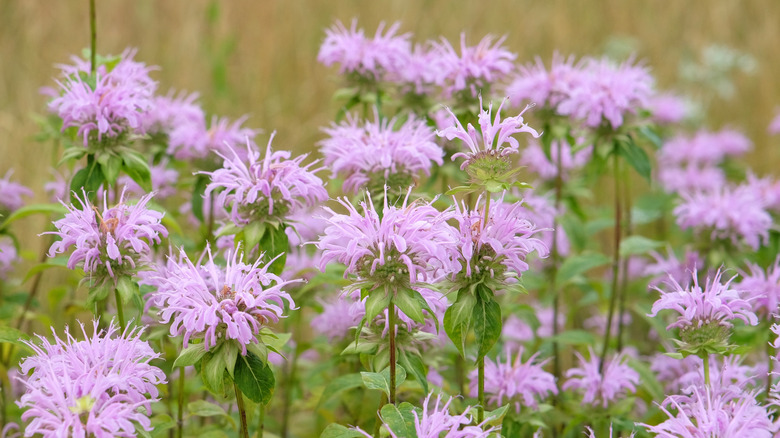
Known as both wild bergamot and bee balm (Monarda fistulosa), this herbaceous perennial is a resilient plant that grows wild in rocky, subpar soil. It therefore does quite well when planted in the potting mix from your last growing season. Wild bergamot is hardy in Zones 3 to 9 and will grow up to 4 feet tall if given the chance. Their whimsical, fairytale-esque blossoms attract pollinators to a garden — hence their common name of bee balm. Just make sure your old soil still drains well — wild bergamot doesn't tolerate being waterlogged.
Cosmos
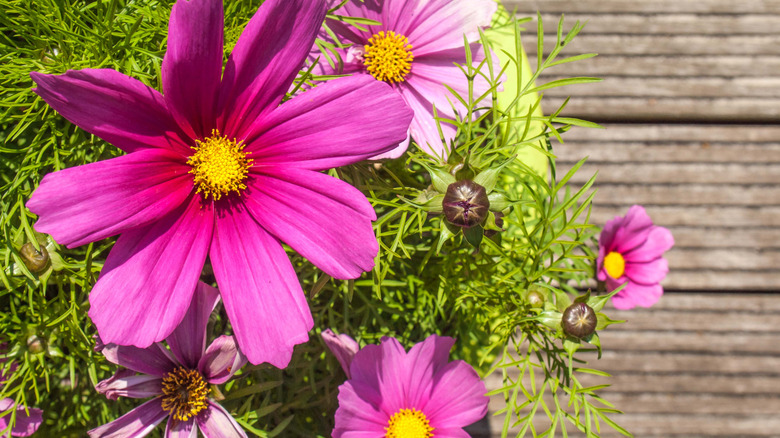
Cosmos (Cosmos bipinnatus) are yet another gorgeous flowering plant that prefers to grow in poor soil conditions. Reusing last year's potting soil is no bother to these plants. Hardy in Zones 2 to 11, cosmos are incredibly tough, despite looking so delicate. The plant can reach heights of 4 feet with a spread of 3 feet, so make sure you use a large planter. Cosmos seeds will sprout pretty much anywhere they land, as long as they don't get too much sun or cold weather. Good drainage is, once again, the name of the game.