

14 Old-Fashioned Home Gadgets That Increased Convenience (And Are Still Around Today)

We may receive a commission on purchases made from links.
Running a home before modern conveniences was exceptionally labor-intensive. We take for granted things like our vacuums, irons, motion detectors, Instant Pots, and alarm clocks. Most of us would struggle if we had to deal with life without these (and so many other) inventions. But while some home gadgets might be old-fashioned, they've stuck around for hundreds of years because they do their jobs well, reduce labor costs, and make tasks easier and more efficient. I'm a history geek, and it fascinates me that, with so many of these "old-fashioned" tools, the basic mechanism hasn't really changed that much in a hundred years or more.
Each one of these gadgets might seem ordinary to you, but their invention changed people's lives, reducing the grind of the everyday. If you suddenly found yourself without power, most of these old-fashioned gadgets would keep working regardless, because they don't require electricity to begin with. No fancy smart features, no Wi-Fi connections, and no apps. Many of these same tools that you've probably got in your own home would be instantly recognized by your great-great-grandparents.
Mechanical clothes brushes made lint and pet hair easier to handle

Before the lint brush or clothes brush, you'd basically have to use a regular brush and your fingers, or a beater, to remove lint, dust, hair, and general debris from clothing, fabrics, and upholstery. The lint brush made this process much easier, as it has a special nap that's designed to catch and remove all that stuff in fewer strokes. Defluffing heavy wool coats or long curtains suddenly became faster work. Positioned one way, it would defluff the fabric when you brushed in a downward motion. With the head turned to the second position, you could brush in an upward motion if, for example, you had stubborn pet hair that had worked its way the "wrong" way into your lovely wool coat. Turning the head also let you work comfortably with the nap if you were left-handed.
Washing machines and dry cleaning services are relatively modern inventions. Humans now accumulate huge amounts of clothing. For hundreds of years, people couldn't easily wash clothing, especially heavy outer garments, so finding ways to clean and refresh them was essential. The invention of the lint brush made this process so much easier. Modern versions, like the Evercare Magik Brush, perform the exact same function, and many are still the same, with the swiveling head mechanism. And as we finally make the move away from fast fashion back to more sustainable fashion and behavior, having a lint brush for your favorite items is just good sense. They last for years and reduce your waste, because they need no disposable sticky plastic sheets or refills.
Domestic sewing machines cut hours of pain-staking work for clothes and furnishings

The convenience leap from hand stitching to machine sewing was monumental. I love sewing in all its forms, but if you ask me whether I'm going to sew a whole garment (or even really a single full seam) by hand or with my machine, it's a no-brainer. Early home sewing meant hours of painstakingly slow hand stitching, even for the simplest garments and linens. Making a neat and tidy repair or patch isn't that fast, really. But the introduction of the home sewing machine changed people's lives overnight. That sounds dramatic, but it's true. If you could use a sewing machine, you could make clothes and curtains in a few hours instead of weeks. You could start a small local business, offering repairs and custom clothing. You could make your own household budget go further, as you could alter, repair, and rework garments and fabrics you already had.
Now, admittedly, the modern sewing machine is much more advanced than the original models. When they first came on the scene, they were powered by hand cranks, not electricity. Today, they may be electric and fancy, but they're all still descendants of those beautiful old hand-crank models. Modern machines offer buttonhole functions, zigzags, and decorative stitches, and you can get machines, like overlockers, that perform very specific functions. Still, the underlying mechanisms and the function are the same. In the seemingly endless sea of fast fashion, having a home sewing machine lets you extend the life of your clothes, recycle them into new items, make some of your own garments, or manage household furnishings like lengthening curtains with bouillon fringe.
Boot scrapers kept dirt outside instead of on the floor
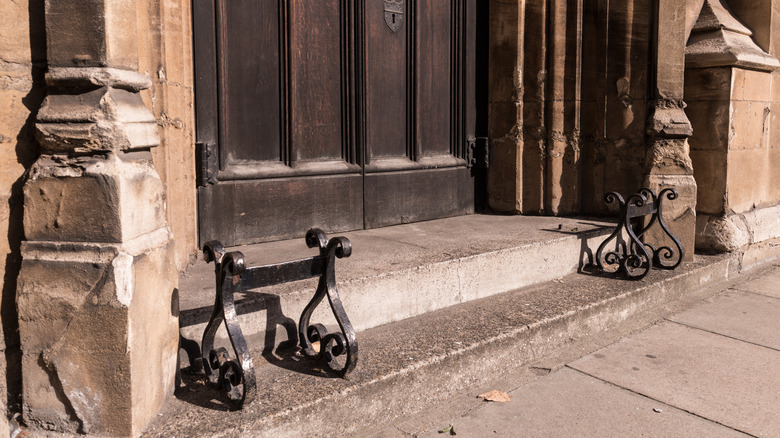
Before doormats and vacuums, getting mud indoors created a lot of laborious cleanup, especially when paved streets were rare, and what passed for a street was often muddy, dusty, or manure-strewn. The answer was built-in boot scrapers. Fixed boot scrapers outside doors let people get the worst of the mud and debris off their feet before they came into the house. That cut down on tracking dirt inside, and reduced time spent scrubbing floors and beating rugs.
In historic districts, you'll still commonly find original boot scrapers, outside older city houses and brownstones, but modern homes still often have them too. Updated versions are often freestanding with brushes, or are a combination of both scraper and doormat. Some are even adorably shaped like hedgehogs with bristly backs for you to scrape your shoes on, like this cute Redecker bassine fiber hedgehog shoe cleaner. Even though our streets are paved and less muddy in general, using a boot scraper still substantially cuts down on grit, mud, salt, and road chemicals getting tracked through the house.
Carpet sweepers offered quiet, cordless floor cleaning
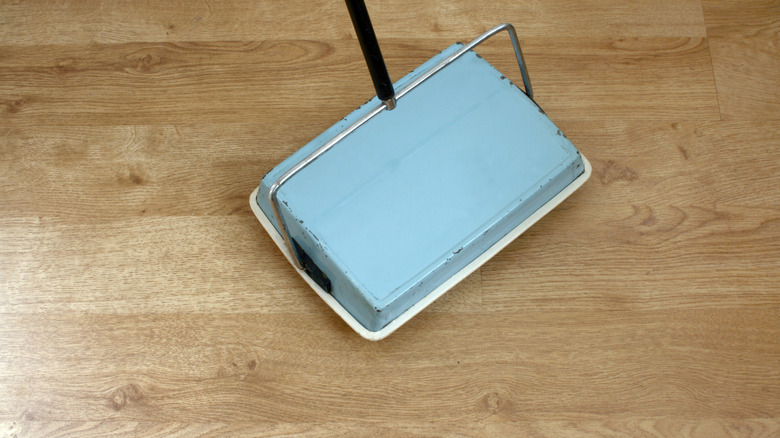
The dustpan and broom were the only real way to sweep the house, even the carpets, before vacuums came on the scene. And it was laborious, time-consuming work that really was never-ending. Enter the mechanical carpet sweeper, patented by Melville R. Bissell in 1876. It's a surprisingly simple device that transformed household floor maintenance. Basically, it's a box on wheels with and handle and a cylinder covered in rotating brushes. When you push the sweeper, friction rotates the brushes to catch crumbs, dirt, and debris, flicking them into an internal pan. Once it's full, you simply empty the pan into the trash. Before vacuums were widely available or remotely affordable for most of the population, the floor sweeper became one of the best ways to keep carpets and rugs clean. They worked on hard flooring, too, although they weren't quite as efficient because the smoother the floor, the less friction to rotate the brushes.
While carpet sweepers have been mostly superseded by vacuum cleaners, they're still in production. Many modern households like them because they're easy to break out to clean up small messes, and they're quiet compared to a vacuum, so they won't disturb babies and upset pets. Plus, people who want to limit their energy use like carpet sweepers because they don't require electricity. Because they're lightweight, people with mobility issues may also find a sweeper easier to use than a bulky vacuum — these make for one of the best ways to clean a carpet without a vacuum.
Stovetop pressure cookers slashed cooking time and fuel costs

Cooking tougher, cheaper cuts of meat and making stews from dried beans and lentils takes a long time in a regular pan. The longer it takes, the more fuel it consumes, and the more it costs. And, of course, constant simmering meant you'd have to check on the stove frequently, and didn't dare leave it unattended for long. The stovetop pressure cooker meant people could drastically cut cooking time and still get the same results, saving money and time, and making more affordable cuts of meat more practical and accessible.
Modern stovetop and electric pressure cookers still rely on the same basic principle of trapping steam under pressure to raise cooking temperature and reduce cooking time. They're fantastic for cooking from-scratch and one-pot meals of all kinds, and plenty of people use them for things like broth, stews, beef ribs, and pulled pork on a regular basis. Modern appliances include multipurpose electric devices — we'd recommend this Ninja Foodi pressure cooker and airfryer 10-in-1 multicooker — but all pressure cookers have worked the same way since they were invented in the 17th century.
Feather dusters made delicate dusting faster
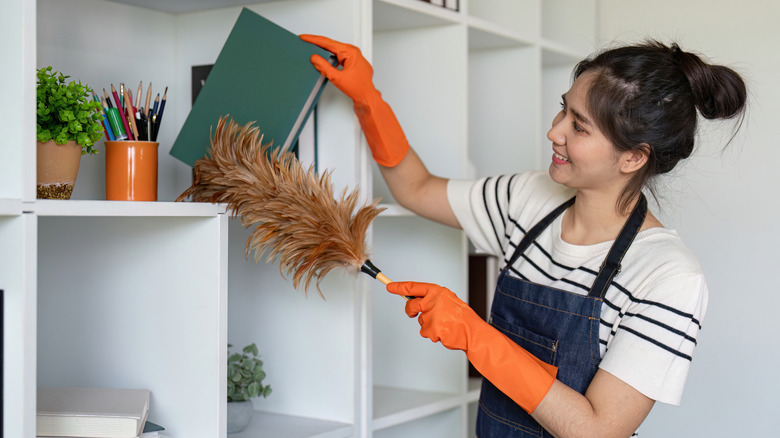
Before the feather duster, if you wanted to dust, you'd have to remove everything from a shelf, wipe it down with a cloth, wipe down each individual item, and then place it back. The classic feather duster used chicken or ostrich feathers, and was designed to whisk away dust lightly and efficiently, from shelves and frames, without disturbing any delicate knick-knacks, so you no longer had to move every single thing. Instead, you could just dust around or over things, and even lightly dust the objects themselves. The flexible feathers can reach into crevices and around fragile objects, and in those little nooks and crannies of ornate furniture.
Modern versions that use microfiber "feathers" or electrostatic materials all essentially do the same job. Although these types of dusters have evolved to use synthetic fabrics, they're still common in many homes. Even in houses that don't have many knick-knacks, these dusters are useful for tasks like cleaning blinds, light fixtures, and other delicate or intricate surfaces where using a cloth isn't efficient or practical.
Floor-mounted doorstops kept doors under control and reduced wall damage
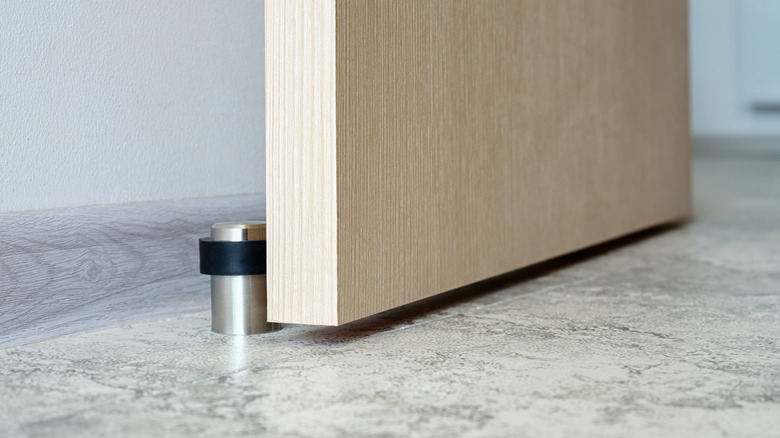
As houses slowly embraced heavier interior doors with bulkier handles and knobs, and plaster and baseboards became important to the overall appearance of a home, there needed to be a way to stop door fittings from damaging the finish of the walls. The floor-mounted doorstop was the answer. Floor-mounted models physically catch the door at a set point and stop it from slamming because of drafts, or winging too far when someone walks in. Being attached to the floor, there's no danger of the stopper getting accidentally moved.
While you can see these in historic homes, you'll still find floor-mounted doorstops in many new-build houses too, because they still serve the same much-needed function. There are plenty of interesting and unique non-fixed door stoppers, too, giving a fun way to protect your doors and walls from needing regular repair. Some also have a catch on them that will hold your door open at a specific point, allowing for airflow without having to find something to prop the door open with.
Mop buckets with wringers made floor washing less backbreaking
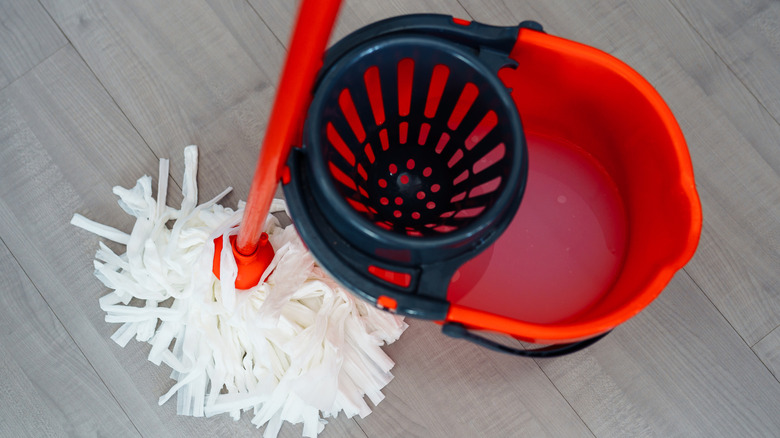
Scrubbing floors on your hands and knees is backbreaking work. This particularly challenging job even caused a medical condition, "Housemaid's knee," more formally known as prepatellar bursitis. In 1891, the mop wringer was patented. The design clipped onto the side of a bucket and let the user wring out a mop. This made mopping far easier, faster, and more practical than scrubbing with a brush on your hands and knees. It also meant floors dried faster and streaked less, as there was less water left behind on the floor.
These mop buckets have obviously gained in popularity over the decades, and endless new improvements and variations have been brought out. But they all do essentially the same thing. They all take a mop, and wring the water out of it so you can clean effectively. Mop and wringer buckets are still arguably the most efficient and efficient method of hard floor cleaning. For most homes, they're much more affordable and practical than a floor washing machine, too. Some models have wheels, others have splash guards and divided buckets for clean and dirty water. Some spin-wring, while others press the water out in a more similar manner to the original patent. Whichever model you choose, just be grateful that you're not having to scrub the floor on your hands and knees every week.
Draft excluders made rooms more comfortable and cheaper to heat

Door draft excluders are a real old-fashioned way to block drafts at the bottom of doors and keep rooms warmer and more comfortable. Draft excluders reduce cold spots and wasted heat, and make sitting near doors more consistently comfortable. They were even more necessary before the introduction of weatherstripping and better insulation.
Today, they serve the exact same purpose, particularly for those of us who live in old, drafty homes. But even modern homes can develop drafty spots over time, and a draft excluder is a quick, easy fix that will help you stop wasting heat and therefore money. You can even make your own DIY draft stopper. Today's draft excluders are sometimes filled with dense insulating foam and fabrics, and styles are endless. Some even have magnetic strips on them, giving a way to hold them in place against the door.
Motion-activated door chimes helped people keep track of comings and goings
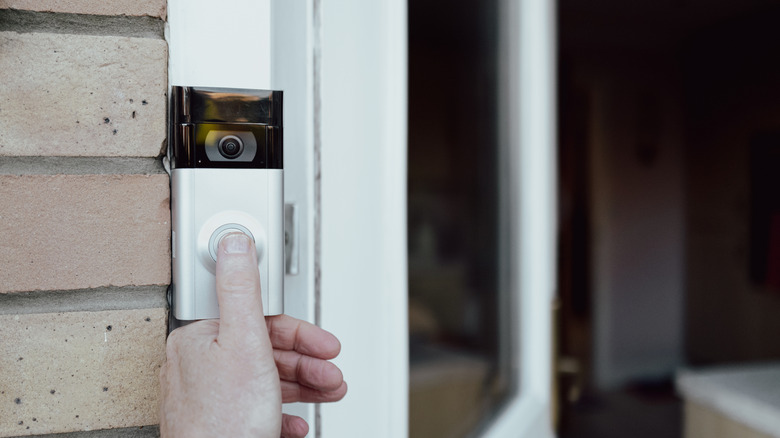
Door chimes of some description have been around for hundreds of years. A simple bell on an arm above a doorway would ring when someone opened a door, alerting the occupants that someone had entered. The same goes for mechanical doorbells, which people could ring instead of knocking and waiting for the householder to welcome them into the home. Chimes were more likely to be heard throughout the house than a simple knock on the door.
These devices were the precursor to motion-activated or magnetic door chimes. When a door opens, these modern gadgets ding, chime, ring, or send a notification to your phone. They're a simple, affordable method of basic home security and let you keep an eye on people, including your kids, going in and out of your home.
Manual hedge shears gave gardens crisp edges quickly
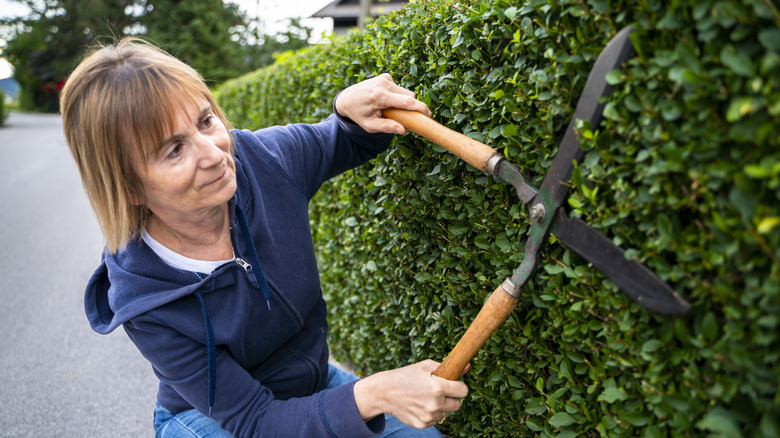
Manual hedge shears are essentially long-bladed, long-handled scissors designed to trim hedges and shrubs neatly, and they've been in use in various forms for thousands of years. Ancient Romans would still likely recognize the hedge shears we use today, even though they've changed a little over that huge timespan. Before gas-powered hedge trimmers were introduced in the 1940s, shears were the main way to keep formal plantings under control.
For smaller areas and precision trimming, hedging shears are still one of the most common garden tools sitting in sheds around the globe. Gas hedge trimmers are bulky, expensive, and noisy, and they're not the best choice for everyone. Manual hedge shears, like these Fiskars Power-Lever Hedge Shears, work in all situations, but they're best reserved for smaller hedges and gardens. Modern ones often have shock-absorbing handles and are built from lighter materials, but the scissor-action or double-bladed pivot hasn't really changed, because it simply doesn't need improvement.
Compost bins turned kitchen scraps into usable garden material
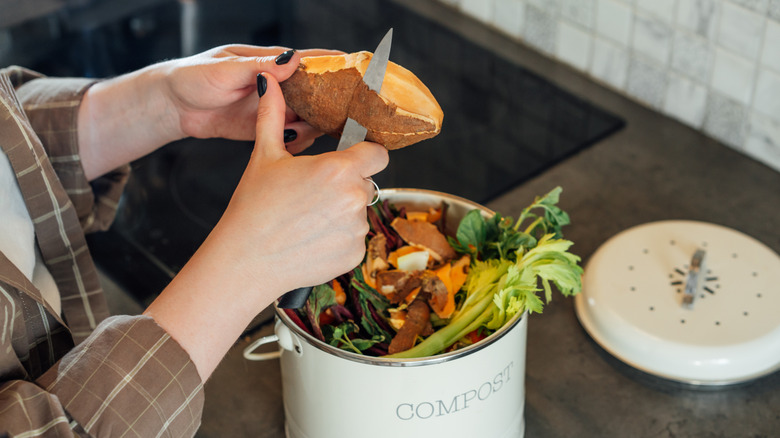
Long before zero-waste and self-sufficiency started getting trendy, families used compost heaps and compost bins, or slop buckets, to turn their kitchen scraps into compost they could enrich their gardens with. People knew that it made sense to return their fruit and vegetable scraps to the garden in the form of nutrient-rich compost to feed the soil and the new season of crops they would grow to feed their families. Even if they didn't understand the science, they understood the benefits of composting at home. Early records of composting go back as far as 2,300 BCE.
Gardeners and permaculturists are big advocates of composting as much of your waste as possible. You can keep a small under-counter compost caddy, like the little EKO Kitchen Compost Bin, to hold your scraps for a day or two and then empty it into a larger compost bin outside, where worms and other decomposing organisms can turn those scraps into beautiful, rich, crumbly compost that you can add to your garden beds.
Clothes irons kept outfits sharp with a simple hot plate
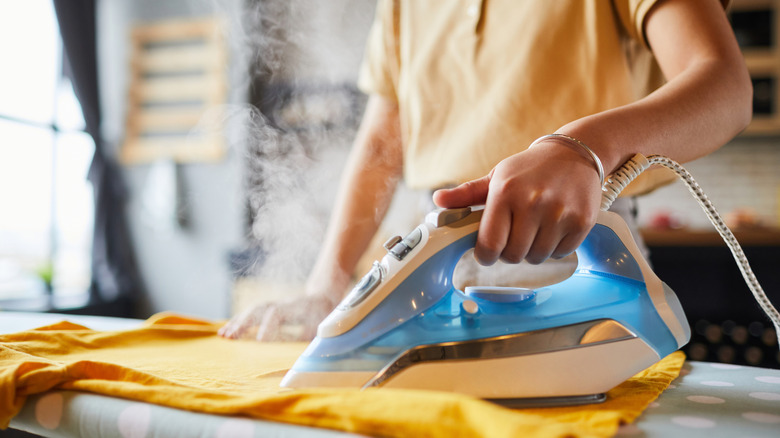
The humble clothes iron started life hundreds of years ago, as just a heavy, flat plate or flat iron, maybe with a wooden handle if you were lucky. It would simply be heated over a fire until it was hot enough to press clothes. Many households had a pair of these, so one would be heating while you were using the other, switching them over as one cooled.
Electric steam irons are based on this original idea, but they have fancier features, like modern materials, temperature controls, and steam vents. But the idea is still the same. Even full-size basic, general household irons are relatively cheap and keep clothes and linens looking their best. They're also essential if you make or repair your clothes at home, as you'll spend almost as much time pressing seams as you will actually sewing. For those going on journeys, you can even get compact travel irons to refresh creased and folded clothes.
Household scissors made hundreds of small jobs quicker
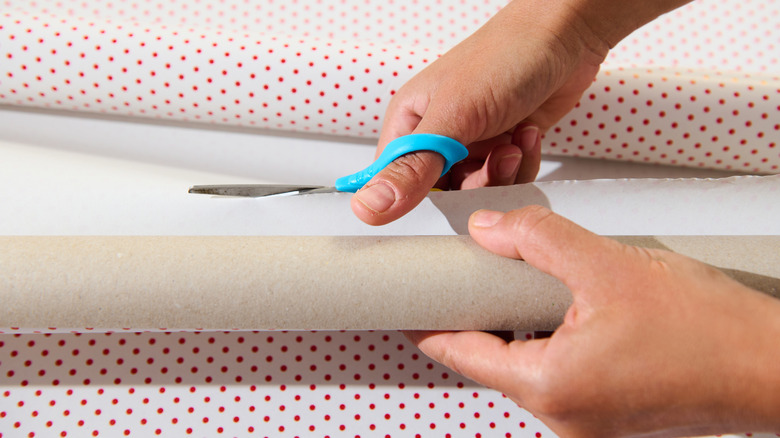
Scissors have been in use since the Bronze Age, circa 3,500 BCE. The earliest were simple spring scissors, slightly different from the typical household scissors we know today. Pivot-bladed scissors are known to have been in widespread use in Ancient Egypt, Rome, China, and other ancient cultures, from around 1,500 BCE onwards. It's incredible to think that a member of an ancient civilization would look at your kid's safety scissors and instantly understand what they are. A single, well-crafted, well-maintained pair of scissors made all kinds of tasks, from sewing to cutting paper, safer, easier, and more precise.
Most of us today keep multiple pairs of scissors for different tasks — any home may contain a combination of embroidery scissors, tailor's scissors, kitchen scissors, paper scissors, and general-purpose scissors. Each variety has a different heft, style, size, and purpose, but they're all still the same basic design. The oldest known kind, spring scissors, still exist too, like these Beaditive Sewing Scissors, made for snipping threads and seams. You can find specialist scissors, left-handed models, micro-serrated blades, ergonomic handles, and other design updates, but the two basic styles never change. And they're still utterly indispensable.