

11 Reasons Why Driveway Cracks Keep Coming Back & How To Stop Them For Good
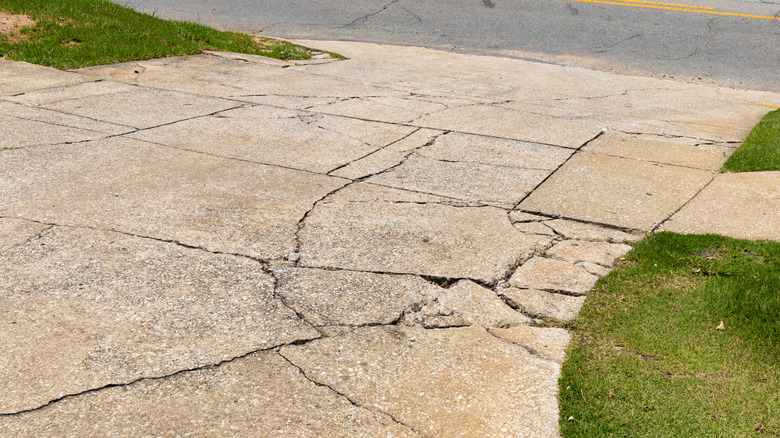
One of the most frustrating problems that homeowners have to deal with is a cracking driveway that doesn't seem to be fixable. No matter how many times you try to repair the cracks in your driveway, they always seem to return. Maintaining a driveway like that can be a pain. The problem most homeowners don't realize is that these cracks are rarely caused by a single issue. They usually stem from deeper structural, environmental or installation problems that surface-level patching can't fix.
There are myriad reasons why your driveway cracks may keep coming back. The problem could be due to mistakes made early on during your driveway installation, while others are due to environmental changes that cause structural damage to the pavement over years. We'll go through some of the top reasons for recurrent driveway cracks and tell you how these can be fixed for good. With these tips, you can finally break out of the patch-and-pray cycle to keep your driveway stable and durable for years to come.
Poor soil compaction beneath the driveway can cause cracks
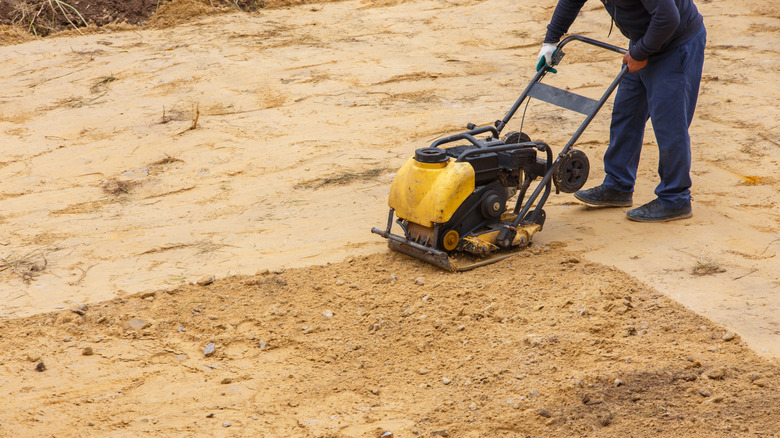
Driveways typically sit on a sub-base of soil or gravel that is compacted to push out air pockets and creates a solid foundation for the concrete or asphalt to be laid over. This step is crucial for the driveway to bear the weight of cars and heavy machinery. But if this step isn't properly done, the soil can move and settle over time, causing the concrete or asphalt above to move as well. Concrete and asphalt can handle compression well but have low tensile and flexural strength, which means they crack easily when flexed by the movement of the soil base. This problem might not be apparent when the driveway is new, but the sub-base movement over time will continue to cause cracks indefinitely.
For a driveway with a poorly compacted sub-base, trying to patch the cracks is an exercise in futility. Instead, you should try foam injection, also known as "poly-jacking". This method involve drilling holes through your driveway to the sub-base and injecting the foam which expands to compact the soil underneath. This isn't a DIY job, so be sure to consult professionals. In severe cases where the damage is extensive, you might have to excavate your driveway to the sub-base and replace it entirely. So as soon as you notice cracking, you should take action to address it quickly.
Water getting under the driveway can cause damage
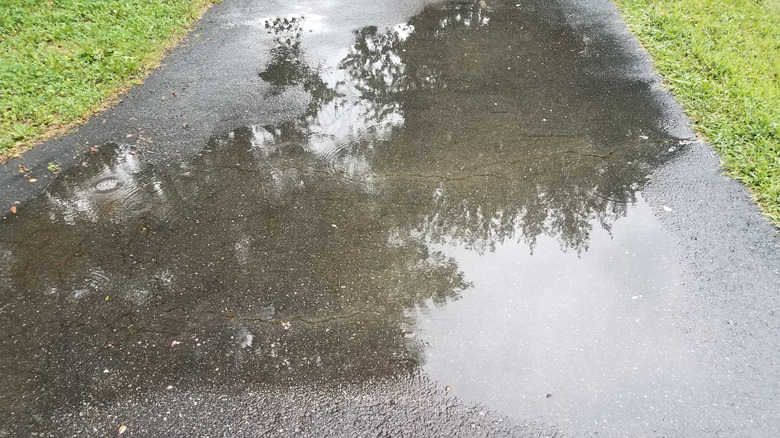
Water is one of the biggest culprits when it comes to damaged driveways. The reason why your driveway is sinking and cracking might simply be because water is getting into places where it shouldn't. When there isn't proper drainage in your driveway, water can seep underneath and erode the foundation over time. This creates depressions or hollows in the sub-base that then cause the pavement above to sink, flex, and crack. If your driveway has puddles that never dry completely, you might have a drainage problem — and you'll want to address it as soon as possible.
The permanent fix to this driveway damage is to improve your drainage. That way, the water can't collect in the first place. You can install a channel drainage system to collect water and redirect it into a drainage ditch or gutter. You can also regrade your driveway to make it slope away from your home, ensuring the water flows away rather than pooling on your driveway to cause problems. Both of these jobs are complex and will require the help of professionals, but they will be worth the up front investment to prevent repeated repairs in the future.
Freeze-thaw cycles can ruin your driveway
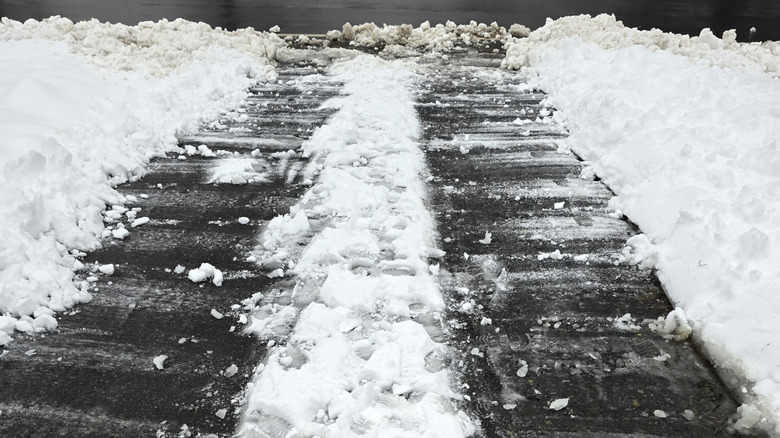
Trapped moisture can cause damage beyond just eroding your sub-base if you live in a cold climate. In places where the temperature drops significantly during the winter, moisture trapped in your driveway can freeze and expand. This would force the slab upwards, creating cracks in the driveway material. The longer this goes on, the worse it will become, since water can then enter and worsen existing cracks, as well as cause new ones. It's a vicious cycle.
Filling up the cracks in your driveway can only stave off the problem, but won't fix it for good. This time, don't just patch up your cement or asphalt driveway – apply a sealant over it. These chemicals create a protective layer over your driveway, preventing moisture from seeping into the cracks and causing damage. Water simply flows off a sealed driveway like a duck's back. These chemicals do wear off over time, so they will have to be reapplied every three years to maintain efficacy. But the protection they provide is well worth the time and money.
Heavy vehicle loads exceeding driveway capacity can cause cracks
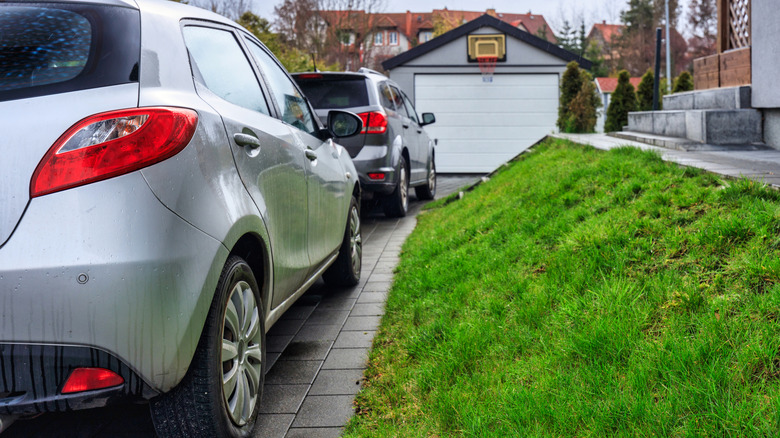
Did you know that every driveway has a load-bearing capacity? This threshold is determined by a combination of factors, including the sub-base, the thickness of the asphalt or concrete layer, the composition of the material, and even the regular temperature of the climate in which the driveway exists. Most residential driveways are built to carry a certain amount of weight, usually about 3000 to 4000 psi. But if you drive a heavier car like an SUV or truck, you may be subjecting your driveway to more weight than it can bear. Some homeowners find out the hard way when they undertake some renovation that requires heavy machinery and end up with cracked driveways.
The solution to this one is simple: Avoid heavy loads on your driveway. Most residential driveways aren't equipped to bear the weight of multiple cars or heavy vehicles and machinery, so just be mindful of what you're parking. Alternatively, there are some ways to reinforce your driveway for heavier loads. The first is foam or polyurethane injection to stabilize the sub-base for improved weight distribution. If the damage is substantial, professionals can excavate and reinstall a tougher driveway, preferably with a geo-textile fabric layer to increase load-bearing capacity.
Tree roots growing under your driveway may be the root of your cracks
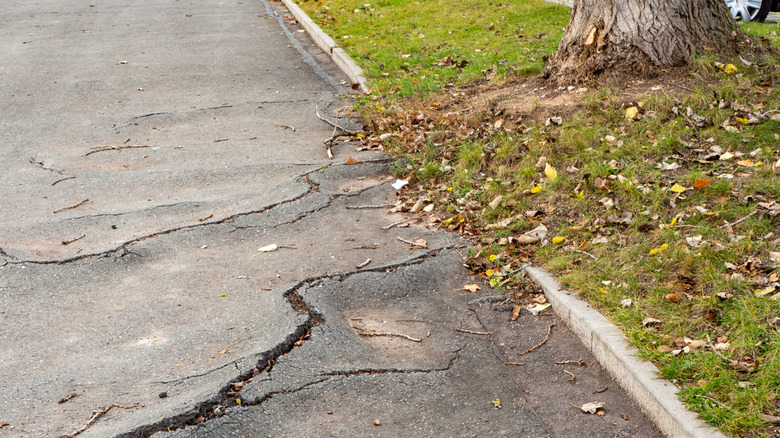
If there's a tree near your driveway, you don't only have to worry about the leaves and branches that may fall on your driveway — you also have to worry about damage from the roots. Tree roots expand outward for moisture, digging into the tiniest cracks in your driveway to seek it out. Then those roots thicken as they grow, exerting outward and upward force to lift and crack your driveway. Asphalt driveways are more susceptible to this than concrete ones, as the material is more porous, allowing easier entry for the roots to do their damage.
Your first step should be to prune the problematic roots with the help of an arborist. Nothing can save your driveway as long as those roots remain where they are. Too much pruning could cause the tree to get unstable and fall, which is why its best to call in a professional for the job. Next, install a root barrier to keep the issue from recurring. A root barrier is a sheet of metal or thick plastic installed deep in the ground between the tree and your driveway, which prevents any lateral root growth under the driveway. The spaces left by the roots can be filled with compacted gravel or soil, followed by a replacement of that driveway patch.
Poor quality concrete or asphalt mix can doom your driveway from the start
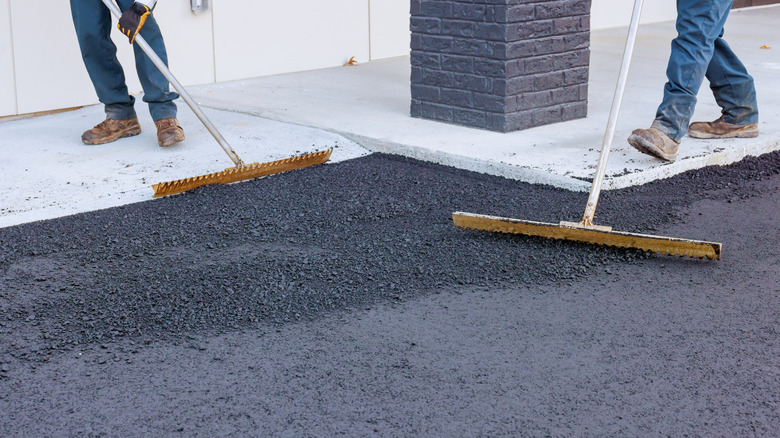
A poor asphalt or concrete mix can create a driveway that never lets you rest due to persistent cracking. If the original driveway material was mixed improperly, the driveway can become weaker than it should be. Too much water in a concrete mixture or a low-grade binder in asphalt can also make your driveway susceptible to damage. There are a few things to look out for that indicate a poor mix, such as discoloration and crumbling. Additionally, if you notice patchiness in your driveway, where some parts look darker or rougher than the surrounding sections, then you can suspect that the concrete wasn't mixed properly.
To address damage caused by an inconsistent mix, you'll need to replace damaged sections with new concrete or asphalt that uses a proper combination of paving materials. You could use a concrete mix calculator if you want to DIY the repair. But to ensure you get the right combination, you should hire professionals who know the proper mixing ratio for enhanced strength and workability. Experts know how these materials react with real conditions and what tweaks should be made when the weather is too moist. These skills offer guidance that you can't get from a concrete mix calculator alone.
Oil, chemicals, or deicing salts can weaken the surface of your driveway
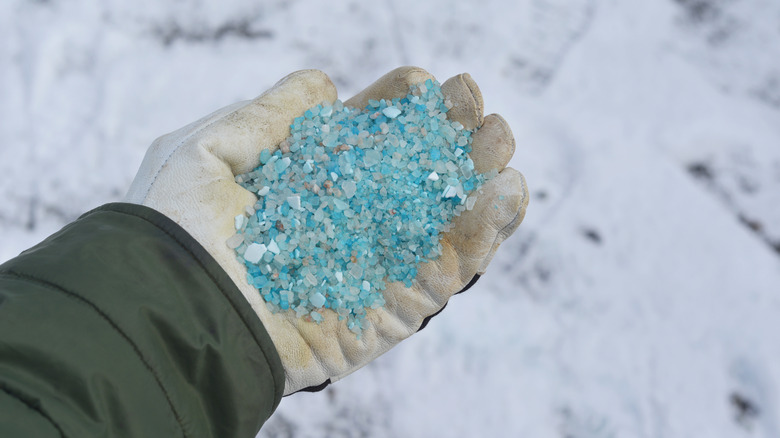
The surface of your driveway might seem untouchable, but you'd be surprised at how much damage little things like oil spills and vehicle fluids can do to your driveway. If they're not cleaned up quickly, they can cause corrosion. And if you live in a snowy area, then your trusty deicing salt might be the culprit. While useful in the winter, the salt can end up reacting with your asphalt driveway, causing your asphalt to deteriorate and fade, and concrete to scale or spall. This begins the cycle of recurrent cracking.
To avoid damage from chemical solutions, clean up spills on your driveway as soon as they happen. For oil spills, use materials like cat litter or sawdust to absorb the spill once you notice it, then employ a degreaser. Allow that to sit on the stained patch for as long as the product directs before using a scrubbing brush to break up the stain. Then, rinse the spot with some water. For deicing salts, a good power-washing during the spring should clear your driveway of its harmful effects. While it takes a little extra effort in the off season, it is an essential task to prevent your driveway from cracking.
Improper thickness of your driveway can cause recurrent cracks
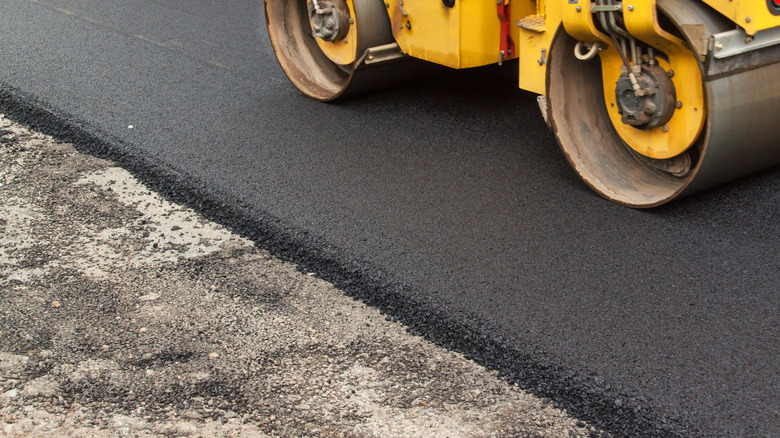
A new driveway costs a lot to pave – about $2,500 to $9,500 nowadays. That is a huge sum of money, yet some paving companies might still decide to cut corners when it comes to the thickness of the asphalt installed in order to maximize profits. But a thin driveway won't handle vehicle loads and temperature changes well, so this sets you up for a recurrent cracking situation. You might be unlucky enough to have employed an inexperienced paver, who failed to consider the weather in your area and the kind of cars you have when installing the driveway. While a thinner driveway may work for homes in cooler climates that expect only foot traffic, it wouldn't work in a hot area with two SUVs.
Your asphalt driveway should be about three inches thick, while concrete should have a minimum thickness of four inches to support the average home and their car. If your driveway is experiencing damage due to being too thin, one way to fix it is with the milling and overlay technique. This process entails grinding down the existing thin asphalt layer to allow for the application of a new asphalt layer over your existing sub-base. It's worth noting that this will only work if your sub-base is top-notch condition. If not, a full-depth replacement might be necessary.
Expansive clay soil can damage your driveway
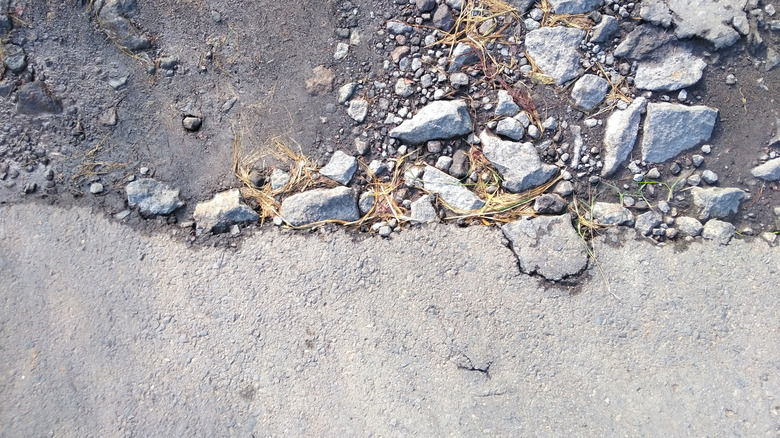
Expansive clay soil causes a fortune in damages to concrete pavement like home foundations and driveways. Clay soil might seem harmless if you don't know how to spot it. And no matter how much you compact it, the issue with this soil doesn't stem from air pockets and a lack of compression. Expansive soils suck up moisture like sponges, and when they do, they expand and exert tremendous pressure upwards, buckling your driveway. In dry seasons, they lose their water just as fast and shrink, leaving spaces that cause more cracks. As long as your driveway is on expansive soil and nothings is done, you can expect rifts to keep appearing.
There are a few ways to handle expansive soils under your driveway. The first is moisture control. Do everything from sloping your driveway, to planting some plants near the driveway to pull up some water. You can also install moisture barriers and sub-surface drainage to keep water away from your driveway. Another potential solve is to treat the soil with lime or cement to stabilize it, as these materials reduce the soil's swelling potential. These options may take care of the issue depending on other conditions like your climate. If they don't, you'll likely need to remove your entire driveway and eliminate the soil before reinstalling in order to fix the issue.
UV light exposure can weaken your driveway
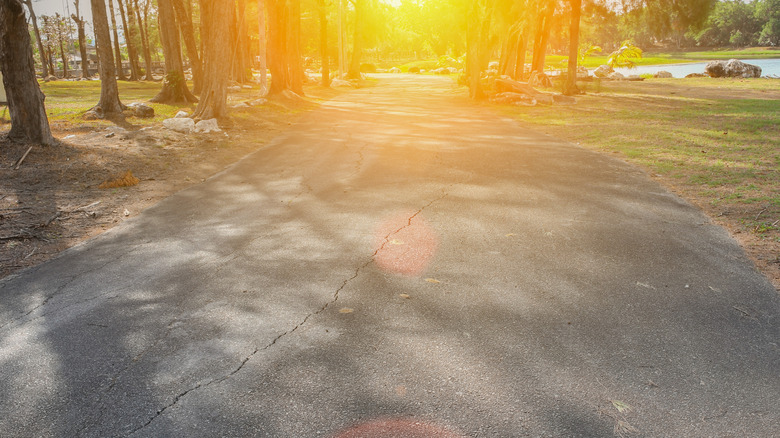
As inconvenient as it sounds, constant exposure to the sun can be problematic for both asphalt and concrete driveways. The sun dries out your asphalt, making it more brittle and easier to crack at any movement of the sub-base. Ultraviolet rays from the sun also cause oxidation of your driveway material, causing your asphalt to fade over time and your concrete to turn a patchy and dusty color. This oxidization also cause your driveway to break down, ensuring that those cracks appear early and never leave.
A UV-resistant sealant is your best bet for solving this issue on either concrete or asphalt. These chemicals form a top layer over your driveway preventing the UV light from causing oxidative damage. The best way to apply the driveway sealer is with a spray applicator — but don't just apply it once and call it a day. It's recommended that you seal your driveway every 2-3 years for a long-lasting finish.
Poor control joint placement can destroy your driveway
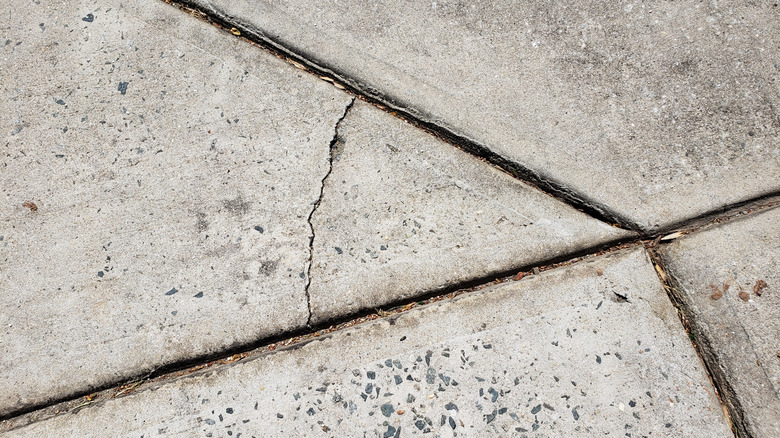
Concrete expands under high temperatures and contracts when it cools, which is why pavers install control joints during paving. Control joints are straight lines cut into the driveway at specific intervals to help control cracking. Your driveway would inevitably shrink and crack while it dries, so a control joint is there to be a designated cracking spot to prevent damage elsewhere. Unfortunately, these joints aren't always placed properly or the temperature can get too high and overwhelm the spaces created. In these cases, your concrete can tear itself apart while expanding, forming cracks that only get bigger with time.
In areas where the temperature can reach extremes, you might need to install expansion joints. These are sometimes confused with control joints, but they are different. Expansion joints are spaces between slabs of concrete that are usually filled with a flexible material like cork or rubber. These materials close the space to prevent moisture entering the cracks, but are flexible enough to be compressed when the concrete swells. These joints are best installed before the concrete is poured, but an existing driveway can be cut away and replaced to allow for the placement of expansion joints.