

Foam Vs Fabric Covers: Only One Reigns Supreme For Protecting Outdoor Faucets In Winter
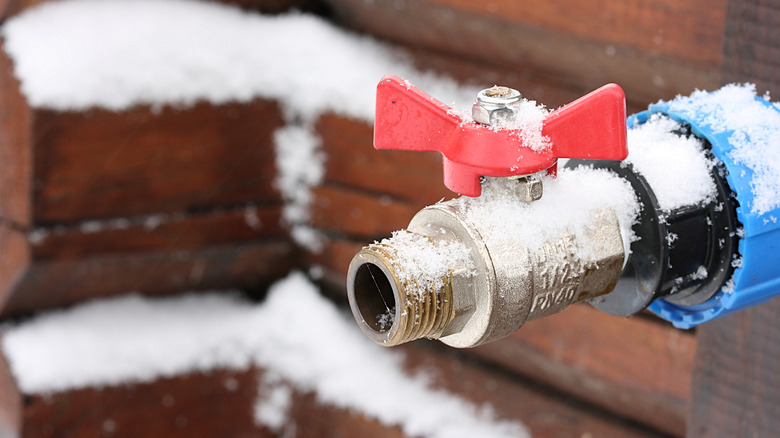
As the temperatures dip and the cold winter season draws nearer, winterizing your home becomes the most important thing to do in preparation. But as you're sealing holes and cracks in the house, and cleaning the gutters in the yard, don't forget your outdoor faucets. They may seem minor, but failing to winterize them can result in serious and costly water damage. That's why faucet covers are so important, as they're the best way to protect your outside faucet from freezing in winter. The only question is, between foam and fabric covers, which one should you select for your spigots? Foam covers are considered the superior option, especially due to their better insulating ability and hard protective property.
However, these stiff foam covers can be tricky to install on oddly shaped outdoor water spigots, which is where fabric covers may work better. But, both of these covers are cost–effective, readily available, and an easy solution for winterizing spigots. Before you make your choice, take time to research all the advantages and disadvantages of each type and select the one that's ideal for your specific situation.
What's the ideal faucet cover for your outdoor faucet?
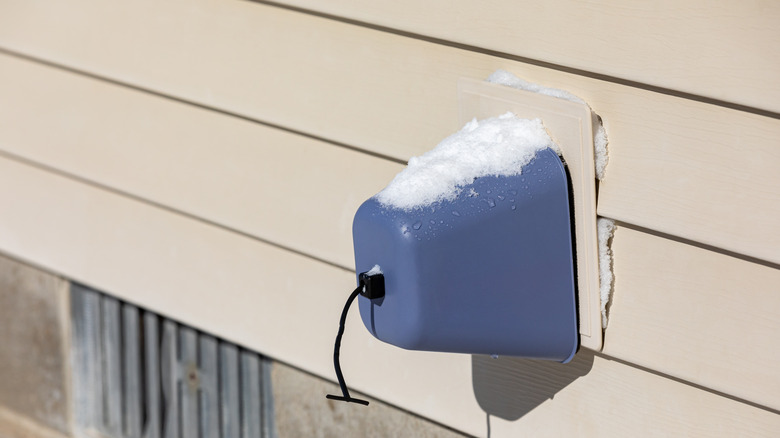
Before deciding which cover is ideal for your outdoor faucets, let's first understand that the different physical properties of the foam and fabric covers are what determine their difference in functionality. Foam faucet covers, typically made from styrofoam, are hard, while fabric ones, often made from vinyl or polyester, are soft. Therefore, if you have a standard outdoor faucet that's located against a flat exterior wall, the foam cover would be the ideal choice because it sits flush against the wall, creating a perfect seal against the cold winter air. The firm structure of the foam cover can also protect the spigot to some extent if something happens to fall on or knock against it.
Fabric faucet covers, on the other hand, are great for oddly shaped spigots because this soft cover adapts to the exact shape of the faucet. Although the fabric cover doesn't sit flush against the exterior wall like a foam cover, its flexibility actually serves as an advantage if yours is a freestanding outdoor faucet. However, fabric covers don't provide the same level of physical protection as rigid foam options.
How to protect your outdoor faucet in winter using a cover
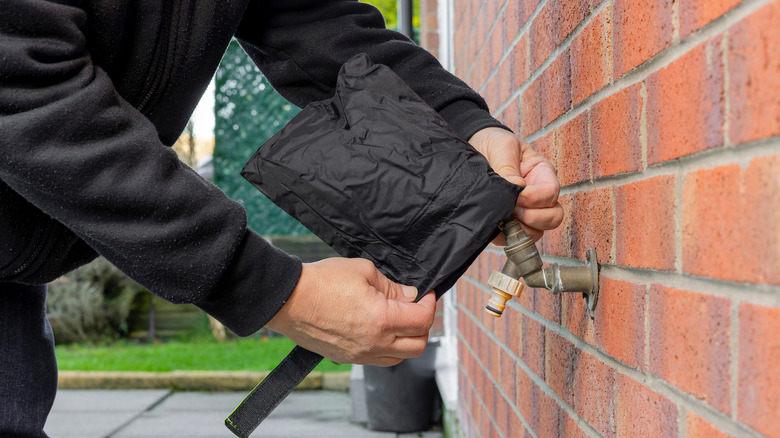
Insulating your outdoor faucets with a cover is a pretty straightforward process. First, if there's any hose connected to the spigot, remove it and then turn off the main water supply to the outdoor faucet. To make sure no residual water remains in the spigot or pipe, open the faucet and let it drain completely.
If you're installing a foam cover, place the rubber loop that's inside the cover around the handle of the spigot, and then fasten the cover in place by sliding the cord clamp to tighten the outside cord. For fabric faucet covers, position the cover around the spigot and then fasten the drawstrings around the part of the spigot closest to the wall, ensuring there's no room for cold air to get into the spigot.
There is still some maintenance to keep up with once the cover is in place. Every once in a while, as long as the winter season lasts, check on the faucet cover so you can either reinstall it properly if it comes loose for whatever reason or replace it if it's damaged. Checking the cover about once a month throughout winter is usually enough.