

No-Dig Gardening Sounds Perfect But Are There Downsides?
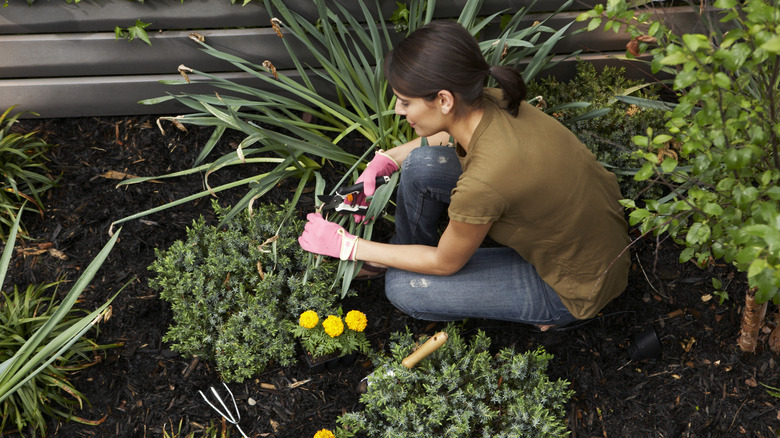
Your garden is a personal connection to nature, a way to unwind and decompress, all while soaking up the sunshine and enjoying a variety of plants you've grown yourself. However, your garden also provides the ability to experiment, a chance to tinker with your methodology until your process feels perfectly tailored to your preferences. As a result, while developing a gardening style and routine that's right for you, you may come across no-dig gardening.
At its core, no-dig gardening is exactly what it sounds like: gardening that doesn't require large amounts of digging. Rather than tackling and tilling the soil with shovels and spades, this technique revolves around minimal soil interference. While you may still need to dig cells for your plants and care for their growing environment, you'll mainly focus on the surface of the soil.
When done correctly, no-dig gardening can offer a variety of benefits. While not exactly hands-free, it can require less work than other types of gardens that rely on annual tilling. By disturbing the soil as little as possible, you can also create a growing area that's more aligned with natural conditions, where organisms like worms or bacteria can thrive and help support your plants. However, as with every garden method, it's important to keep in mind any potential downsides of no-dig gardening. This can include the time needed to establish this setup, as well as the materials you may need to invest in if you don't already have them on hand.
Potential downsides of no-dig gardening to consider

Part of the appeal of creating a no-dig garden is its focus on natural ecosystems within the soil. When you dig and move the soil around in your garden, you can disrupt the natural processes there, as well as local residents like earthworms, bacteria, or even insects — all of which can contribute to the health and structure of your soil. Planting a variety of thriving crops directly on top of soil that's already crowded with plants and roots can be a difficult task, and you may need to spend several weeks adding cardboard and compost in layers to the surface of your soil to remove any existing plants. If you're hoping to plant quickly — especially late in the season — this setup period can slow things down.
Another downside of no-dig gardening is the upfront cost of materials like cardboard, mulch, and compost. In many ways, a no-dig garden is similar to creating a DIY raised garden bed. You add layers of cardboard that will break down and nourish the soil while also reducing weeds without digging, then top it off with mulch and compost to create a growing medium. As a result, you'll need enough of these materials not only to start your garden, but to maintain it over time. In areas with naturally rich soil, buying compost or mulch may feel unnecessary and add to your overall costs.