

The Indoor Plant That Thrives In The Warmest Parts Of Your Home
Finding an indoor plant that can handle the warm, dry areas of your home without constant attention can feel like a challenge, but the ponytail palm (Beaucarnea recurvata), also called elephant's foot, does just that. This houseplant thrives on little water and is easy to care for. Despite its name, this popular houseplant isn't a true palm at all. Instead, it's a drought-tolerant succulent that thrives in the warmest spots of your home. With its bulbous trunk, called a caudex, that stores water and its cascade of long, arching green leaves, the ponytail palm brings sculptural interest and a touch of personality to indoor spaces. This plant is well-suited for bright windows, upper floors, and areas near heating vents where other houseplants may struggle to thrive.
One of its biggest appeals is how forgiving it is. Missed waterings and fluctuating humidity rarely bother it, making it a houseplant that's easy for even the most forgetful people to grow. It's greenery without a demanding care routine. When given the right light, proper drainage, and occasional water, this resilient plant can thrive indoors for decades, making it a standout choice for warm homes and those who want a pop of color without the fussiness.
How to grow and care for ponytail palm
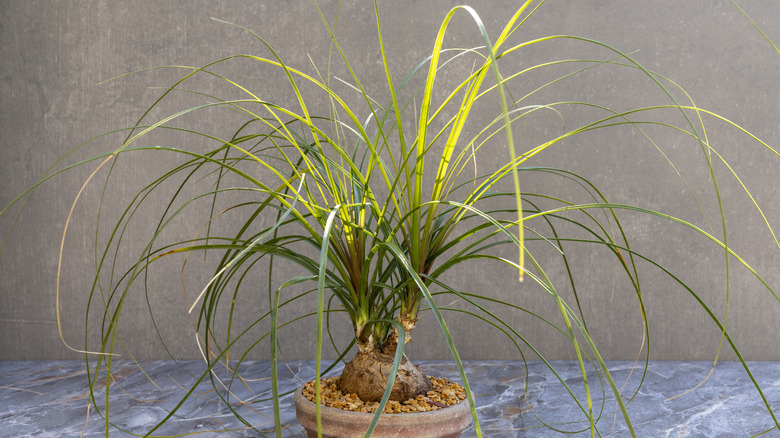
Growing and caring for a ponytail palm indoors is relatively simple, making it an excellent choice for both beginners and busy plant lovers. These plants thrive in bright, indirect light, so place yours near a sunny window where it can soak up plenty of filtered sunshine. The more sunlight your ponytail palm gets, the healthier and more robust its foliage will be. Use a well-draining soil mix formulated for cacti or succulents or mix regular potting soil with sand and perlite to create a well-draining soil. This will help prevent root rot, a common problem from overwatering.
Water deeply but infrequently, allowing the top inch or two of soil to dry completely before watering again. Indoors, this often means watering only every few weeks, especially in cooler months. Ponytail palms also enjoy average indoor temperatures between about 65 and 80 degrees Fahrenheit and tolerate typical household humidity levels. Fertilizing is optional but applying a balanced or cactus-specific fertilizer during spring and summer supports growth. However, you should avoid fertilizing in fall and winter when the plant is dormant. With the right light, soil, and careful watering, your ponytail palm can successfully grow indoors for years as a striking, low-maintenance houseplant.