

The Worst States To Live In If You Want To Avoid Termites
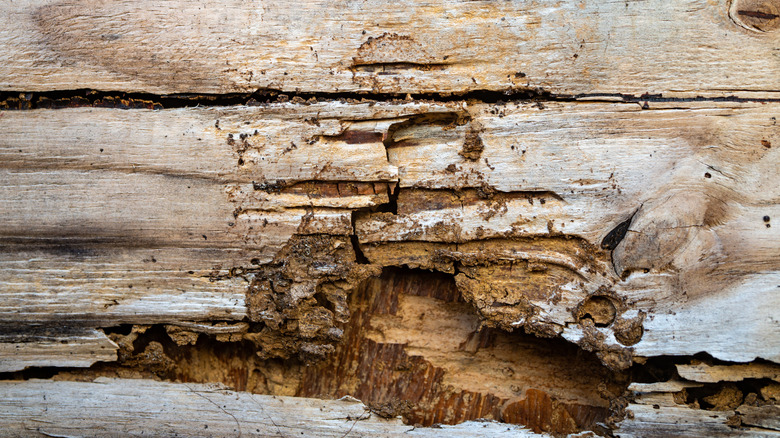
A termite infestation is many homeowner's worst fear. Getting rid of the wood-munching insects isn't a minor affair, and it's not something a homeowner should attempt on their own. Signs of termites — damaged wood, dirt tunnels, piles of wings — are indicators of a problem that needs to be addressed immediately. Climate is the major factor determining the states in which your home is most susceptible to damage. Termites seek out warm, humid places like the Southeast U.S., Hawaii, and the California coast. Homes in these regions have a very high likelihood of developing an infestation according to the termite infestation probability zones (TIP) created by the U.S. Forest Service.
As you go farther south in the U.S., temperatures and humidity rise. The climate of the lower Midwest, South, and Southeast U.S. create the ideal conditions for thriving termite colonies. The entire states of Florida, Georgia, Alabama, Mississippi, Louisiana, Hawaii, and South Carolina are in the highest risk category, while the southernmost parts of Arkansas, North Carolina, and Tennessee, eastern Texas and coastal California, are also high risk. Florida tops the list, with scientists at the University of Florida suggesting that half of the homes in southern Florida will have termite damage in the next 20 years. Miami is the most infested city in the state, followed by Tampa, Orlando, and West Palm Beach.
The worst termites to have
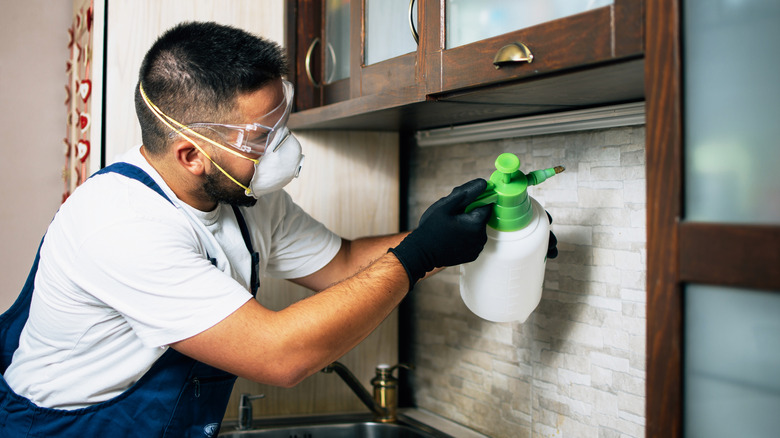
Not all termite species are destructive and undesirable, but the worst of the worst is probably the Formosan termite because of the amount of damage their huge colonies, some that are comprised of as many as a million insects, are capable of. They first showed up in the continental U.S. in Mississippi in 1984 and in Hawaii in 1907. Formosan termites are now widespread in the Southeast where they can cause severe damage to your home in as little as three months. They're the most destructive structural pest in the state of Louisiana, where they swarm out of the ground in spring.
Climate change and the introduction of new termite species into the U.S. will eventually make more U.S. states vulnerable. As it is now, the likelihood that you'll have a termite problem diminishes as you move northward, with states like Washington, Idaho, and Minnesota suffering very little impact from the insects. If you want to completely remove the risk of termites, your only choice is to move to Alaska.
If you're buying a home in one of the states with a heavy risk of termite infestation, have an inspection done before you buy. If the inspector finds evidence of termites, ask the seller to remediate the problem or make an allowance on the sales price so that you can have termite treatment done by a professional before you move in. Be aware that not all termite infestations are obvious to an inspector, so you should watch for signs of termite damage in the future. If you're living in one of the states where termites are prevalent, take precautionary steps to prevent termite infestations and have annual inspections done.