

Creative Solutions For Building A Squirrel-Proof Raised Garden Bed
We may receive a commission on purchases made from links.
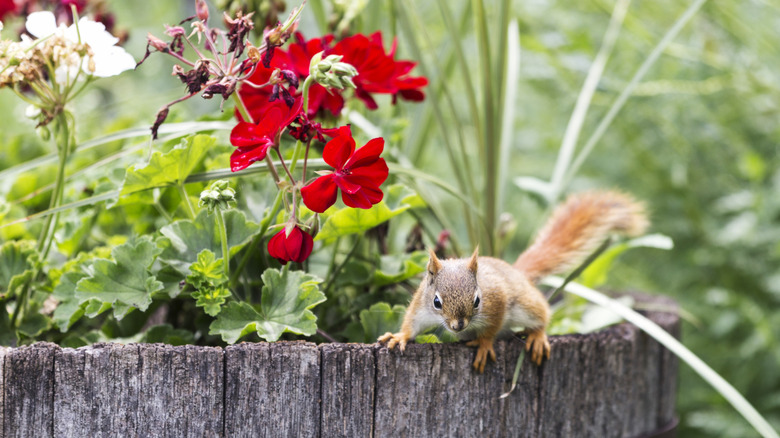
I have a love-hate relationship with squirrels. We're frenemies. They love freshly planted beds, soft compost, and delicious crops just as much as I do. I'm a master gardener and nature enthusiast, so squirrels both delight and frustrate me, and I've tried all kinds of things to keep these clever, fast, and amazingly persistent little critters out of my garden beds for decades.
Physical barriers are essential — and they need to be good. Squirrels can climb, dig, chew, jump, and will try their absolute hardest to get to anything that really takes their fancy. You'll need the right mesh, the right structure, and the right style of enclosure to keep the contents of your raised beds safe. I've tried many of these methods myself over the years, and I've seen others have great success, too. As an added bonus, securing your raised beds against squirrels also protects them against countless other pests.
Start by blocking their digging from underneath
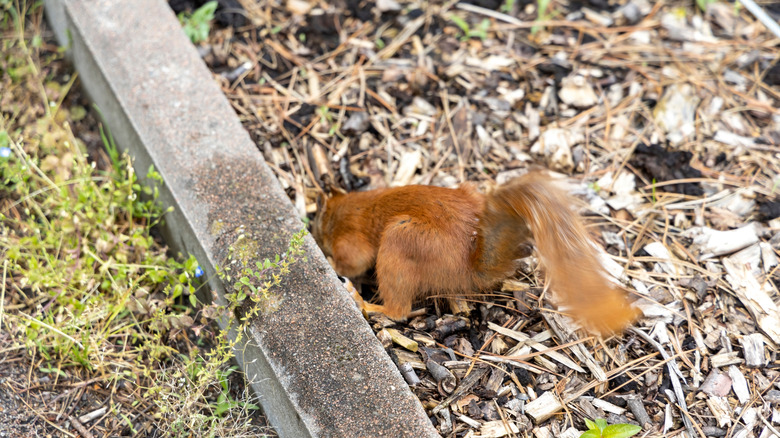
You can cover the top of your raised bed with whatever you want, but squirrels are relentless little digging machines, so you need to start at the bottom if you want to create really secure beds. They'll happily tunnel under bed edging and pop up right in the middle of the bed, seeking out bulbs, tubers, and any other tasty things they want. And, once the bed is full of soil, it's pretty much impossible to fix without emptying the bed and starting again.
If your bed isn't already full, start by lining the bottom with galvanized hardware cloth before you add the soil. But remember squirrels can squeeze through small gaps, so make sure you go for ½-inch hardware cloth, like this 100ft 1/2-inch Hardware Cloth from Kaners. This is sized small enough that squirrels can't get in, but large enough that water can freely drain through and useful soil organisms like earthworms can make their way up into the bed. You need to secure the mesh to the underside or the inside of the bed, or the squirrels will figure out how to slip in at the sides.
Build a full mesh cage that matches your bed footprint
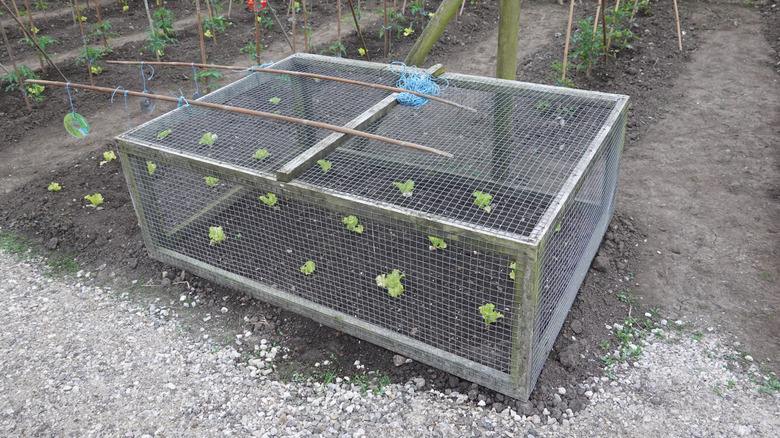
Really, the best way to go is to turn the bed into a cage for your crops. You need a full mesh cage that exactly matches the size of your bed, so it can just sit right on top. You're essentially adding a box frame covered in hardware cloth. I use this method for higher-value crops that I know squirrels (and other pests) tend to come after, like my strawberries, peas, tomatoes, and similar easy targets.
Garden netting just doesn't cut it when the crops are something really tempting, so save yourself a lot of frustration and go straight for hardware cloth. The frame needs to be sturdy lumber, the same size as the bed footprint and a touch taller than the tallest crop you plan to grow. Many plants that are perfect for raised beds, like carrots, spinach, and peas need plenty of head room. Go for galvanized hardware cloth and exterior-grade screws or staples, so they don't end up rusting away in just a season or two. Once built, the frame should sit on top of the bed or completely over it, and there should be no gaps squirrels can wiggle through. If the structure is fairly light, you need to secure it, too.
Add hinged lids so you can actually use the bed
Lifting a heavy cage top off and back on, and re-securing it every time you want to access your bed, is, admittedly, not ideal. You end up just trying to prop up one side with a brick or a chock of wood while you contort yourself into the gap to reach the weeds or harvest the crops, Then, at some point, you'll knock the thing that's holding the lid up, and it'll come crashing down on you. Ask me how I know!
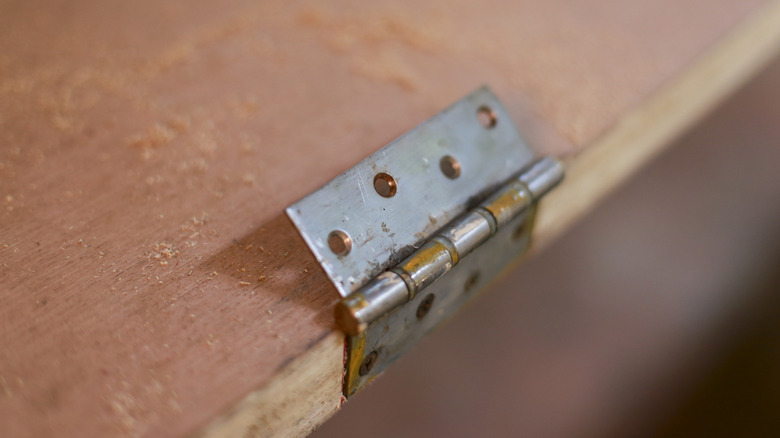
But, adding a hinged lid solves this problem, and it's so simple. For these, I use a wooden base with PVC hoops to keep the whole thing nice and light. Then I cover it in hardware cloth. Use this idea on beds where you want the frames to stay for years. Add strong hinges, like the TamBee Heavy Duty Gate Hinges, to the rear so you can safely open up the bed all the way whenever you need to work, and just close it when you're done. You can use a gate latch, a hasp, or a hook-and-eye fastener, like Aiptosy's 6-Inch Hook And Eye Gate Latch, at the front or sides to keep it closed when you're not using it. For long beds, instead of one huge frame, make two or three separate sections so you can just lift a portion at a time.
Use chew-proof metal near the soil and lighter netting above
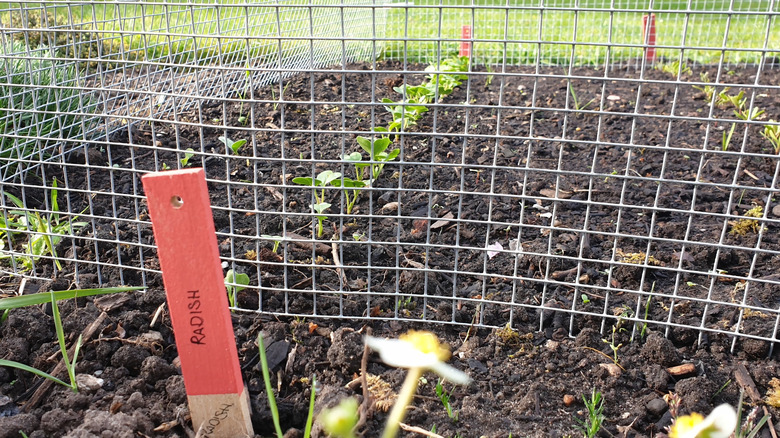
I like hardware cloth because it's super tough, but it's also heavy, expensive, and has lots of sharp bits. So it's a smart plan to try and balance cost, weight, and squirrel defense. Now, even though squirrels climb with ease, they do most of their chewing, gnawing, and pushing along the first foot or two. Their aim is to dig under or push through at the base.
Therefore, if you're trying to reduce cost and weight without ringing the dinner bell for those dastardly squirrels, use hardware cloth from the base to about 2 feet tall. Above that, switch to wildlife-safe netting. This method protects the chew zone without adding unnecessary weight or cost to the roof and higher portions. Just make sure you fully secure (and overlap) the netting to the wire mesh, because if you leave a small, unsecured gap, I can pretty much guarantee the squirrels will find it in a surprisingly short amount of time.
Shape a hoop tunnel over the bed with sturdy covers
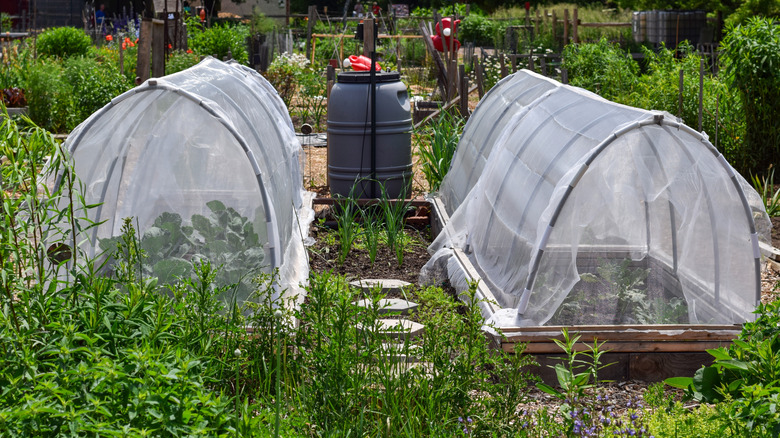
I use hoop tunnels a lot. They are brilliant when you need something right now and don't have time to build a new frame. Hoop tunnels are also a great option for adding a cover to a raised bed that's already built and full of soil. They are fast to erect, and the domed structure means you don't get a lot of leaf, snow, or ice buildup on the top.
If you're really in a hurry and need to get a bed covered, the simplest solution is to push some stakes into the soil at the very edges of the bed, then use flexible PVC pipe. Fabiacci's Flexible Pipe PVC Tubing works well. Slide one end over one of the stakes, and the other end over the stake directly opposite, and repeat this with equal lengths of pipe all across the bed. Then, attach a rigid piece of wood, bamboo cane, or piece of PVC under the peak of the arches to hold the whole thing steady. Next, cover with wildlife-safe netting.
This is the quick-and-dirty method and is really only a temporary job until you can build something better. But it does get the job done. If you want to up your game and turn it into a longer-term solution, affix the pipes directly to the walls of the bed, and attach stabilizing bars at the peak and one on each side. You can even get a little fancy and use this idea with a singed frame. I like this option for crops that don't need pollinators, like brassicas, because I can just clip on strong insect mesh that keeps rodents, birds, and butterflies out, so my cabbages, broccoli, and kale can grow in peace.
Create a dig-proof skirt around the outside of the bed
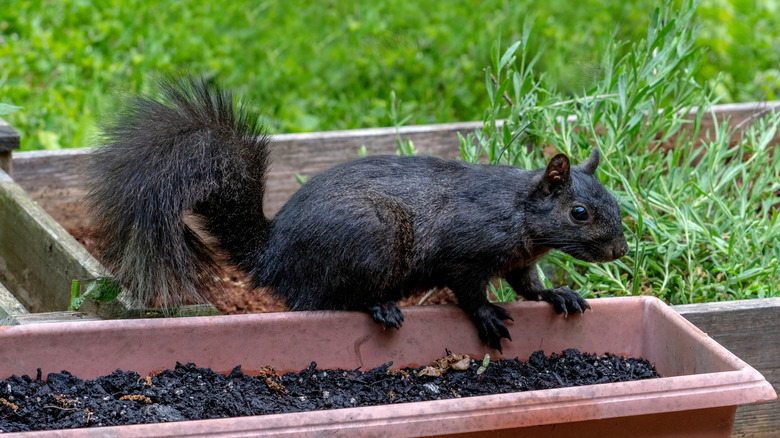
Many critters, not just squirrels, will happily dig under your bed, ignoring all the cages and other fortifications you've carefully built. They go right for the base, so even if there's just a tiny gap at the soil line, they'll scratch it out and be in the bed in no time. The best way to defend against this is with an outward-facing skirt. It makes digging at the edge frustrating and unproductive, and keeps your beds safe. This is one of the best winter prep jobs you can do for your raised beds.
Fasten hardware cloth or welded wire near the bottom of the bed sides, then bend it outwards so that it lies flat on the ground. On all sides, you've basically got an L-shape. It should run at least 6 inches and preferably 12 inches along the ground. Then cover it with a layer of mulch like gravel or wood chips so it's not unsightly. As the critters try to dig in, they'll very quickly hit the mesh and should, after a few attempts, give up.
Use modular mesh panels you can swap between beds
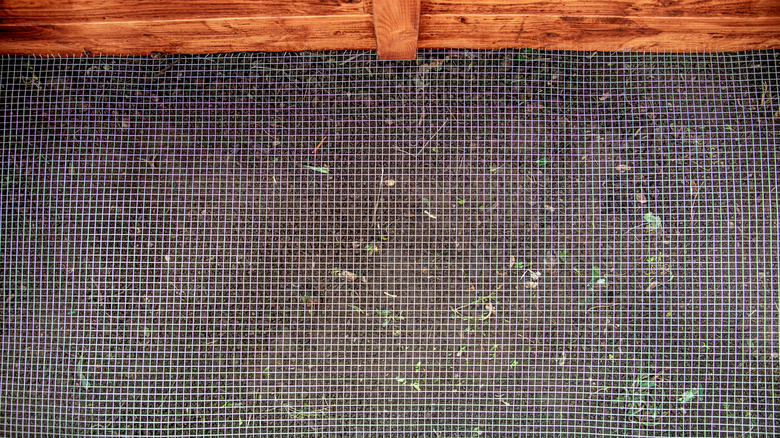
You might not want or need permanent cages on every single bed. Yes, when seedlings are vulnerable, fruit is ripening, or you're growing something one year that is too tempting to squirrels all season, it makes sense to keep those beds covered at those times. But you may not want a permanent setup across all your beds. That's where the modular mesh panel comes in.
All your beds need to be the same size for this to work well against squirrels. Essentially, you build timber frames that fit the top of your beds and wrap them in strong netting or hardware cloth. You can also make them slightly raised, depending on what you're growing. Or tweak this slightly and use the PVC dome idea if you know you'll be growing taller crops. For the best results, you want to create a "fitting" system. This can be as simple as attaching latches to each bed and frame (although you'll need to make sure they line up properly). You can also try shallow grooves, cleats, or brackets for them to attach to.
Turn a cluster of raised beds into a single walk-in cage
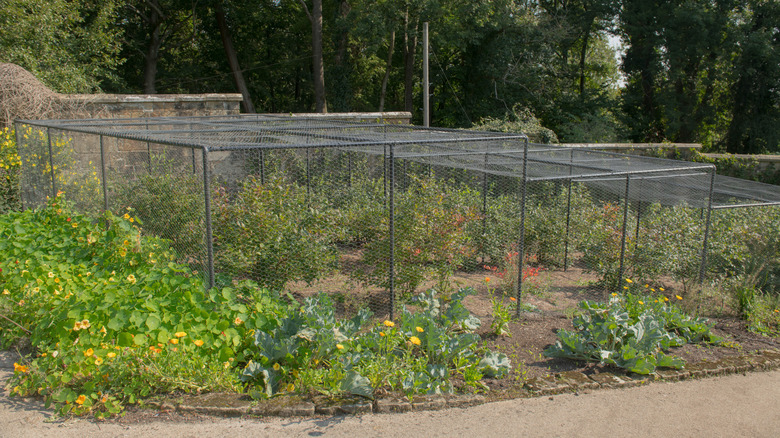
In some circumstances, turning a group of raised beds into a single walk-in cage is the best possible choice. It's much easier to protect a whole vulnerable group of permanent or semi-permanent plantings in one cage, in my experience. I've got a couple of these walk-in cages on my property, and they're incredibly useful. They save my permanently-place fruit bushes, raspberry canes, and strawberries, as well as taller, vulnerable crops, like tomatoes and peppers, from all manner of hungry wildlife. I also like just being able to open the door, walk in, and get to work without having to wrestle frames or contort myself into weird positions to get to my crops.
To do this right, you'll need to make sure the frame is tall enough that you can walk in and stand comfortably. Leave plenty of room between the outer edge and the beds, so you can move around them easily. And don't forget a hinged door with a simple latch. Go for a full-size doorway, because you need to get in there with tools, a watering can, and maybe, occasionally, a wheelbarrow or other bulky item. Make sure it's a sturdy frame with plenty of supports on side panels and across the roof. Keep the weight down by going for hardware cloth along the bottom couple of feet, then using appropriately-sized netting. Remember that most crops that need protection of this type need pollination, so the netting needs to have large enough holes to let them in and out unimpeded, unless you want to manually pollinate tiny flowers with a tiny paintbrush, which involves hours of tedious work.
Choose wildlife-safe netting and fix it tightly to frames
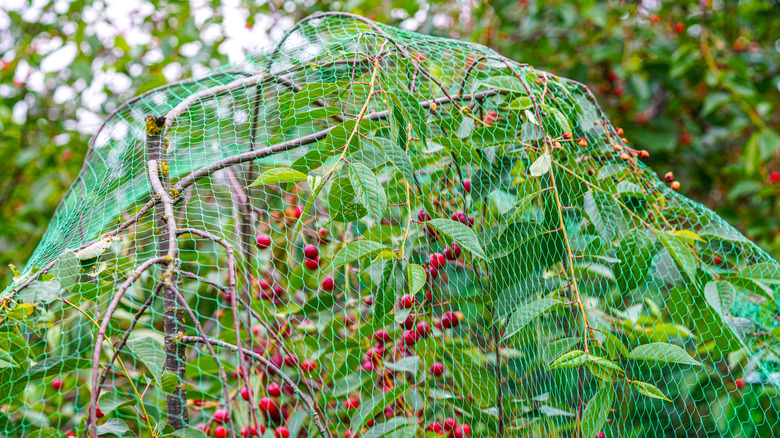
Cheap, loose plastic netting has its downsides. It's hideous, dangerous for birds, some insects, and even some reptiles and small mammals who get tangled in the large, floppy holes. It's awful stuff. Its price point is also false economy, because it degrades quickly, is more prone to tears, and ends up costing you much more over time, as you have to replace it regularly. Weak netting, large holes, and cheap garbage that's prone to tearing is no match for even an apathetic squirrel. With minimal effort, it'll push or chew its way through and into your raised beds.
Use fine, tough, wildlife-safe netting with small openings of a 1/2 inch or less. Unless you want to completely exclude even pollinators, in which case use insect or butterfly netting. But in most cases, you want pollinators to have access to do their job, so consider that when choosing netting. Make sure you pull it taut over the frame and that it is firmly and securely anchored, so it doesn't sag and leave gaps. Check joins, corners, and edges every couple of weeks through the growing season, as these are the weakest points most likely to need ongoing maintenance.
Protect the soil surface during the most vulnerable stages
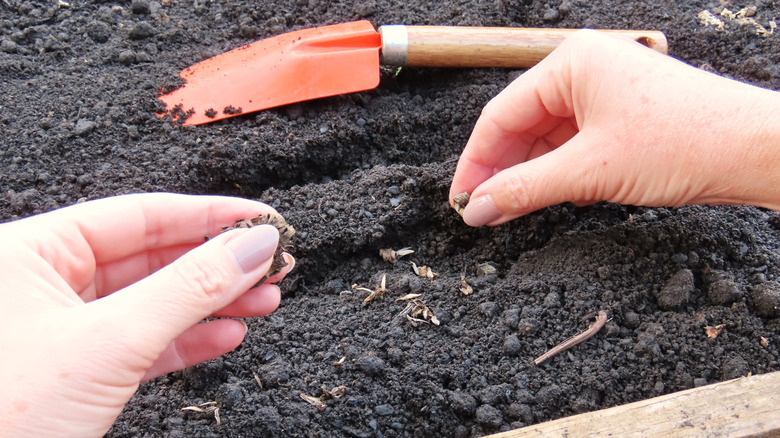
Squirrels love a freshly planted bed. The soil is fluffy and easy to dig. The seeds, bulbs, or tubers you've just planted haven't grown roots yet, so they're super-easy to pull up and eat or rebury in a squirrel's stash. Lots of people don't realize this. They think that their lovely, even, newly planted bed, with its tidy, beautifully labelled rows are safe until the seeds germinate. That's a fatal mistake. Those same people will be horrified a day or two later when they see their carefully-prepared bed is riddled with craters, because the squirrels have rifled through every single row and found 90% of the yummy snacks you planted for them.
Protect your ungerminated seeds. Squirrels, mice, voles, and even birds all want them. This is when I'd use mesh panels for a fast, clean way to temporarily protect the contents of a bed. You can use whatever method of protection you want, based on whatever you're planting. But for quick protection for newly sown seeds, the mesh panels are an easy option. You can always switch to taller or more permanent protection once the seeds are well-established.
Use stone or gravel around beds to make digging less appealing
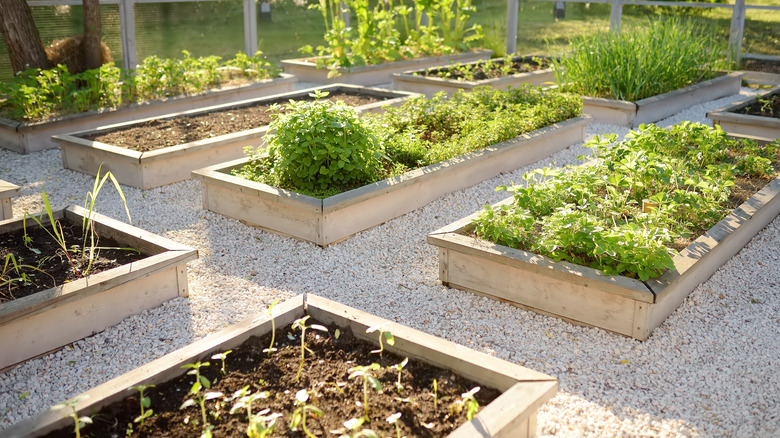
I know I already mentioned using gravel over top of an L-shaped hardware cloth barrier, but if you don't want to install one, I still recommend surrounding your beds with gravel or stone. Don't put gravel inside raised beds, but do surround them with it. Gravel makes digging much more challenging and far less appealing to even the most persistent squirrel. Just make sure it's a decent layer of at least a couple of inches.
Ideally, you want a wide border of gravel, stone, or pavers around raised beds, even if you haven't buried a mesh skirt. If you do have a mesh skirt, make sure it is fully covered, or the squirrels will find the edge and go right underneath. Hard, stony surfaces make digging uncomfortable and awkward, which makes the content of your beds a more challenging, and therefore less appealing, meal.
Ring the bed with plants squirrels tend to avoid
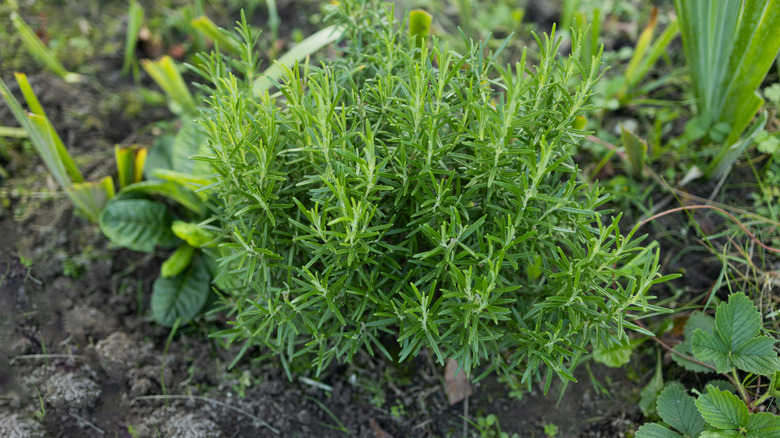
As an organic grower and permaculture enthusiast, I love companion planting and its benefits, and it's a huge part of how I successfully grow all manner of plants. And it can help squirrel problems, but it won't singlehandedly solve them. You can't squirrel-proof a raised bed with plants alone, but they can act as a useful deterrent in conjunction with other physical barriers.
Plant strongly-scented plants like alliums, whether they're ornamental or edible. Aromatic herbs like sage and rosemary are also heavily scented. Mint is another useful addition, as long as you keep it contained. The jury is out on whether the squirrels dislike the scent of these plants or whether the strong scents mask the smell of the plants you're trying to protect. I don't know why it works, but I'm happy that it does. I definitely notice less squirrel (and general rodent) activity in the areas where I grow lots of aromatics. Plus, of course, these plants help draw in pollinators and predatory insects that benefit your whole garden.
Plan covers so watering, pollination, and airflow still work
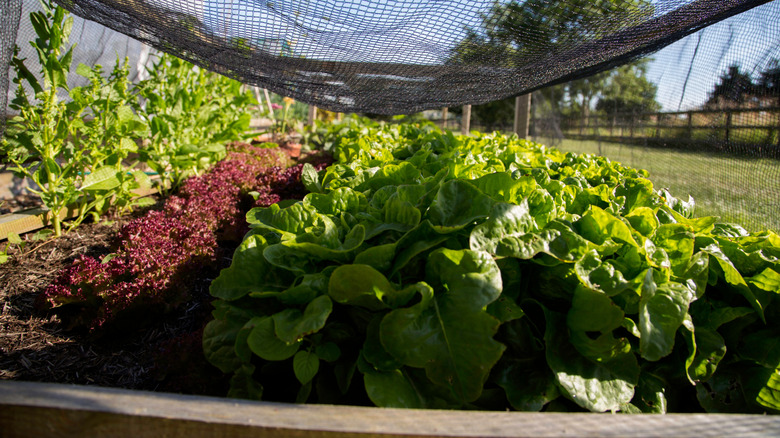
Yes, excluding squirrels is important, but you still need to consider the health and productivity of the plants beneath that protection. Covers that are too tight or solid can block rain or cause it to run off the sides instead of soaking through. They can also trap heat and greatly reduce airflow, which encourages disease. And, of course, pollination is critical to the success of many plants, so you need to take that into account, too. One of the biggest mistakes you can make with raised bed gardening is ignoring these basic needs.
You've got options, though. For pollination, make sure any netting or mesh has holes small enough to block squirrels, but large enough to allows pollinators to enter and exit. Feed Garden's Deer Netting is a good choice. If there's lots of human activity most of the day, and therefore squirrels are less likely to risk a visit, use a hinged system or lift lids during the day. Then, close them up at night during peak flowering season so pollinators get chance to do their job. Prioritize ventilation, too. Don't overfill your beds and make sure whatever protection you build, that it is roomy enough not to block airflow.