

The Heat-Tolerant Edible Fruit Tree You Can Grow In A Container That Thrives In Small Spaces

If you've ever assumed a backyard full of fruit trees isn't your gardening style, you're not alone. Maybe you love the idea of growing fresh, juicy citrus. But you've always figured you don't have the large, sprawling garden or pruning wherewithal to grow a shrub. What if we challenged those assumptions? Would you change your mind? Let's find out! We're here to let you know that you don't need tons of patience or an entire field out the back of your house to become an orchardist. You just need to find the right citrus species. Allow us to introduce you to the compact, warm weather-loving, and delicious fruit-producing Indio Mandarinquat tree (Citrus reticulata x Fortunella).
It's a rare fruiting semi-dwarf shrub that checks all the boxes we mention above — and more. It's a variety of tree that grows happily in garden containers and tolerates a fair bit of heat. In fact, the more sun the better. Mandarinquats are relatively low maintenance, so they're a great fruit tree that even a beginning gardener can grow in their yard. The shrub is evergreen, so its emerald-hued leaves remain on its branches all year. Plus, the bright orange, teardrop-shaped fruit looks as gorgeous as it tastes. And the best part? Unlike most other citrus, you can eat the peel along with the flesh, making it waste-free. Growing your own citrus tree in a small space suddenly feels not only possible, but practical and even downright fun.
How to grow a potted Indio Mandarinquat in your small backyard
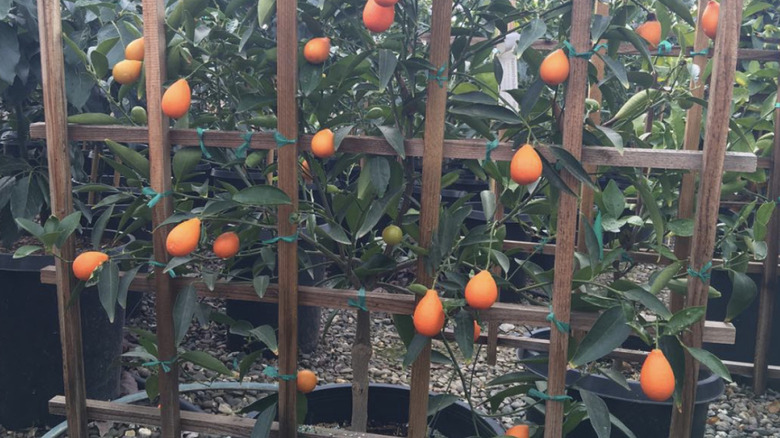
If you want to grow an Indio Mandarinquat tree outdoors year round, you need to garden in USDA Plant Hardiness Zones 9 to 11. However, since this is a semi-dwarf shrub, it's perfect for planting in containers. Bring the plant indoors when temperatures drop to freezing and you can extend that range down to Zones 3. Make sure it's planted in a well-draining growing medium, since Indio Mandarinquats don't do well when their roots are soggy. Pop the planter in a full sun spot in your garden and give the shrub a good, deep watering about once a week — unless the soil is obviously dry or the plant is wilting. Other than that, there's not a ton of maintenance.
A tip to help your fruit tree grow and produce faster is scheduled pruning. Indio Mandarinquats don't need to be fussed over like more high-maintenance fruit trees (looking at you, apples and pears). However, an annual pruning in early spring will help maintain the shrub's shape, remove any dead or diseased branches, and promote abundant fruiting. Unpruned and growing in the ground, these vibrant trees can reach heights of 15 feet. Pruned and planted in containers, they will max out at 6 to 8 feet tall. Generally, citrus trees start producing fruit in their third year after planting — and it's worth the wait. These sweet, slightly tart bright orange citrus, which ripen in winter and early spring, are rich in Vitamin C, flavonoids, and fiber.