

12 Houseplant Watering Hacks You Should Avoid At All Costs

We may receive a commission on purchases made from links.
There's a lot to love about a home full of houseplants. Bringing the beauty of nature inside immediately makes a space feel more inviting. Using greenery is a great way to play around with contrast and texture in your home décor. Houseplants are good for your health, too — many purify the air, alleviate stress, and boost productivity. Unfortunately, it's not always easy to maintain lots of houseplants, so we turn to hacks for help. Some, however, can harm rather than aid our indoor plants. In fact, there are popular tricks you should avoid at all costs, from misting leaves and watering plants with ice cubes or pasta water to putting rocks in the bottom of planters and growing succulents in a terrarium.
Maybe you lucked out and simply don't have a natural green thumb. Don't beat yourself up. There are so many elements you need to get right when keeping houseplants alive. It's far more likely that you're just making a few watering mistakes that are resulting in dire consequences for your beloved plants. It's no surprise — and even expected — that you'd be searching the internet for tips on choosing the right low-maintenance houseplants for beginners. Even experienced houseplant gardeners are always on the hunt for the hacks that make watering a breeze. The problem? There's little houseplant watering guidance that's universal across species and environments. And that's especially true of gardening hacks, which are often more popular than practical.
Giving sugar water to houseplants
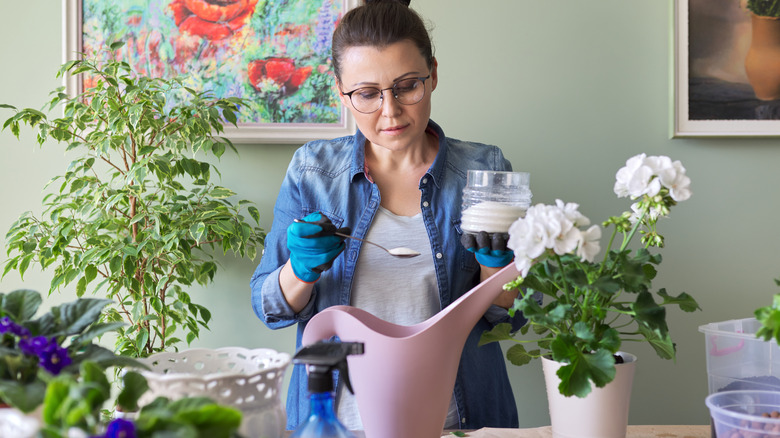
Adding a little sugar water to cut flowers is a popular trick, with some experts claiming that combined with an agent like vinegar, it can help the blooms last longer. But that hack doesn't apply to houseplants growing in soil, not even the temporary additions to your indoor garden, like Christmas cacti or poinsettias. It can actually do more harm than good, attracting fruit flies and inviting mold. To help indoor plants last longer, rely on watering methods that keep the soil evenly moist and make sure you use pots with proper drainage.
Following a calendar alert to water your plants
Productivity experts often advise setting calendar alerts to keep on top of daily or weekly tasks. Checking them off as you do them is certainly satisfying. Watering houseplants isn't quite the same thing as paying a bill or washing the sheets. Plants are living things with ever-changing needs. The weather, the light, their placement in your home — it can all impact growth and watering needs. Learn about how much water a specific plant requires and its watering cues, then adjust watering accordingly. Don't treat it like another item on your to-do list.
Using ice cubes instead of water
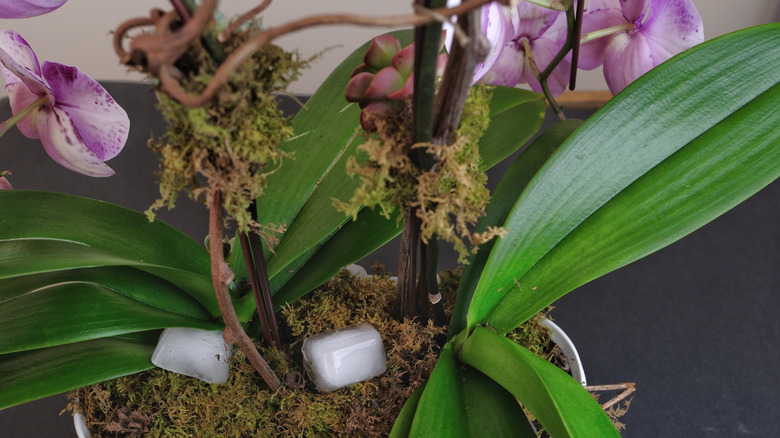
How easy is it to just take an ice cube out of the freezer and pop it in your houseplant? It's an especially popular trick for orchids, which do poorly with overwatering. But experts say all that ease isn't worth it. It can negatively impact the long-term health of a plant. For one, the cold shock can injure above-ground plant parts and roots. This can be particularly damaging to houseplants that don't withstand freezing temperatures. Additionally, the melting ice creates uneven pockets of water rather than the more consistent drizzle of a watering can.
Using the same soil for all houseplants
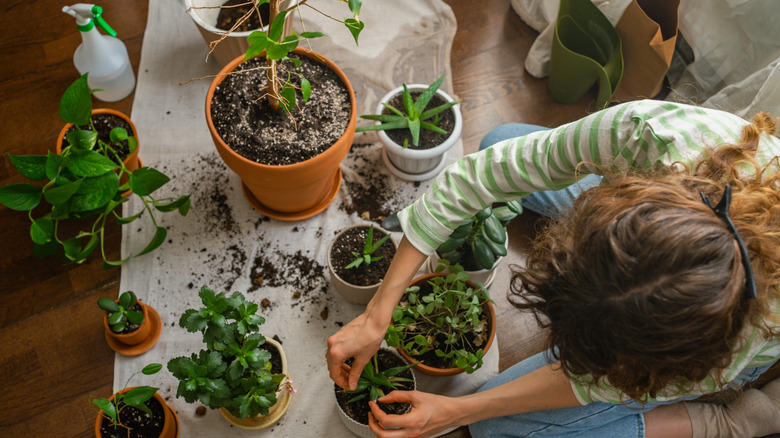
Say it with us now: Watering plants isn't just about the water; it's also about the soil. Good drainage keeps your houseplants healthy, and it's dependent on soil consistency. You might keep a big ol' bag of garden soil in the garage and use it for all your plants. That's not the right approach. Succulents, for example, need far better drainage than bog-loving pitcher plants. Before going one size fits all with soil, figure out which medium your plant needs. Or keep it easy on yourself and grow houseplants with similar soil preferences.
Incorrectly bottom watering
With bottom watering, you allow a houseplant to take up water from the base rather than the top of a planter. It gives water right to the roots, and is said to promote better growth and reduce common houseplant issues like rot. It is undeniably a clever hack, provided it's done right. Before you try bottom watering, make sure you have the proper tools, like trays that don't block drainage holes, and that you have houseplants that like this watering style. Avoid it with, for example, epiphytic ferns and orchids or shallow-rooted begonias and sedums.
Using pasta water on your plants
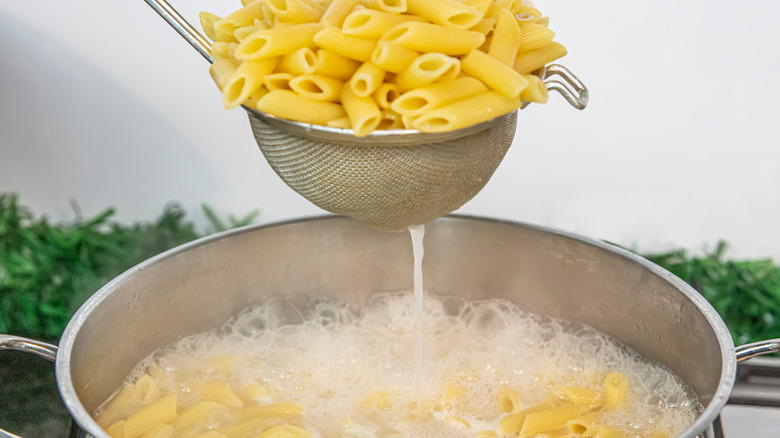
Okay, so maybe you haven't tried this viral hack yet, but if you've ever scrolled through #PlantTok, you've probably seen someone claiming that pouring leftover starchy pasta water on your houseplants gives them a quick nutrient boost. Who doesn't love a fresh pot of pasta? It's tempting to think your plants may feel the same way. In fact, the excess sodium from the cooking water or preservatives in the dried pasta could harm your plants. If you think your houseplant needs more nutrients, TPS Nutrients Indoor Liquid Fertilizer is a better option.
Misting a houseplant's leaves
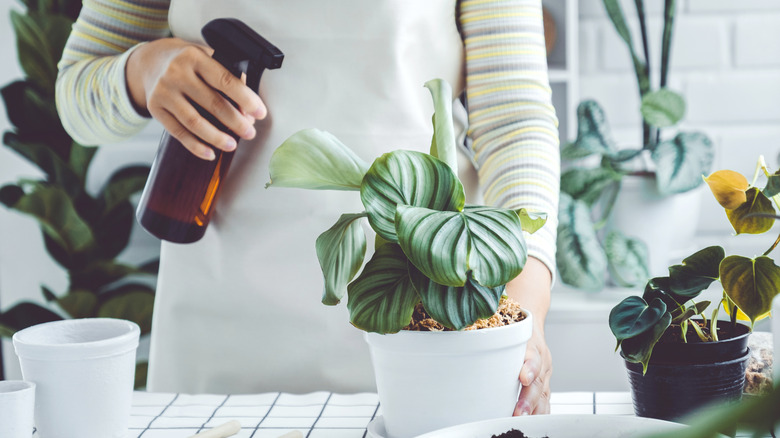
It's easy to see why this became a popular trick not just for watering houseplants but also to keep their foliage dust-free and shiny. Spritzing the leaves of your houseplants gives them an instant glow that makes the whole house look a little better. Plus, it's kinda fun to do. It's not, however, an effective way to water plants. For one, persistently damp leaves can encourage bacterial or fungal growth. Additionally, you may inadvertently think you don't have to properly water your plants at the root zone.
Using cold water straight from the faucet
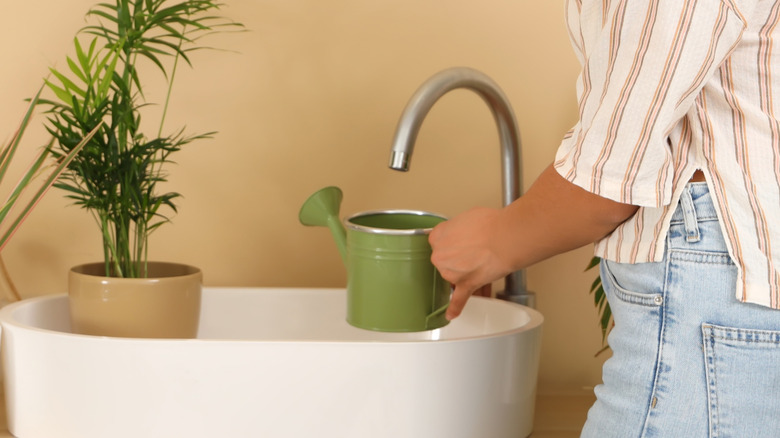
One common watering mistake you're likely making with indoor plants is related to the type of water. Distilled water is preferred for many houseplants over chlorinated tap water, but using it can be pricey and time-consuming. Tap water is okay to use straight from the faucet, as long as the temperature is above 50 degrees Fahrenheit. If it's colder, leave your filled watering can out on the kitchen countertop until the water hits room temperature. (Aim for the 60s to low 70s.) Your plants won't suffer from cold shock, and the chlorine will evaporate, too.
Interfering with succulent drainage by growing them in a terrarium
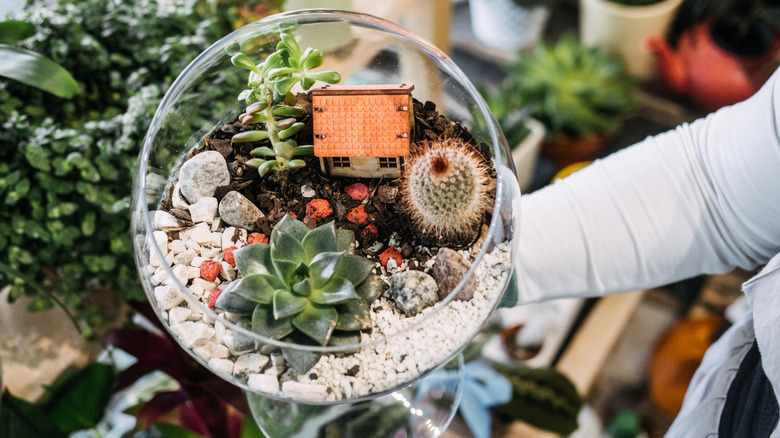
We'll be the first to say that succulents in terrariums look incredible. Succulents are hardy, making them popular beginner terrarium plants. But people often make the rookie mistake of watering them on a similar schedule to potted succulents. A regularly watered terrarium will quickly turn humid, with soil far too moist for these drought-tolerant plants — succulents typically hail from desert terrain. If you really love the look of a succulent terrarium, opt for more humidity-friendly species like aeoniums or sedums, and go very easy on the watering.
Improperly employing pebble trays
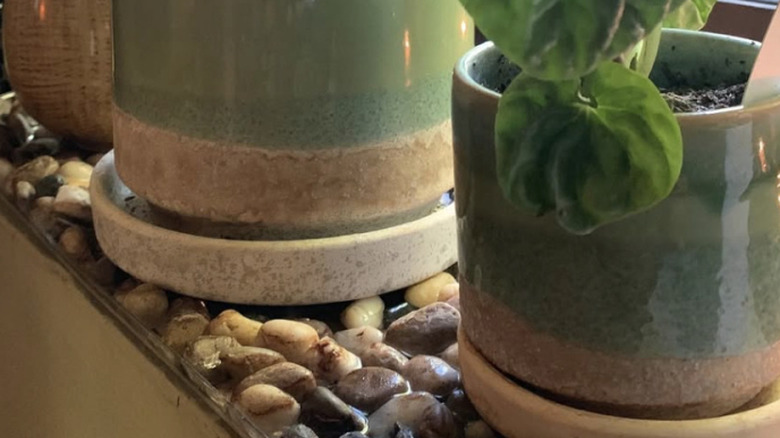
Head over to Instagram or TikTok and you'll find tons of posts promising pebble trays as the answer to your houseplant watering woes. With this method, you place potted plants on a shallow tray filled with river pebbles and water. The idea is that it creates some much-needed humidity for plants that hail from tropical rainforests. However, this hack is really only effective for houseplants that are less than 1 inch tall, like a creeping ficus. If your plants are craving moisture, water them often and place a humidifier nearby.
Placing rocks in planters without proper drainage
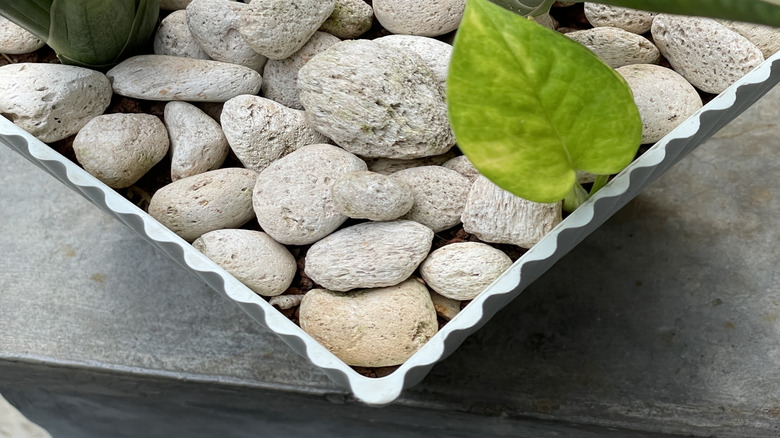
You may believe putting rocks in the bottom of planters is a good watering strategy. This oft-touted advice does more harm than good. The layer of stones creates pockets of air that actually slow drainage rather than boost it. Plus, these gaps can attract pests or trap water, which quickly turns anaerobic. You can use rocks at the top of a planter for aesthetic reasons. Just do so sparingly. Ensure your pot contains a well-draining growing medium and has lots of drainage holes. Keep an eye out for signs of rot.
Sticking to the same watering schedule year round
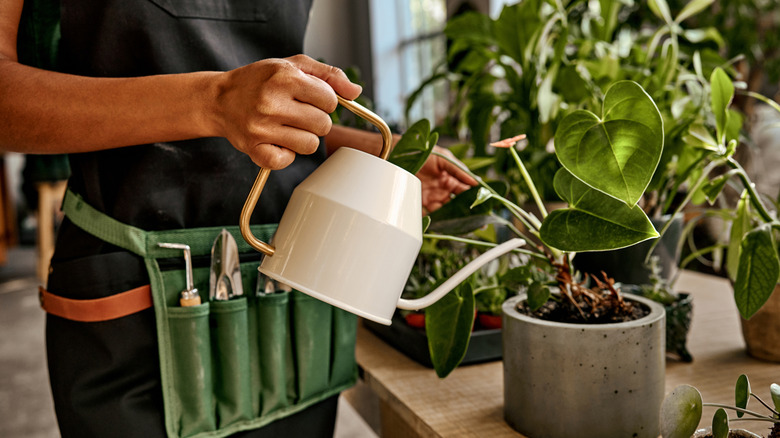
You've figured out how often your plant needs water and you've settled into a routine. Schedules are an easy hack that ensures you never forget to water your plants. However, even houseplants are affected by the seasons. Environmental changes, like shifts in daylight hours or cooling or heating, impact plant growth, altering the amount of water they need. Rather than water your plants on a set schedule, learn to read the signs your houseplants are giving you. Then you can adjust and adapt watering as the seasons change.