

The Berried Bush That'll Keep Robins Happy All Winter
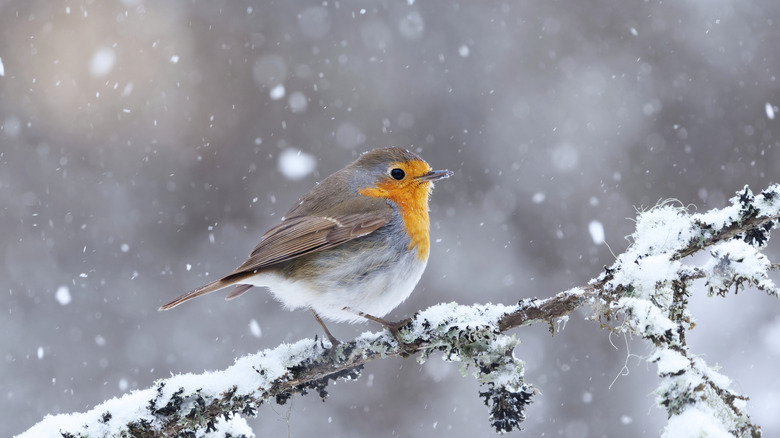
Did you know that cold intolerance is not why some American robins migrate in the fall? Instead, they fly south because the ground freezes and the worms and underground insects they eat become scarce. Robins are omnivorous for much of the year, but they turn to fruit and berries when their usual food sources disappear in winter. That's why the berries of plants like the highbush cranberry (Viburnum opulus var. americanum), also called the American cranberry, will attract robins and keep them happy throughout the cold months. The fruit is rich in vitamin C and gets sweeter and softer with successive freeze-thaw cycles, making them particularly palatable to birds.
Looking to attract robins to your garden? You'll be happy to learn that the highbush cranberry is one of the most popular shrubs for supporting wildlife in home gardens. The plant provides nesting sites, shelter, and food for robins and other birds, small to large mammals, and pollinators. The highbush cranberry, which is not related to the more familiar cranberry (Vaccinium spp.), is a large shrub. Expect it to grow 8 to 15 feet tall and 8 to 10 feet wide in your garden. Its berries are not true berries; they're drupes with pits, like cherries. In June, the shrub produces flat-topped clusters of white flowers. It's easy to grow and transplant, and it's adaptable to most growing conditions.
How to plant easy-grow, cold-tolerant highbush cranberry
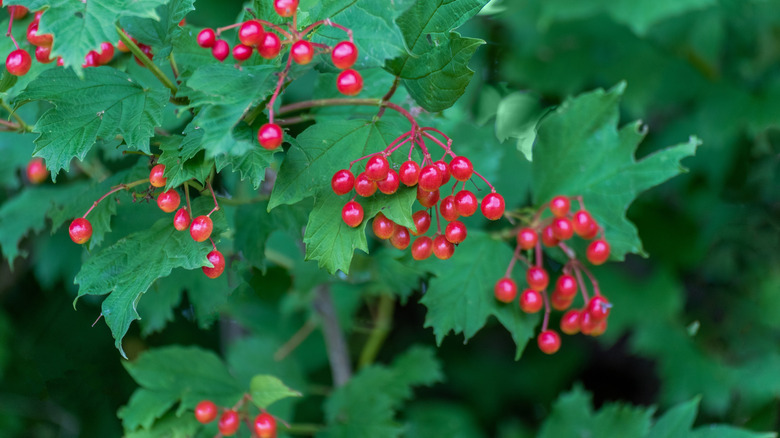
The highbush cranberry is a beautiful shrub that thrives in cold climates. It's frost-tolerant and grows well in USDA Hardiness Zones 2 to 7. It's challenging to start these shrubs from seed because they don't germinate until the second season. Instead, try propagating it through hardwood and softwood cuttings, crown division, and layering. Or just buy a potted sapling from a nursery. Plant your highbush cranberry in moist, rich, loamy soil that drains well, allowing for plenty of space to accommodate its mature size. Mulch the base of the shrub after planting to discourage weeds. Choose a spot in full sun for best flowering and fruiting; the plant will also tolerate some shade. In its first year, water your highbush cranberry weekly to supplement low rainfall. After that, you will likely only need to water the shrub during dry weather.
If you want a shrub that'll keep robins visiting your yard year-round, avoid over-fertilizing. Too much nitrogen discourages fruit development. If your highbush cranberry starts to lose leaf color, you can give it a little nitrogen fertilizer, following the manufacturer's instructions. Prune your highbush cranberry after flowering to keep it on the smaller side or prevent it from getting leggy. The shrub rarely attracts diseases or pests. Powdery mildew, bacterial leaf spot, shoot blight, stem borers, thrips, and tarnished plant bugs may show up from time to time. One major threat is the Viburnum leaf beetle, which can defoliate a highbush cranberry. Use insecticide containing acephate, bifenthrin, carbaryl, cyfluthrin, deltamethrin, lambda-cyhalothrin, or permethrin on the larvae.