

Repair Or Replace: How To Determine What's Best For Your Snow Blower
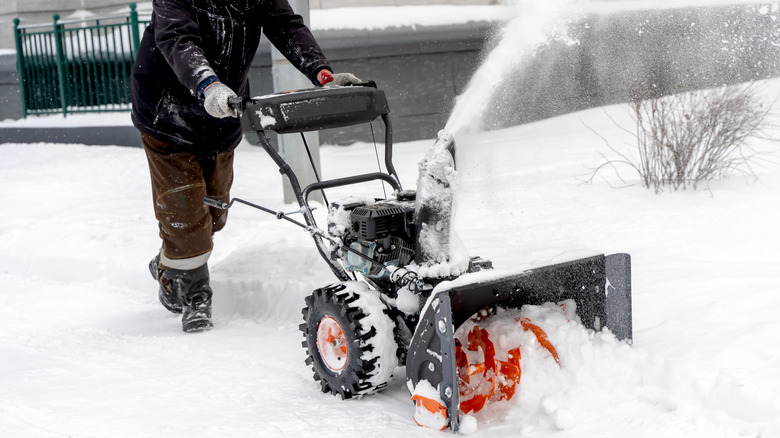
You've finally gathered the courage and strength to step out of your warm cocoon and remove the snow blanketing your porch and driveway. But it'll all be for naught if your snow blower doesn't start, despite several repeated attempts. So, is that a sign to replace the faulty device, or should you shell out for repairs? Although you can base this decision on several factors, replacement costs are usually the key determinant. If a single repair or the sum of upcoming repairs exceeds half the cost of a comparable new machine, a replacement makes more financial sense.
For instance, if repairing your two-stage snowblower costs $800, but you could buy a new, top-rated version for $1,400, you should consider making the investment. Otherwise, you'll be paying high prices for an aging machine, sans any warranty or reliability benefits. Naturally, the decision to replace or repair your snow blower will also become clearer once you consider its age, condition, and safety, in addition to how easily you can find its replacement parts. Your needs and performance non-negotiables will also affect this decision.
When does repairing your snow blower make more sense
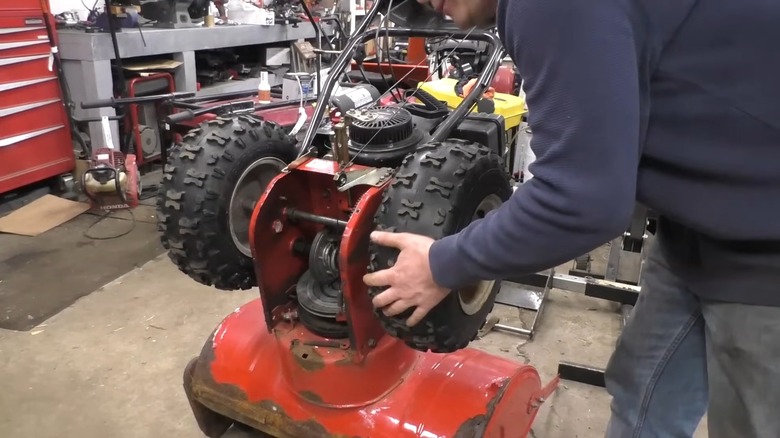
Repairing your snow blower is a smart move when your machine is relatively young and doesn't pose a whole lot of problems. To put this into perspective, most modern blowers last between 10 and 15 years, given the right care and attention. Though anecdotal evidence suggests hardy models from pre-1980 can last over 25 years. So, if your snow blower is well within this range, it makes sense to shop around for repair quotes or develop your mechanical inclinations to DIY repairs.
Usually, most snow blowers fail over minor issues, such as worn belts, faulty spark plugs, blocked augers, or clogged discharge chutes. Such textbook issues can often be redressed inexpensively, for under $100 or less in most snow blowers, making the case for repair over replacement — even more so if your machine's engine is fundamentally sound. Repairing also makes financial sense if your blower doesn't receive a lot of action. In areas where snowfall is scant or intermittent, you can squeeze out more uses from your tool with the right repairs and care. Not sure how to go about it? Some easy tips to extend the life of your snow blower after you've repaired it include regularly inspecting it for any faulty components, keeping up on lubrication, and regularly changing out air filters, oil, and spark plugs, in addition to other parts as needed.
When is replacing your snow blower a better alternative
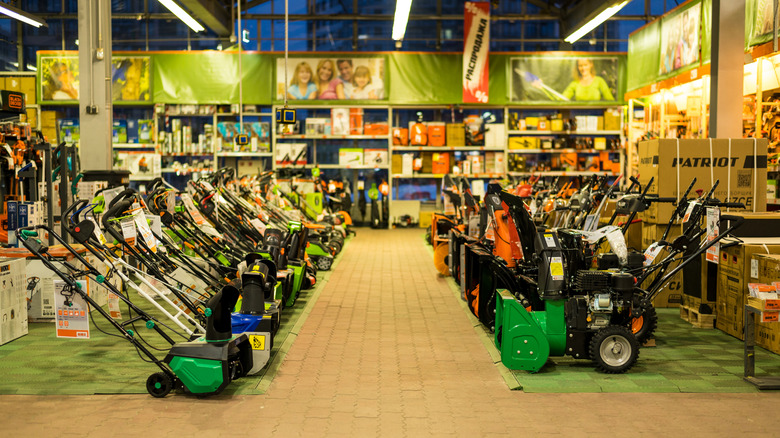
Replacing your snow blower is the better option when repairs become frequent, requiring a trip to the repair shop multiple times in a single season. Or, when they're tied to core machine and transmission failures, such as cracked engine blocks, whose repair costs approach nearly 50% of the price of a new machine. This especially holds true for machines older than 10 years, as they're, in any case, inching closer to the end of their useful lives.
You should also consider upgrading your snowblower when performance and safety issues arise repeatedly. A blower that leaves a light stream of snow after making a pass isn't worth retaining, nor is one that experiences sputtering noises and excessive vibration. Besides, modern machines are usually more energy-efficient and safer to use. For example, top-rated snow blowers from companies like Toro and Ariens usually include improved auger and chute control systems, heated handles, and LED lighting for dim environments, which reduce fatigue and injury risk. The higher upfront prices are justified over time by reducing maintenance spending.
Parts availability is another deciding factor. Sourcing parts for discontinued machines can cause time delays and raise repair costs, making replacement a superior option. Lastly, when your needs change, say you relocate to a place experiencing heavier, wetter snow or desire more powerful engines to reduce your toil, investing in a newer machine is the right call.