

Safety Tips To Know Before Using The Oven's Self-Cleaning Function
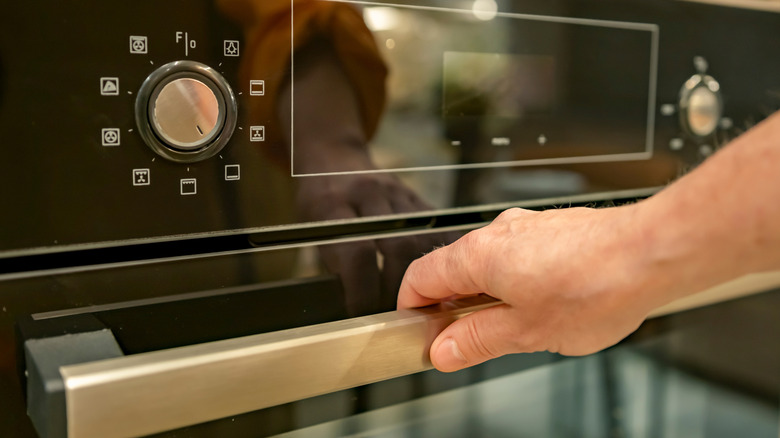
The self-cleaning feature you find on your oven can seem like a modern miracle. With just the push of a button, caked-on grease and food residue seemingly disappear. You finish with an easy wipe down after cooling. However, before you start a self-cleaning cycle on your oven, it's necessary to understand how the process works. More importantly, you'll also want to understand why it requires additional precautions for an effective and safe cleaning. Figuring out the safest way to use your oven's self-cleaning feature and executing necessary safety tips can ensure that you don't pose any risks to your home or appliances.
Self-cleaning ovens can reach extremely high temperatures, ranging from 800 up to 1,000 degrees Fahrenheit. Being aware, staying home during cleaning, and taking proper safety measures helps ensure you don't misuse the self-cleaning feature and damage your oven, or worse, hurt yourself. The primary function of the feature is known as pyrolytic cleaning. When your oven heats up, it burns food residue and debris into ash for easier cleaning. Typically, the cleaning lasts for about three hours when using this feature, and the door is locked automatically during that time. There are other methods you may consider for how you should be cleaning your oven if you don't like the idea of using extreme heat.
Important precautions you must take before using the self-cleaning feature
Before you jump into the self-cleaning cycle for your oven, there are important safety precautions you should take. These measures can help protect your oven, your home, and even your health. Because the cleaning function generates high heat, it can put stress on your oven's components as they work to reach those extreme temperatures. You should use the self-cleaning feature sparingly, rather than as your primary cleaning method to reduce wear on your appliance.
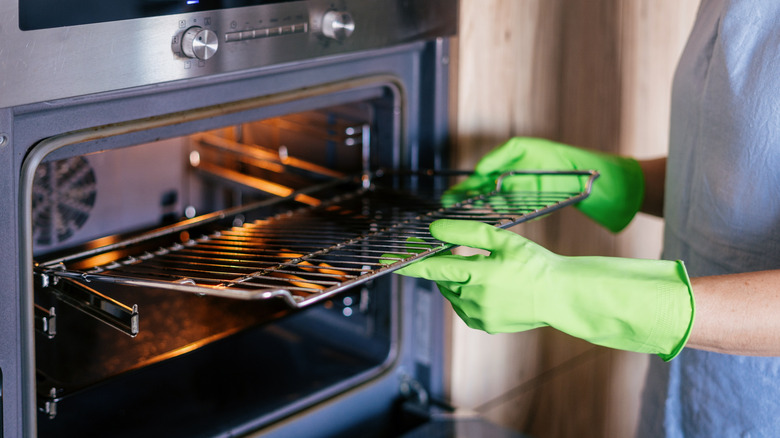
First, review the manufacturer's instructions for using the self-cleaning feature to ensure you use it correctly and follow specific safety guidelines for your model. Ensure you avoid a kitchen catastrophe by removing any dishware from your oven. You should also remove the oven racks to clear it out, since those can be damaged during the self-cleaning cycle. Next, you'll want to examine the ventilation in your kitchen when using the self-cleaning feature, as the ultra-high temperatures can generate harmful fumes and smoke. In some cases, carbon monoxide can be released, which is harmful. In addition to turning on your range hood or exhaust fan, consider opening a few windows. You, your children, and your pets should also steer clear of the kitchen during cleaning to avoid fumes and heat.
Leaving large pieces of food or grease in your oven can generate strong odors and smoke, and they can possibly even catch fire during cleaning. You should ensure that you wipe up and try to clear out any large spills or grease spots to reduce the fire risk. Do not leave anything exposed to heat on top of your oven while cleaning. Finally, do not add oven cleaners with the self-cleaning function since they can damage your oven's interior and, ultimately, its performance.